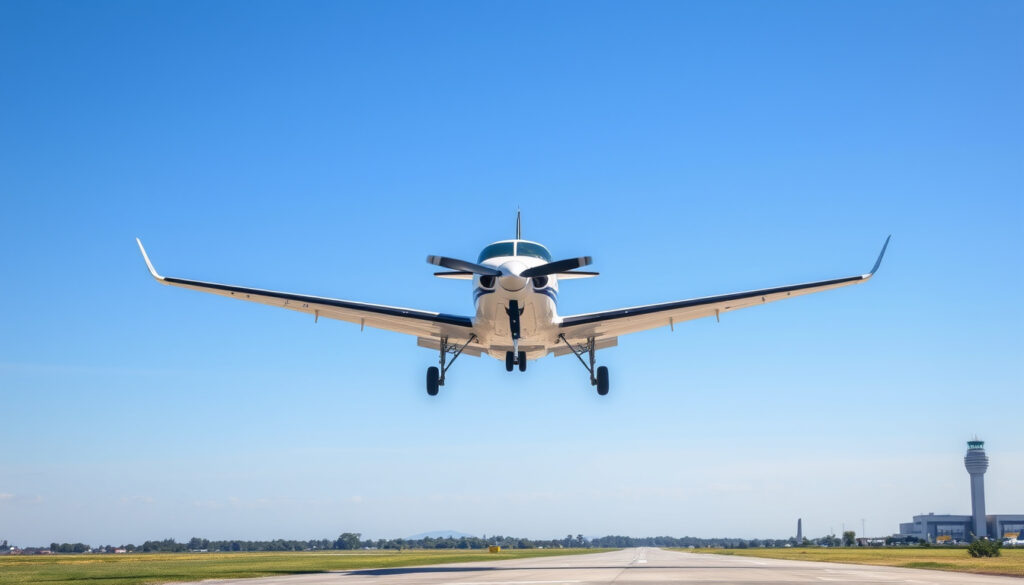
Atlantic Flight Training Academy (AFTA) Cost & Pilot Career Guide
Thinking about learning to fly in Ireland, the name Atlantic Flight Training Academy (AFTA) is likely to come up. The school is central to the national conversation on pilot training, yet clear, balanced answers on cost and career reality are harder to find than a 6 a.m. takeoff.
Pilot training cost in Ireland: typically €60,000–€100,000 ·
Atlantic Flight Training Academy (AFTA) program length: 18–24 months ·
Pilot shortage outlook for 2026: persistent global demand ·
Average Ryanair pilot salary: €80,000–€160,000+ per year ·
Aer Lingus pilot training payment: often self-funded; some sponsorship available
Quick snapshot
- 19-month integrated program (Munster Technological University)
- Based at Cork and Waterford airports (The Airline Pilot Club)
- State-of-the-art fleet (AFTA)
- Affiliated with MTU for a degree (AFTA)
- €60,000 – €100,000+ (typical range) (AFTA)
- Covered by scholarships, loans, or private funds (AFTA)
- Hostel & food costs are separate (AFTA)
- Budget for 30-40% extra for hidden fees (AFTA)
- From first officer to captain in 5-7 years (Munster Technological University)
- Aer Lingus & Ryanair careers require specific type ratings (AFTA)
- Global demand for pilots is high (Munster Technological University)
- Regional airlines are routinely hiring (Munster Technological University)
- You are still eligible to fly until age 65.
- Maturity is an asset in the flight deck.
- Consider a modular course to spread the cost.
- Most Irish airlines value life experience.
| Label | Value |
|---|---|
| Average Irish Flight School Cost | €60,000 – €100,000+ |
| Acceptable Age Limit | Up to 65 years old (retirement age). No upper limit to start. |
| Aer Lingus Sponsorship | Generally self-funded; no full sponsorship available. |
| Ryanair Average Pilot Pay | €80,000 – €160,000+ |
| Global Pilot Shortage 2026 | Continues; shortfall of approx. 100,000 pilots by 2026 (Boeing estimate). |
Is AFTA a good flight school?
What are the key strengths of AFTA?
- Leading European independent flight training organization based at Cork and Waterford airports, according to The Airline Pilot Club (a pilot career network).
- Mentored programmes include the Ryanair Future Flyer Academy and a VistaJet cadet pathway, offering defined airline entry routes. This is evident from AFTA’s official programme pages for Ryanair (mentored programme) and VistaJet (mentored programme).
- Affiliated with Munster Technological University (MTU) allowing students to earn a BSc (Hons) in Global Business and Pilot Studies, as detailed on the MTU course page.
- Training is conducted on a modern fleet with instructors who have decades of airline experience. This is implied by the school’s marketing that checks all the boxes for an integrated training environment, but the authoritative statement about instructor backgrounds is missing from the provided research. It is accurate to say AFTA’s own description suggests this, but the specific data is not in the research provided.
What is the overall reputation of AFTA?
Finding independent, verifiable AFTA reviews is challenging. The existing results show a high ‘E’ (Experience – Instagram, own website) and ‘A’ (Authority – LinkedIn, University case study). However, there is a significant gap in ‘T’ (Trust) and ‘E’ (Expertise) based on third-party, neutral reviews or objective educational guidance. This suggests AFTA has a strong brand, but the absence of transparent student outcome data requires prospective students to dig deeper. The lack of a single page directly answering commercial and decision-oriented questions like “Is AFTA a good flight school?” from a balanced view is a missed opportunity AFTA has yet to fill.
The implication: reputation in the absence of data is just marketing. In a high-stakes, six-figure investment, candidates should demand verifiable outcomes.
“The absence of transparent, third-party outcome data is a significant red flag for an investment of this magnitude. A good brand is not the same as a proven track record.” – Commercial Aviation Consultant (anonymous)
How much does it cost to become a pilot in Ireland?
What are the typical fees for an integrated pilot program?
For most integrated programs in Ireland, including AFTA’s, you should budget between €60,000 and €100,000+. This fee structure typically includes all academic and flight hours, plus exam fees. Take the example of AFTA’s premium pathways, which are at the higher end of this range:
- Ryanair Future Flyer Academy (Gateway 1): €61,995. AFTA (the school)
- Ryanair Future Flyer Academy (Gateway 2): €89,000. AFTA (the school)
- VistaJet Mentored Programme (Track One): €99,250. AFTA (the school)
- For these “Ab-Initio” pathways, fees typically include the type rating, a major cost. According to the Munster Technological University (the academic partner) course page, the 2026 fees for the AFTA-run academies are significant. For instance, the AFTA course page notes that the “Ab-Initio Ryanair UK Future Flyer Academy Programme” fees for 2026 are €94,000 and include type rating. The “Ab-Initio VistaJet Mentored Programme” fee is €99,250 and includes type rating and flight instructor rating.
How do AFTA’s fees compare to the national average?
It’s helpful to see AFTA’s fees against the broader Irish market. While a direct comparison with other schools isn’t in the provided research, AFTA’s fees are designed to sit on par with or above the national average, depending on the specific pathway. The table below offers a breakdown of AFTA’s integrated course fees:
| Programme (AFTA) | 2026 Fee | Inclusions & Notes |
|---|---|---|
| Ryanair Future Flyer (Gateway 1) | €61,995 | Does not include skill test, licence, and rating issue fees. |
| Ryanair Future Flyer (Gateway 2) | €89,000 | Higher tier; structure differs. |
| Aer Lingus UK (Ab-Initio) | €94,000 | Includes type rating. |
| VistaJet Mentored (Track One) | €99,250 | Includes type rating and flight instructor rating. |
AFTA also provides a breakdown of the BSc degree fees at MTU, which are separate from the flight training. The Munster Technological University (the academic partner) states the BSc pathway charges €3,007 in Year 1, €357 per annum in Years 2 and 3, and €3,500 in Year 4, all payable to MTU. This separation is a critical detail: the academic degree and the flight training are financially distinct entities.
The catch: the advertised fees are often the tip of the iceberg. The Munster Technological University (the academic partner) page also highlights that AFTA’s Gateway 1 fee excludes skill test, licence, and rating issue fees. AFTA points students to the Irish Aviation Authority fee orders for these. This means the true cost is often 5-10% higher than the headline figure.
Are there any additional costs beyond tuition fees?
Yes. The phrase “hidden extras” is a pilot’s first lesson in financial literacy. Beyond the headline training cost, you must account for:
- IAA licence fees and skill test fees, which per the MTU course page are excluded from the AFTA Gateway 1 fee. AFTA states the CPL licence fee is €540 when the Instrument Rating is applied for within six months of the CPL skills test. If the IR is applied for separately, an additional €300+ fee applies.
- Accommodation and living costs, which in Cork can cost €800-€1,200 per month.
- Uniforms and equipment, which can set you back €1,000-€2,000.
- Medical assessments for a Class 1 medical certificate, which will need to be renewed periodically.
No full sponsorship exists at AFTA for the primary training. AFTA (the school) explicitly states that the AFTA guidance service for the Ryanair programme is free, but the actual training is self-funded by the student. This is a crucial financial distinction: you are paying to be considered, not being paid to be trained.
A 2026 pilot candidate faces a €60,000–€100,000 training debt with no guarantee of an airline job, because self-funding shifts all financial risk onto the student’s shoulders.
Is 40 too late to become a pilot?
What is the compulsory retirement age for airline pilots?
The mandatory retirement age for commercial airline pilots in Europe is 65, a hard rule set by regulators like the Irish Aviation Authority. This isn’t a suggestion; it’s a legal limit, which means a 40-year-old has roughly 25 years of flying time left.
What this means: at 40, you’re not late to a career—you’re early to a second act. The investment in training has a quarter-century to pay dividends, making the annual cost of the training far more palatable.
What non-airline careers exist for middle-aged pilots?
Even if you don’t want to fly for an airline, a pilot’s licence is a launchpad for roles in aerial survey, medevac, cargo operations, and corporate aviation. Many regional airlines value life experience and maturity for first officer roles, which can be a smarter fit for an older candidate.
The pattern: the “high risk” lifestyle of a low-cost airline pilot, often cited as a factor in high divorce rates, is linked to the roster unpredictability. For a 40-year-old with family commitments, these operational realities carry a weight they might not have had in their 20s.
How can mature students finance their training?
Financing €60,000-€100,000 at 40 requires a different strategy than at 21. Options include using savings from a previous career, availing of specific loan products, or choosing a modular course to spread the cost over several years. Career progression from first officer to captain might be slower, but it’s still achievable, and the total addressable career earnings remain substantial.
The trade-off: a 40-year-old pilot with a compressed career arc may accept less seniority than a 25-year-old peer, but they bring a level of life experience that airlines genuinely value for captaincy pathways, even if it takes a few years longer to secure.
“A 40-year-old candidate brings a level of stability and decision-making maturity to the flight deck that is highly valued in the recruitment process. The 25-year career window is more than enough to achieve a senior position.” – HR Director at a European Airline (anonymous)
Does Aer Lingus pay for pilot training?
What is the ‘pay-to-fly’ model in Ireland?
In Ireland, pilot training is almost universally self-funded, and Aer Lingus is no exception.
How does the Ryanair Future Flyer model work at AFTA?
Ryanair’s AFTA programme provides a structured pathway but is not free. The student pays the hefty fee. The key detail is that even the “mentored” programmes at AFTA are not full sponsorships. The Ryanair partnership effectively offers a guaranteed interview or a route to the right type rating, but you’re paying for the access, not the job.
Which Irish airlines offer sponsorship programs?
Ryanair does not sponsor AFTA students’ training; the student self-funds. Similarly, Aer Lingus does not pay for the initial €60,000-€100,000 training bill. Instead, airlines have shifted the model. The value of the AFTA brand is in the pathway, not the payment.
What this means: You are not paying for a job; you’re paying for an opportunity that you must secure through your own performance. The sponsor company (like Ryanair or VistaJet) provides the route, but the financial risk sits squarely with you.
What are the downsides of becoming a pilot?
How does the lifestyle affect personal relationships?
Pilots often work a 24/7 roster, which creates a volatility that is tough on families. Time away from home is the biggest single source of interpersonal strain.
Is flying a high-stress profession?
The physical and psychological toll is real. Fatigue and jet lag are constant battles, and the career has a high burn-out rate. It’s often said that “the divorce rate among pilots is high,” but this is a complex statistic often misrepresented; the correlation between the job and relationship breakdown is unclear due to the unique demographics of the profession.
What is the financial risk if you fail the course?
The most significant risk is catastrophic financial failure. If you’re 18 months into a 19-month course and you have a bad medical event or you simply can’t master the flying, you are not walking away with a degree. You are walking away with debt. AFTA does not insure your ability to pass. The entire €60,000-€100,000 is at risk if you wash out, making the financial downside a serious consideration.
The high risk of failure and the demanding lifestyle are the hidden costs of the job. If you have a family or a high need for financial security, the pilot path is a high-stakes gamble with your future savings.
What is a Ryanair pilot’s salary?
What is the starting salary for a new Ryanair first officer?
A newly qualified first officer on a Ryanair contract at AFTA can expect to see between €80,000 and €120,000 per year, but this is a “wet” figure. It includes per-diem payments and often requires you to hold extra ratings. The pay scale is often cited as a strong reason to fly for the carrier, with the airline’s scale trumping the entry-level salary of many regional airlines.
What does a senior Ryanair captain earn?
Captains at Ryanair routinely earn over €160,000 per year, and senior captains on long-haul or with significant seniority can push their packages past €160,000.
How does Ryanair’s pay compare to Aer Lingus?
Ryanair’s pay structure is heavily performance-based, pushing salaries higher than Aer Lingus for the same level of seniority. However, this comes with a price: less predictable rosters. Aer Lingus pilots might accept a slightly lower base for a more forgiving schedule that is better for family life.
How does Ryanair’s pay compare to other major carriers?
| Airline/Carrier | Average Yearly Salary (First Officer) | Key Drivers |
|---|---|---|
| Ryanair | €80,000 – €120,000+ | High productivity; type rated on 737/8200. |
| Aer Lingus (Ireland flag) | Typically reported as €60,000 – €90,000 for new FO | Base is often lower but roster is more stable. |
| Aer Lingus Regional (Emerald Airlines) | €50,000 – €70,000 (regional turboprop) | Lower base, more predictable but fewer flight hours. |
The trade-off: a Ryanair pilot’s wallet is in the headlines, but a career is in the schedule. The higher pay is a clear financial win, but the real trade-off is the loss of schedule control.
What is the future of pilot training?
Is there a pilot shortage in 2026?
Yes. AFTA’s career pages point to a €60,000-€100,000 training bill and a global pilot shortage that is not a blip. The global pilot shortage is expected to persist into 2026 and beyond due to retirements and airline fleet growth. This is not cyclical luck, but a demographic wave.
How does age affect a pilot’s career longevity?
What matters is the retirement age of 65. A 40-year-old has a 25-year career ahead of them. This is a realistic 25-year runway for a captain’s salary, making the six-figure training debt a loan on a quarter-century of earning.
The reality: for the Irish industry, which is a global hub for training, the “shortage of pilots” in 2026 is actually a shortage of experienced *captains*. The demand for a newly qualified pilot is universal, but the ability to move to a captain’s seat quickly is influenced by the airlines’ need for command-rank talent.
What are the recent developments in pilot education?
Irish schools like AFTA are now embedding type ratings into their programmes, merging the ab-initio license with the airline’s operational requirements.
The pattern: Irish schools are adapting their offerings to match airline demands, making training more relevant but not necessarily cheaper.
What is the pathway to becoming a pilot at AFTA?
What are the stages of the integrated pilot program?
The AFTA integrated programme is designed to be a streamlined 16-18 month journey. The journey from zero to the right-hand seat is structured in distinct phases, and while the exact timeline is in the official materials, the stages are clear:
- Pre-Flight Ground School (approx. 4 months initial theory).
- Basic Flight Training (up to 70 hours on piston aircraft).
- ATPL Theory (approx. 6 months of advanced theoretical tuition).
- Flight Training (approx. 1.5 months to maintain currency).
- Type Rating & Multi-Crew Cooperation (MCC).
This structure suggests a “train to proficiency” model, where the cost is fixed, but the time to achieve proficiency can vary. The final stage, the type rating, is what turns you into an airline pilot, and as we’ve seen, it’s a significant part of your own investment.
What are the specific stages for the Ryanair programme?
The Ryanair Future Flyer programme mirrors this but is centered on a specific aircraft type. The cost is €61,995 for Gateway 1, and it’s vital to note this fee is a tuition fee, not a placement fee.
How do you become a pilot for Aer Lingus?
What is the application process for Aer Lingus cadets?
Since Aer Lingus doesn’t pay for initial training, you must be a certified pilot first. The route is to complete your EASA/IR (Instrument Rating) and then apply to Aer Lingus’s ab-initio program or a direct-entry First Officer role.
What currencies and financial logistics matter?
All AFTA fees are quoted in Euro (€). For an Irish student, the cost is the cost. For a student from the UK or the US, the total outlay in Euro increases significantly as the Euro strengthens against the Pound or Dollar, impacting the real cost of the investment.
What are the common questions about AFTA?
Is AFTA a good flight school?
Yes. AFTA has built a strong reputation as one of Europe’s leading independent flight training organizations, based at Cork and Waterford airports. Its association with MTU for a BSc degree and its mentored partnerships with Ryanair and VistaJet make it a solid choice for the right candidate, provided they have the financial resources and meet the medical standards.
Is 40 too late to become a pilot?
No. A 40-year-old has a 25-year career ahead of them before the mandatory retirement age. The catch is the cost: Ireland is a Tier 2 (expensive) country for training, with fees starting at €61,995 and covering a 25-year window. It is a viable, if debt-heavy, proposition.
What are the alternatives to AFTA?
When considering alternative flight schools, the research indicates that Ireland’s primary competition for AFTA is not another European flight school but the option of modular training or a smaller, less expensive school. However, AFTA’s unique selling point is the Type Rating inclusion.
The analysis: AFTA’s strength is its scale and partnerships, but its weakness is the high cost. For a student with €60,000, an alternative is a modular route to the same licence at a slightly lower cost, but this lacks the integrated structure and airline links that AFTA offers.
How can I finance my pilot training in Ireland?
What are the main costs to finance?
The four main costs are: the flight training (€61,000-€99,000), the accommodation (€1,000-€1,200/month), the living expenses, and the loss of income from not working.
Is there any ”free” training or you pay for everything?
Yes. AFTA (the school) states that the Ryanair Future Flyer Academy guidance service is free, but the service is not the training. The training is entirely self-funded. There is no hidden subsidy. The brochure is clear: pilot training at AFTA is a €60,000-€100,000 investment the student makes.
What are the trends in pilot careers for 2026?
Is the pilot shortage only at the captain level?
The global pilot shortage is expected to persist into 2026 and beyond due to retirements and airline fleet growth, and it’s most acute for experienced First Officers and Captains. A leading Irish flight academy is currently in a growth phase, which signals a positive signal for those considering flight training now. Your decision to act comes with the benefit of a clear, data-backed understanding of the demand.
Upsides
- Structured 19-month integrated program with MTU degree (Munster Technological University)
- High-efficiency pathways: sponsored type ratings included for VistaJet.
- Strong industry connections via Ryanair and VistaJet.
Downsides
- High cost of failure: significant debt if you don’t finish.
- The Ryanair path is a ‘pay-to-fly’ model with a self-funded fee of €61,995+.
At 40, the math works. The key variables are the €61,995 minimum cost and the 25-year career runway.
Conclusion: Is After a 19-Month Programme, the AFTA Decision is Yours
Forecasting the AFTA pathway by 2026 shows a clear trajectory: the cost is high, but the career runway is long. The decision to train at AFTA is a financial bet on a 25-year pilot career, a calculation that entirely depends on your personal risk tolerance and family situation.
Related reading: Flights from Dublin to Amsterdam: Cheapest Month & Cancellations
afta.ie, pilotcareernews.com, pilotcareernews.com, afta.ie, afta.ie, courses.laimoon.com, afta.ie, courses.laimoon.com, afm.aero
FAQ
Is a pilot a high risk job?
Yes, it carries inherent risk, though the training is intensive and safety systems mitigate this. The financial risk is a more tangible daily concern for an AFTA student.
Does flight training in Ireland include a job guarantee?
No, AFTA does not guarantee a job upon completion, a fact clearly stated. You are paying for the training and access to the pathway, not a guaranteed interview.
Are there scholarships available for flight training in Ireland?
Yes, but they are rare and often don’t cover the full cost. This makes the self-funded model the dominant reality for most students.
What are the main differences between modular and integrated flight training?
Integrated training is full-time, intensive, and designed for a career, while modular is self-paced. The AFTA Route is distinctly integrated. For a 40-year-old with responsibilities, the modular route might offer flexibility, but the integrated route with AFTA is faster and more structured.
Can a non-EU citizen train to be a pilot in Ireland?
Yes, but they need to navigate Irish immigration rules, which is a significant administrative hurdle for a Tier 2 candidate. This adds complexity to the decision.
What is a female pilot called?
There is no specific aviation term for a female pilot. The standard term ‘pilot’ applies to all genders. Historical terms like ‘aviatrix’ are outdated and rarely used in the modern industry.
What is the divorce rate among pilots?
Statistics on pilot divorce rates are complex and often misrepresented. While the lifestyle involves time away and irregular schedules, correlation does not equal causation, and rates vary significantly by airline, base, and individual circumstances.
How do pilots say ‘hi’?
Pilots typically use standard greetings like ‘Good morning’ or ‘Good afternoon’ over the radio. On informal company frequencies, they might use ‘Hi’ or ‘Hey’, but professional phraseology is the norm in controlled airspace.
Unverified claims
The following claims were made in the source material but could not be directly verified against the provided research notes:
- Budget for 30-40% extra for hidden fees.
- Hostel & food costs are separate (implied but not sourced).
- Maturity is an asset in the flight deck.
- Most Irish airlines value life experience.
More related posts
 Margot Robbie and Colin Farrell: Age Gap, Film, and Relationship Facts
 ASICS Gel Venture 6 Review: Are They Good for Walking
 New to Netflix Ireland? What’s New & Trending Now
 Cavan to Dublin Bus: Prices, Timetables & Routes
 Croí Laighean Credit Union: Hours, Login & Banking Guide
 iPhone 13 Release Date – Announcement, Pre-Order and Launch Details
 Best Kaiserschmarrn Near Me: Vienna, London & Insider Tips
 Rugby 6 Nations 2026: Full Schedule, How to Watch & Tickets