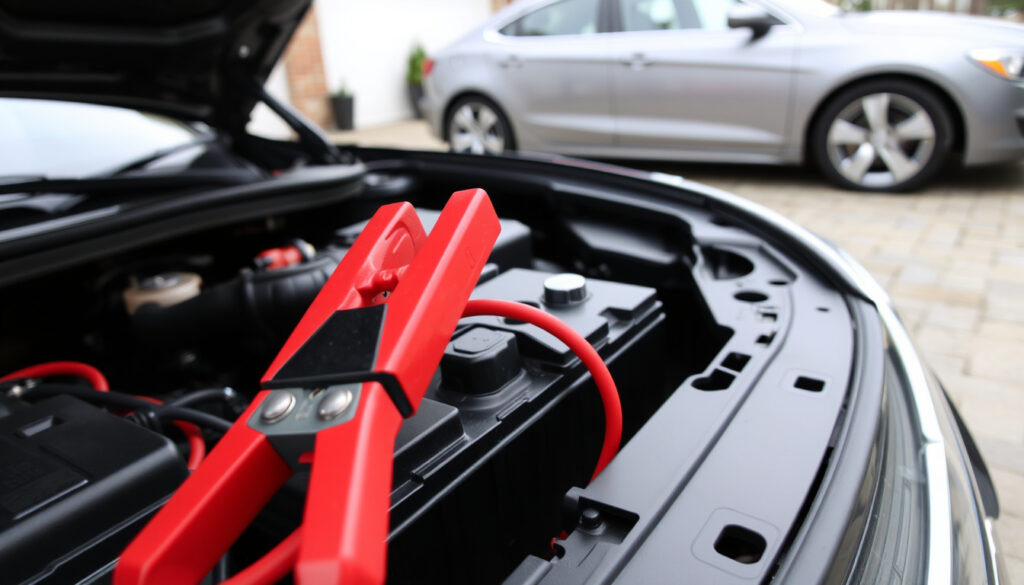
How to Use Jump Leads Correctly: Step-by-Step Guide
Few things bring a sudden halt to your day like a car that won’t start, but a set of jumper cables and a willing neighbour can often get you back on the road if you know the correct connection order — backed by advice from roadside assistance experts.
Cars in U.S. with battery failure annually: over 30 million (AAA) ·
Drivers who incorrectly connect jumper cables: nearly 40% (RAC survey) ·
Average cost of a battery replacement: $200–$300 (AAA) ·
Most common mistake: connecting negative to negative terminal (Halfords)
Quick snapshot
- Red always connects to positive first (AAA Northern California)
- Black last connection must be to engine ground (Start Rescue)
- Reverse order for disconnection (Start Rescue)
- Turn off both engines before connecting (AAA Northern California)
- The connection order in some UK guides differs from the standard AAA order (Gumtree)
- The optimal charge time may be as short as 3 minutes according to some forum advice (350z-UK forum)
- Some guidance recommends waiting about three minutes after connecting cables before starting the donor engine (350z-UK forum)
- The exact location of the ground connection point varies by vehicle and should be away from fuel lines and moving parts (Teagasc)
- Connect cables: 2–3 minutes (Start Rescue)
- Charge time: 5–10 minutes (Start Rescue)
- Post-jump drive: 20–45 minutes (Northeast Post)
- Keep dead car running for 20 minutes (Northeast Post)
- Drive to recharge battery (Northeast Post)
Six key facts, one pattern: the connection order is critical, and the final ground clamp is the most common point of error.
| Fact | Value |
|---|---|
| Number of steps in correct order | 6 (four connections + start + removal) |
| Risk of spark if black is connected to dead battery negative | Potential hydrogen explosion (Start Rescue) |
| Average time donor car should run before trying dead car | 5 minutes |
| Number of vehicles in U.S. requiring jump start per year | Over 30 million (AAA Northern California) |
| Recommended jumper cable gauge | 4–6 gauge for most cars (Start Rescue) |
| Safety precaution | Wear safety goggles (Start Rescue) |
What is the correct order to attach jumper cables?
The correct order prevents sparks near the battery, where hydrogen gas can accumulate. Follow these six steps exactly.
Prepare both cars
- Park the cars close enough so the cables reach, but do not let them touch. Turn off both engines, set parking brakes, and put transmissions in Park or neutral (Start Rescue, breakdown provider).
- Identify the positive (+) and negative (−) terminals on both batteries. The positive terminal is usually red and marked with a plus symbol.
The implication: taking two minutes to prepare reduces the chance of a dangerous spark.
Connect red lead to dead battery positive
- Attach one red clamp to the positive terminal of the dead battery. Make sure it has a firm grip on the metal post.
Why this matters: the red cable carries the positive charge, and connecting it first ensures the circuit is built safely.
Connect other red end to good battery positive
- Connect the other red clamp to the positive terminal of the donor battery.
Connect black lead to good battery negative
- Attach the black clamp to the negative terminal of the donor battery.
Connect black clamp to engine ground on dead car
- This is the critical step: do not connect the final black clamp to the dead battery’s negative terminal. Instead, clamp it to a clean, unpainted metal surface on the engine block or chassis of the dead car, away from the battery and moving parts (Teagasc, agricultural authority).
- If the final connection is made directly to the dead battery negative, a spark can ignite hydrogen gas emitted from the battery, potentially causing an explosion (Start Rescue, breakdown provider).
The trade-off: connecting to ground instead of the negative terminal is a small extra step that eliminates a major explosion risk.
The final black clamp must go to bare metal, not the battery terminal. This single rule prevents the most common and dangerous mistake in jump-starting.
The implication: this precise order is the only safe way to jump-start without risking an explosion.
Which jumper leads do you put on first?
Connection priority is about building a safe electrical path. The order is always: red first, black second.
Red on positive terminals first
- Connect red to the dead battery positive first, then to the donor battery positive. This ensures the positive circuit is established before the negative side is grounded.
Black on negative terminals
- Connect black to the donor battery negative, then to the engine ground on the dead car. The final connection to ground completes the circuit and should be made last.
Order of removal is reverse of connection
- When removing cables, start with the black clamp from the engine ground, then the black clamp from the donor battery, then the red clamp from the donor battery, and finally the red clamp from the dead battery (Start Rescue, breakdown provider).
The pattern: red first, red last — the positive cable is always the first on and last off, keeping the circuit safe.
What are common mistakes when jump-starting?
Even experienced drivers make errors. Here are the most frequent ones, backed by roadside assistance data.
Connecting black to dead battery negative instead of ground
- This is the most common mistake, cited by nearly all major sources. The RAC warns that it can cause a spark near the battery, igniting explosive hydrogen gas.
Cables touching each other while connected
- If the red and black clamps touch while both are attached to batteries, a short circuit can occur, damaging the cables or the vehicles’ electronics. Keep the clamps separated and never let the metal ends touch.
Starting donor car with cables already attached incorrectly
- Always make all four connections before starting either engine. Start the donor car first, let it idle for a few minutes, then attempt to start the dead car.
The catch: nearly 40% of drivers make at least one of these errors, according to a RAC survey.
If you’re in a hurry, it’s tempting to skip the ground connection. That’s exactly when the risk of a spark spike is highest. Slow down for safety.
How long to leave jump leads on?
Charge time depends on the dead battery’s state, but a few minutes is usually enough.
Minimum 5 minutes with donor engine running
- After connecting cables, start the donor car and let it idle for at least 5 minutes. This allows the donor alternator to send charge through the cables to the dead battery (AAA Northern California, auto service).
Up to 10 minutes for deeply discharged batteries
- If the dead battery is very low (e.g., interior lights left on overnight), let it charge for up to 10 minutes. Some forum advice suggests waiting about 3 minutes for voltages to equalise before starting the donor engine (350z-UK forum, enthusiast community).
Rev donor engine gently to improve charge transfer
- Increasing the donor engine’s RPM slightly (to about 1,500-2,000) can boost alternator output and speed up the charge. But don’t redline it — gentle revving is enough.
Why this matters: a 5-minute charge is usually sufficient for a typical dead battery, but deep discharges require more time. If the car doesn’t start after 10 minutes, check the connections.
What is the correct way to remove jump leads?
Disconnection order is the reverse of connection. Removing the wrong clamp first can create a spark.
Remove black from ground first
- Unclip the black clamp from the engine ground on the former dead car. This disconnects the ground path and reduces any risk of a spark.
Remove black from good battery
- Then remove the black clamp from the donor battery’s negative terminal.
Remove red from good battery
- Next, remove the red clamp from the donor battery’s positive terminal.
Remove red from dead battery
- Finally, remove the red clamp from the former dead battery’s positive terminal. This is the last clamp to come off.
The pattern: the final clamp removed is the first one attached — red positive on the dead battery. Following this reverse order prevents any accidental short circuits.
Step-by-step guide: how to jump start a car with jumper cables
Here is a condensed, actionable checklist of the entire process.
- Park both cars close but not touching. Turn off engines, set parking brakes, put transmissions in Park/neutral.
- Identify positive (+) and negative (−) terminals on both batteries.
- Connect red clamp to dead battery positive (+).
- Connect other red clamp to donor battery positive (+).
- Connect black clamp to donor battery negative (−).
- Connect final black clamp to a clean, unpainted metal surface on the dead car’s engine block or chassis (not the battery negative terminal).
- Start the donor car and let it idle for 5 minutes. Rev gently to 1,500-2,000 RPM.
- Try to start the dead car. If it doesn’t start, wait another 2-3 minutes and try again.
- Once the dead car starts, let it run for at least 20 minutes.
- Remove cables in reverse order: black from ground, black from donor, red from donor, red from dead battery.
The takeaway: memorise the sequence “red-positive, black-ground” and you’ll never go wrong.
What’s known vs what’s unclear
Confirmed facts
- Red always connects to positive first.
- Black last connection must be to engine ground, not battery negative.
- Reverse order for disconnection.
- Turn off both engines before connecting.
- Donor engine should run before trying the dead car.
What’s unclear
- Exact optimal charge time varies with battery state (some sources say 3 minutes, others 5-10).
- Some modern cars with stop-start systems or complex electronics require special jump start procedures — always consult the owner manual.
Drivers should memorize the red-positive, black-ground sequence, while remaining cautious about charge time and consulting their owner manual for modern cars.
Expert perspectives on jump-start safety
“Always connect the black clamp to a metal bracket or engine block, never the negative battery terminal. That final connection point is where the biggest risk of sparking occurs.”
— RAC breakdown expert, roadside assistance provider
“Connecting the negative lead directly to the dead battery’s negative terminal is the most common cause of sparking and gas ignition. It’s a small mistake with potentially serious consequences.”
— AA technical team, automotive service organisation
Both experts agree: the ground connection is the most critical safety step. The RAC emphasises choosing a metal bracket, while the AA highlights the ignition risk of skipping it.
After the jump: keeping your battery healthy
Once the car starts, don’t just drive off. Let the engine run for at least 20 minutes to allow the alternator to recharge the battery. If possible, drive for 45 minutes at above 1,000 RPM (Northeast Post, motoring guide). Check the battery terminals for corrosion and clean them with a wire brush if needed. For UK drivers, the choice is clear: a 30-minute drive will restore enough charge to start the car again tomorrow, or you risk a repeat breakdown.
For a detailed breakdown of the correct connection order and common pitfalls, see our guide on jump-starting a car safely.
Frequently asked questions
Can I jump start a car in the rain?
Yes, it’s safe as long as you avoid letting water enter the battery cells. The battery itself is sealed, but keep the connections dry. If the battery is cracked or leaking, do not attempt a jump start.
Will jump starting damage my car’s electronics?
Modern cars have sensitive electronics, but a properly executed jump start using quality cables should not cause damage. The risk increases if you connect cables in the wrong order or if the donor car has a significantly higher voltage (rare).
Do I need to rev the donor car while jump starting?
Gently revving the donor car to 1,500-2,000 RPM can help the alternator deliver more charge. It’s not strictly necessary, but it can speed up the process, especially for a deeply discharged battery.
How can I tell if my car battery is dead vs something else?
If the dashboard lights come on but the engine doesn’t crank, the battery likely has enough power for accessories but not for the starter. If the lights are dim or the car is completely silent, the battery is probably dead. A clicking sound when turning the key often indicates a low battery. If the engine cranks slowly but doesn’t start, the issue may be fuel or ignition, not the battery.
Can I use jumper cables on a hybrid or electric car?
Most hybrids and EVs have a 12V battery for auxiliary systems, and you can jump start that battery using standard cables. However, you should never attempt to jump start the high-voltage traction battery. Consult the owner manual for the specific location of the 12V battery.
What should I do if the jump start doesn’t work?
Check the connections: ensure the clamps are gripping metal, not plastic or paint. Try waiting longer (up to 10 minutes) with the donor car running. If the dead car still doesn’t start, the battery may be too old or damaged, or the problem could be the starter motor, alternator, or a blown fuse. Consider calling a breakdown service.
How often should I replace my jumper cables?
Inspect your cables at least once a year. Replace them if the insulation is cracked, the clamps are corroded or broken, or the copper wire is exposed. Quality cables with a 4-6 gauge rating and surge protection can last many years if stored properly.
Related reading
- MG 4 for Sale in Ireland — electric vehicle options that may use different battery systems.
- Toyota Land Cruiser 2025 Price Ireland — a popular SUV with robust battery systems.
More related posts
 What Is a DDoS Attack? Definition, Examples, and Prevention
 Adidas x Liberty London: Models, Colors, Where to Buy
 Hannah John-Kamen: Biography, Ethnicity, Game of Thrones & Movies
 Hamburger SV vs Bayern: Prediction, H2H, and Key Questions
 Dunnes Grocery Prices 2022 vs Today: Cost Breakdown
 Change Gas and Electric: Find Cheapest Supplier in Ireland
 Bike to Work Scheme: How It Works, Savings & Eligibility
 Real Housewives of London: Watch, Season 2, Richest Cast