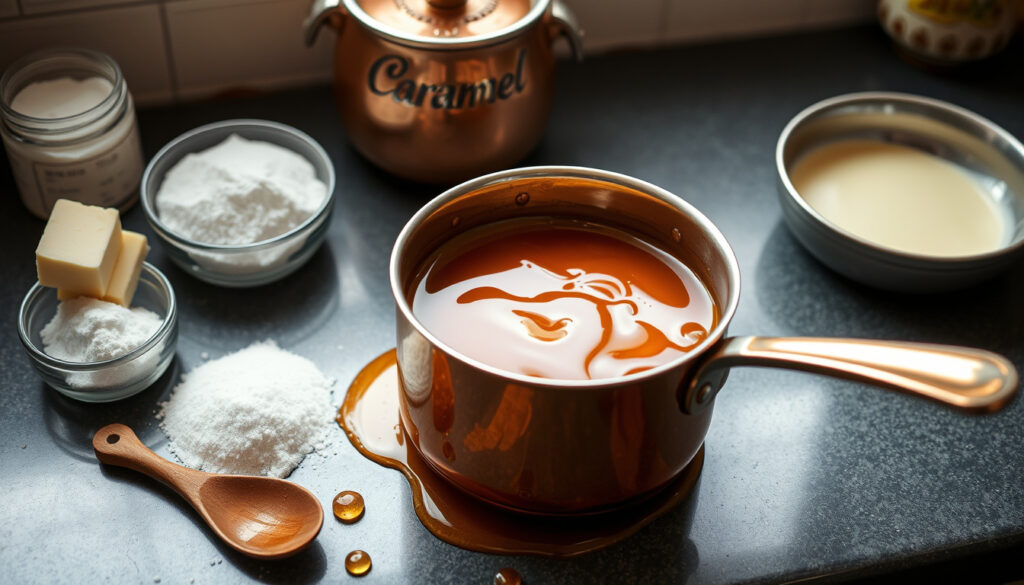
How to Make Caramel: Step-by-Step Guide for Beginners
Anyone who’s watched sugar turn from white crystals into a glossy amber liquid knows the moment feels a little like kitchen alchemy. But making caramel at home is more about temperature control than magic — and once you understand a few key principles, you can produce a rich, buttery sauce every time, whether you want a classic sauce or a vegan twist.
Melting point of sugar: 320°F (160°C) ·
Typical caramel sauce ingredients: 4 (sugar, water, butter, cream) ·
Calories per tablespoon: 52 ·
Common cooking time: 10–15 minutes ·
Caramelization temperature range: 320–350°F (160–177°C)
Quick snapshot
- Sugar, water, butter, cream
- Medium difficulty
- 15 minutes
- Add sea salt after cooking (Kevin Is Cooking)
- Easy variation (Kevin Is Cooking)
- Same time (Kevin Is Cooking)
- Use sweetened condensed milk
- No water needed
- Slow simmer
- Coconut cream, coconut sugar
- Dairy-free
- 15 minutes
Four common caramel variations, each with a different base. The two that matter most for newcomers are the classic wet-method and the dry-method — both produce the same deep caramel flavor but follow different handling rules.
| Fact | Value |
|---|---|
| Caramelization starts at | 320°F (160°C) |
| First recorded caramel recipe | 17th century |
| Calories per tablespoon of typical sauce | 52 |
| Recommended pan material | Heavy-bottomed stainless steel |
How do you make basic caramel?
Step-by-step caramel making process
Making caramel on the stove requires only a few ingredients and a watchful eye. The classic wet method starts with sugar and water in a heavy-bottomed pot. Belly Full (food blog) explains that you combine sugar and water, heat until the sugar dissolves, then cook without stirring until the mixture turns deep gold or amber. This typically takes 8 to 15 minutes over medium heat.
The dry method skips water entirely: Handle the Heat (baking resource) recommends melting sugar alone in a stainless steel pan over medium heat, swirling occasionally until amber, then carefully adding butter and cream.
Using a candy thermometer
- Caramelization begins at 320°F (160°C) — the point where sugar molecules start breaking down.
- The target range for a deep amber sauce is 340–350°F (170–177°C).
- Without a thermometer, watch for a color that resembles a new copper penny.
Testing for doneness
Visual cues are the most reliable test. Kevin Is Cooking (recipe site) notes that a deep golden or amber color signals the caramel is ready for the next step. If you have a thermometer, aim for 340°F (171°C) for a standard sauce.
Home cooks who rely on color alone rather than a timer consistently get better results because sugar can darken quickly in the final minute.
The pattern: visual observation beats timing every time — your eyes are more reliable than the clock when judging doneness.
What are the ingredients in a caramel?
Basic caramel ingredients
Four ingredients form the backbone of almost every caramel sauce: sugar, water, butter, and heavy cream. Tastes Better From Scratch (recipe blog) uses butter, brown sugar, water, and salt cooked over medium-low heat until thickened. Some recipes replace heavy cream with evaporated milk for a lighter texture.
Variations: salted, vanilla, dairy-free
- Salted: Add sea salt after cooking, as Kevin Is Cooking demonstrates.
- Vanilla: Stir in vanilla extract off the heat to preserve its aroma.
- Dairy-free: Use coconut cream and coconut sugar for a vegan version.
The pattern: the base recipe stays the same; you swap one or two ingredients to create a new flavor profile. For beginners, master the basic ratio first before experimenting with substitutions.
What are common mistakes when making caramel?
Why sugar crystallizes
Crystallization happens when sugar molecules clump together instead of staying dissolved. The Spruce Eats (cooking resource) warns against stirring the syrup once it begins boiling — that agitation can seed crystals. To prevent it, use a wet method (water with sugar) and brush down any sugar crystals that form on the sides of the pan with a wet pastry brush, as Belly Full advises.
How to prevent burning
Burnt caramel cannot be fixed. The trick is to use medium heat and watch the color closely. Sugar and Charm (lifestyle blog) prefers low heat for brown-sugar versions to keep the mixture controlled. The trade-off: low heat takes longer but reduces the risk of scorching.
How to fix grainy caramel
If your caramel turns grainy, you can rescue it by adding a splash of water and gently reheating, stirring until the crystals dissolve again. Alternatively, add a pinch of corn syrup or lemon juice at the start to inhibit crystallization.
A grainy texture signals that sugar recrystallized — this happens most often when the pan is too cool or when you stir after the sugar has started boiling.
The implication: understanding why crystallization happens is your best defense against a ruined batch.
How unhealthy is caramel?
Nutritional breakdown
One tablespoon of typical caramel sauce contains about 52 calories and 10 grams of sugar, mostly from added sugar and saturated fat from butter and cream. The American Heart Association recommends limiting added sugar to 36 grams per day for men and 25 grams for women — a single serving of caramel uses up a third of that allowance.
Sugar content and glycemic impact
Caramel’s high sugar content causes a rapid spike in blood glucose, which can be problematic for people with diabetes or insulin resistance. The glycemic index of caramel is estimated to be high (above 70), similar to table sugar.
Healthier alternatives
- Date caramel: Blend Medjool dates with a little water — no added sugar, fiber-rich.
- Coconut sugar caramel: Lower glycemic index than white sugar, but still calorie-dense.
- Reduced-sugar versions: Use a sugar substitute like allulose or monk fruit, though texture may differ.
The implication: caramel is a treat, not a health food. Occasional use in moderation is fine, but daily drizzling adds up quickly.
What is the secret to perfect caramel?
Controlling temperature and color
The secret is patience. Handle the Heat recommends cooking sugar for about 5 to 6 minutes over medium heat until it turns deep golden. For a wet method, Belly Full says it can take 8 to 15 minutes to reach a deep gold color. The key is to cook until the color is one shade lighter than your target — the sugar will continue to darken from residual heat.
Wet vs dry caramel method
Wet method (sugar + water) is more forgiving for beginners because the water slows the temperature rise. Dry method (sugar alone) is faster but requires constant attention. Tastes Better From Scratch uses a brown-sugar wet method that includes stirring constantly — a departure from the no-stir rule for white sugar, but it works because brown sugar has molasses that inhibits crystallization.
Adding butter slowly to avoid splattering
When you add butter and cream to hot sugar, the mixture bubbles up violently. Belly Full cautions that dairy should be added carefully because the caramel can expand rapidly. Room-temperature or warmer cream helps the sauce stay smooth, as Life, Love and Sugar (dessert blog) notes.
The very thing that makes caramel dangerous — molten sugar at 350°F — is also what makes it delicious: the Maillard reaction and caramelization create hundreds of flavor compounds.
The paradox: the same heat that threatens scorching is what creates the complex flavor compounds you’re after.
Step-by-step: How to make caramel sauce
- Prepare your ingredients: Measure 1 cup white sugar, ¼ cup water, 6 tablespoons unsalted butter (cut into pieces), ½ cup heavy cream (room temperature), and a pinch of salt.
- Combine sugar and water in a heavy-bottomed stainless steel saucepan. Stir gently with a fork until the sugar looks like wet sand.
- Heat over medium heat without stirring. Let the mixture come to a boil. If sugar crystals appear on the sides, brush them down with a wet pastry brush.
- Watch for color: After about 8 minutes, the syrup will turn pale gold. Swirl the pan gently to even out the heat. Continue until it reaches a deep amber color (340°F if using a thermometer).
- Remove from heat and immediately add the butter. Whisk until melted and combined.
- Slowly pour in the cream while whisking constantly. The mixture will bubble up — that’s normal. Keep whisking until smooth.
- Add salt and vanilla (if using) and whisk. Let the sauce cool for 10 minutes — it will thicken as it cools.
- Store: Pour into a glass jar and refrigerate for up to two weeks (Handle the Heat recommends up to two weeks; Five Heart Home (recipe site) says up to a month).
What this means: following the dairy-adding order precisely separates a smooth sauce from a separated one.
Confirmed facts and what’s unclear
Confirmed facts
- Sugar melts at 320°F (160°C).
- Adding cream lowers the temperature of caramel.
- Crystallization can be minimized with corn syrup.
- Butter and cream should be added off heat to prevent splattering.
What’s unclear
- Long-term health effects of occasional caramel consumption.
- Optimal temperature for vegan caramel alternatives.
Quotes from experts
Caramel is made by heating sugar, most often with water in a saucepan until the sugar dissolves and a chemical reaction takes place at around 160°C.
Made from just 4 ingredients, this homemade salted caramel is salty, sweet, and irresistibly buttery.
Both sources reinforce the same core truth: simplicity and precision are the hallmarks of good caramel. BBC Good Food’s description of the chemical reaction grounds the process in science, while Sally’s emphasis on the four-ingredient formula makes it approachable for any home cook.
Final takeaway
Making caramel is a test of observation and patience. The difference between a silky sauce and a grainy mess is a matter of a few degrees and a decision not to stir. For the home cook who wants consistent results, the clear choice is to start with the wet method, use a heavy-bottomed pan, and trust your eyes over the clock. The payoff: a versatile sauce that elevates desserts, coffee, and even savory dishes — and the satisfaction of having mastered one of the kitchen’s most rewarding transformations.
natashaskitchen.com, thebakermama.com, lifeloveandsugar.com, bakewithjamie.com, preppykitchen.com
Frequently asked questions
Can I just melt sugar to make caramel?
Yes, you can melt sugar alone (dry method) to make caramel, but it requires careful attention. Use a heavy-bottomed pan over medium heat, swirl the sugar as it melts, and remove it from heat as soon as it turns amber. Be prepared for the temperature to rise quickly — burnt caramel cannot be saved.
Why isn’t my sugar turning into caramel?
Your sugar might not be hot enough, or you may have added too much water. Make sure the heat is medium and the mixture is boiling vigorously. If you used a wet method, boil off the water first — the sugar will only start caramelizing once the temperature exceeds 320°F (160°C).
Is caramel just melted sugar and butter?
Not exactly. Caramel sauce is melted sugar, butter, and cream (or milk). The cream adds richness and a smooth texture that melted sugar and butter alone cannot achieve. A simple caramel candy may be just sugar, butter, and a little milk, but sauce always includes cream.
How do I fix grainy caramel?
Add a tablespoon of water and return the pan to low heat, stirring gently until the crystals dissolve. Then let it come back to a boil without stirring. If that doesn’t work, you can strain the caramel through a fine-mesh sieve to remove the crystals, though the texture may be thinner.
What is the healthiest caramel?
Date caramel (blended dates with water) is the healthiest because it contains no added sugar and provides fiber. For a cooked caramel, coconut sugar versions have a lower glycemic index, but they still contain significant calories. Moderation is key regardless of the type.
Can you make caramel without cream?
Yes, you can use evaporated milk, coconut milk, or even whole milk as a substitute. Tastes Better From Scratch offers a version that uses evaporated milk for a lighter sauce. The result will be less rich but still delicious.
How long does homemade caramel last?
Homemade caramel sauce with dairy lasts up to two weeks in the refrigerator when stored in an airtight container. Five Heart Home reports that some recipes keep for up to a month. Always check for off smells or mold before using.
More related posts
 Cast of Crazy, Stupid, Love: Full Actor & Character Guide
 Spider-Man: Far From Home – Box Office & Streaming Guide
 Women’s Premier Division Standings 2025: SSE Airtricity
 Galway United vs Waterford: Results, H2H, Prediction & Stats
 Barcelona vs Real Betis Standings: Head-to-Head 2025
 Best Home Exercises for Weight Loss and Fitness – Complete Guide
 Dining Table and Chairs Ireland – Top Picks and Buying Guide
 Bayern Munich vs Sporting CP: Confirmed Starting Lineups