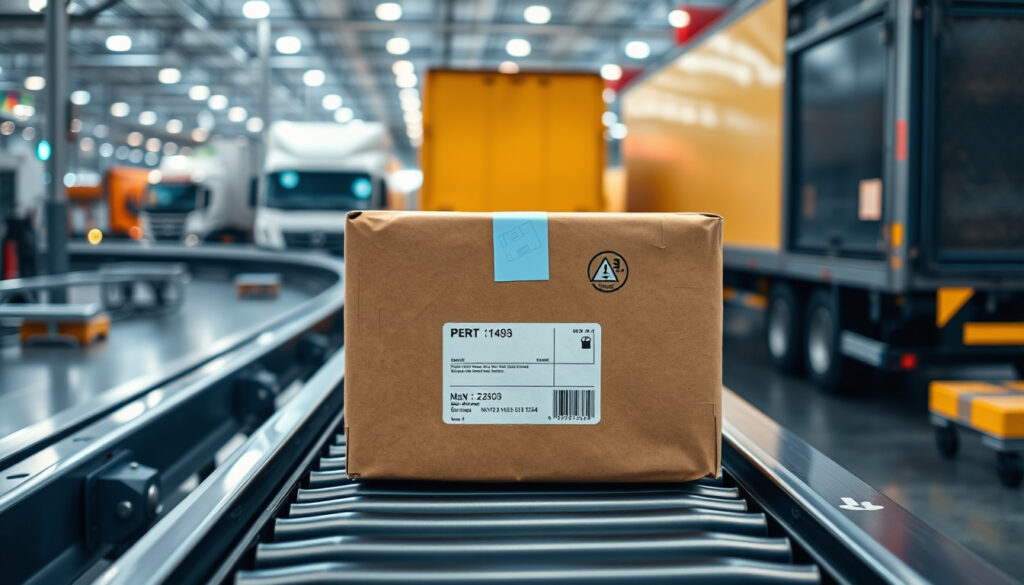
What Does In Transit Mean? USPS, FedEx, and UPS Explained
Few things test patience like a package that sits at “in transit” for days — but the status simply means the package is moving through the carrier’s network between origin and destination, as defined by Collins Dictionary (Collins English Dictionary). This guide explains what that means for USPS, FedEx, and UPS, how long it can last, and what to expect next.
Status meaning: Package is en route between facilities · Typical domestic transit: 2–5 business days (USPS, FedEx, UPS) · Typical international transit: 5–20 business days · Carriers using “in transit”: All major carriers (USPS, FedEx, UPS, DHL, etc.) · Next common status: Out for delivery
Quick snapshot
- FedEx says “in transit” means a package moving within the FedEx network toward delivery; it is a temporary status because the package is not yet at its final destination (FedEx tracking FAQ).
- When exactly the package will arrive depends on route, weather, and sorting delays; tracking updates may not appear until the next scan location; and the exact duration varies (UPS tracking support).
- Carriers can keep the status active for several days, especially on long routes; it usually clears when the package reaches the local delivery facility; refreshing the page does not change transit time (USPS tracking basics).
- The next status is usually “out for delivery” or “delivered”; if a delay exception occurs, the tracker may switch to “delayed” or “customs hold”; USPS adds delivery status details once the item reaches the delivery unit (USPS tracking help).
Eight statuses, one pattern: the wording changes by carrier, but the meaning is the same — your package is still moving, it just isn’t at the door yet.
| Term | What it means |
|---|---|
| In transit | Package is moving through the carrier’s network between origin and destination |
| Domestic duration | Usually 1–10 days, depending on distance and carrier |
| International duration | Usually 5–30 days, including customs |
| Next status | Out for delivery, delayed, customs hold, or delivered |
| USPS category | Moving Through Network |
| FedEx definition | Moving within the FedEx network toward delivery |
| UPS equivalent | On the Way |
| Does it guarantee delivery today? | No |
The pattern: every carrier is trying to tell you the same story — the parcel is somewhere in the network, and the label will only change when the network produces another scan.
What does it mean when something is in transit for delivery?
If you’ve ever opened a tracking page and seen the same “in transit” line for two days, you know why this status confuses people. It’s not stuck — it’s just broad.
What does “in transit” mean for USPS?
- USPS tracks “In Transit” under the “Moving Through Network” category and describes the item as being processed or transported to the delivering Post Office (USPS tracking help).
The practical read: the Postal Service knows where the package is heading, but it hasn’t reached the office that will put it on a carrier’s route.
What does “in transit” mean for FedEx?
- FedEx warns that “in transit” does not necessarily mean the parcel is physically moving in an aircraft or on a truck (FedEx tracking FAQ).
A box can sit in a FedEx hub and still display “in transit” because the system considers it part of an active journey.
What does “in transit” mean for UPS?
- UPS uses its own label, “On the Way,” for a shipment moving through its network toward its destination (UPS tracking support).
Same idea, different wording. The UPS app will say “On the Way” where another carrier would say “in transit.”
What does “in transit” mean for Shein?
- Marketplace orders from Shein usually pass through third-party logistics partners, so the tracking text reflects whichever carrier holds the package. The meaning is the same: the parcel is still in the network and hasn’t been handed to the final delivery courier yet.
What does “in transit” mean for Temu?
- Marketplace orders from Temu usually pass through third-party logistics partners, so the tracking text reflects whichever carrier holds the package. The meaning is the same: the parcel is still in the network and hasn’t been handed to the final delivery courier yet.
What does “in transit” mean for Royal Mail?
- Royal Mail uses “in transit” to indicate the package is moving within its network toward the delivery office, similar to other carriers.
What does “in transit” mean for DHgate?
- Marketplace orders from DHgate usually pass through third-party logistics partners, so the tracking text reflects whichever carrier holds the package. The meaning is the same: the parcel is still in the network and hasn’t been handed to the final delivery courier yet.
What is an intransit?
- An intransit hub is a central sorting facility where packages are sorted and routed. A package marked “in transit” may be at such a hub rather than physically moving. For more details, see the section below.
Brands like Shein, Temu, and DHgate use multiple postal and courier partners, which is why their apps can show “in transit” for days before the last-mile courier picks it up.
“In transit” is not a promise of speed. A static tracking page is not the same as a lost package — it usually means the parcel is waiting for its next scan.
What does “In transit from overseas” mean?
When a package is “in transit from overseas,” it has usually cleared the origin country and is moving toward the destination country. This phase often includes customs, which is one reason the tracking can sit still.
What does “international transit” mean?
- Customs is the most common silent stop: FedEx says a customs delay is one reason a scheduled delivery might be pushed back (FedEx tracking FAQ).
- International tracking often goes quiet because the parcel is between national scan networks.
For a package coming from another country, this is the longest and least visible part of the trip.
How is overseas transit different from domestic transit?
- UPS says packages on long-distance journeys can stay in “On the Way” status for several days (UPS tracking support).
- Domestic scans happen at every regional hub; international scans may only appear when the package enters or exits a country.
Domestic tracking is usually richer in detail; international tracking is quieter but still normal.
Customs is the silent stop in international shipping. A package can sit “in transit from overseas” while it waits for clearance, and no number of refreshes will speed it up.
The implication: silence between countries is normal, especially around customs. Missing updates do not mean the package has vanished.
What does it mean when a shipment is “being processed at the intransit hub”?
A hub is a sorting center, and “being processed at the intransit hub” is the carrier’s way of saying your package just passed through one.
What is an intransit hub?
- An intransit hub is a central facility where packages are sorted and routed, not the destination.
Think of it as a highway interchange: items arrive, get regrouped by zip code, and leave on a different truck or plane.
What does “processed at hub” mean?
- The scan means the package was received at that hub and should move to the next leg of the journey.
- It does not mean the parcel is out for delivery.
This status is common for cross-country shipments and marketplace orders that switch from one carrier to another. What this means: “processed at hub” is a mechanical update, not a problem. The next meaningful scan will usually be the one at the local delivery facility.
Does “in transit” mean it will come today?
No. “In transit” does not mean your package will arrive today. It tells you where the package is, not when it will reach your address.
Will my package arrive today if it says in transit?
- The status can stay active for several days, so a package marked “in transit” in the morning can still be far from the local delivery facility.
- Same-day delivery usually starts with an “out for delivery” scan, not an “in transit” scan.
The status alone is not enough to know whether the driver is close.
What factors determine same-day delivery?
- The package must be at the local delivery facility before the last morning route is loaded.
- It also has to clear any delay exceptions, including customs holds or weather-related interruptions.
If the tracking estimate still says “today” and the status is “in transit,” it may still arrive — but the more reliable signal is “out for delivery.”
An “in transit” package can be sitting in a warehouse, not on a delivery truck. Only an “out for delivery” scan tells you the driver is on the route.
The takeaway: don’t plan your day around an “in transit” scan. Wait for “out for delivery” before you treat it as a delivery-day promise.
What is the next step after in transit?
The next status is usually more useful than “in transit” itself.
What happens after in transit?
- When the package reaches the delivery unit, USPS says additional tracking information appears and the item goes out for delivery (USPS tracking help).
- If the parcel misses a connection, the status can change to “delayed,” “exception,” or “customs hold.”
In an ideal run, the next scan is “delivered.”
What statuses come after in transit?
- Out for delivery
- Delivered
- Delayed or exception
- Available for pickup (for some carrier services)
Which one you see depends on the carrier and how the final miles of the route are handled. The pattern: the next status is more useful than the one you’re staring at now. If the tracker doesn’t move to “out for delivery” by the estimated date, it’s time to call the carrier.
How long does a package stay in transit?
There is no single clock that fits every parcel. Distance, carrier, and customs all change the math.
How long does it take to go from transit to delivery?
- Domestic shipments usually clear the network in a few business days, though rural routes and holiday peaks can stretch that.
- International parcels can spend weeks in transit, especially when customs is involved.
A package that is still in transit after two days is not necessarily delayed.
How many days from transit to delivery?
- Carriers generally commit to a delivery window at the time of shipping; the “in transit” status can remain visible until the day the parcel reaches the local hub.
The important number is the promised delivery date, not the number of scans in the middle.
How long can my package stay in transit?
- A status that stays unchanged for three to five days is usually just a long route or a sorting backlog.
- If it stays unchanged long past the promised window, contact the sender or carrier.
Stale does not mean lost — but it does deserve a closer look. What to watch: time in transit only matters when it exceeds the carrier’s promised window. If the window passes, start a trace with the sender or carrier.
How to track an in-transit package
A tracking page is not a live map. It is a record of the scans the carrier has logged. Here’s how to use it without refreshing every hour.
- Use the carrier’s official tracking page or app, not a third-party aggregator.
- Check the estimated delivery date at the top of the tracking detail — that is the number that matters.
- Sign up for text, email, or push notifications if the carrier offers them.
- Wait for an “out for delivery” scan before expecting the parcel on your doorstep.
- If the promised window passes and the status still has not moved, contact the sender or the carrier and open a trace.
The trade-off: watching tracking too often doesn’t move the package faster, but checking the right status at the right moment saves you a wasted day.
What’s confirmed about “in transit” — and what’s not
Tracking confirms that the package is not at its final destination yet, the status is temporary and should change, and all major carriers use a version of this status that can last for days. What remains unclear is when exactly the package will arrive, whether more tracking updates will appear before delivery, and how long this particular package will stay in transit.
What the official sources say
Two definitions explain the status better than a dozen tracking screenshots.
If people or things are in transit, they are travelling or being taken from one place to another.
Collins English Dictionary
Your item is moving within the USPS network and is on track to be delivered to its final destination.
USPS package tracking FAQ
The takeaway: official wording is intentionally quiet because carriers don’t know your exact street-level arrival time until the last scan.
What this means for your delivery
For anyone waiting on a parcel, the status “in transit” is not the enemy — it’s the network’s way of saying the delivery process is still alive. Use the promised delivery date as your anchor, watch for “out for delivery,” and avoid refreshing the same page every hour. For online shoppers, the choice is clear: check the tracker twice a day at most, or turn a normal shipping delay into an unnecessary headache.
Frequently asked questions
What does “in transit” mean for Amazon packages?
Amazon shipments use the same carrier logic: the parcel has left the fulfillment center and is moving through the carrier’s network. The next useful status appears when a local delivery station scans it.
Can I change my delivery address while the package is in transit?
Sometimes. Most carriers allow a delivery change before the first attempt, but the sender usually has to request it. Contact the seller or the carrier for your specific shipment.
Why is my package in transit for a long time?
Distance, sorting backlogs, weather, and customs are the usual causes. Carriers say a package can remain in transit for several days without a new scan, so a quiet tracker is not automatically a red flag.
What does “in transit to next facility” mean?
It means the package was scanned at one sorting facility and is being routed to another. It is a normal step, not a detour.
Does “in transit” mean the package is lost?
No. It means the opposite — the package is still moving through the network. If the status stays unchanged long after the promised delivery window, start a trace with the sender or carrier.
How can I track my package while it is in transit?
Use the carrier’s official tracking page or app. Most major carriers offer free tracking through their websites or mobile apps.
What should I do if the “in transit” status does not update for several days?
Wait until the promised delivery window has passed, then contact the sender or carrier and ask them to open a trace. A package can remain in transit for several days and still arrive.
More related posts
 Rory St. Clair Gainer: Bio, Job, Age, and Marriage to Rebecca Ferguson
 Best Kaiserschmarrn Near Me: Vienna, London & Insider Tips
 Yes or No Wheel: How It Works and Top Tools for Quick Decisions
 Volkswagen Amarok for Sale in Ireland: Prices, Trims & Where to Buy
 Best Life Insurance Ireland: Compare Quotes, Costs & Providers
 Best Restaurants in Killarney: Local Picks & Pub Food
 How Many Days Till June 4th – Exact Countdown Calculator
 Cast of Wild Cherry TV Series: Full Actors & Characters