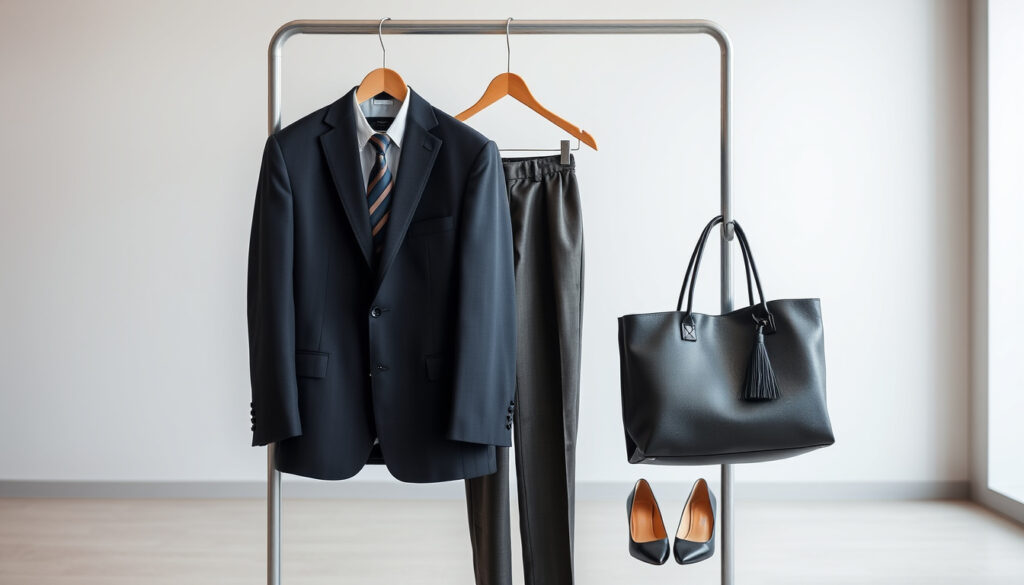
What to Wear to an Interview: Ireland Guide for Men & Women
You’ve landed an interview—now the outfit panic sets in. In Ireland, where corporate culture meets a famously changeable climate, this guide walks through what to wear for every industry and setting so you can walk in feeling prepared, not second-guessing.
Safe choice for office roles: Suit or blazer in neutral colours (NFP Ireland) ·
Corporate interview (men): Dark suit, tie, polished shoes (ProfessionalCV.ie) ·
Corporate interview (women): Blazer, closed-toe shoes, minimal jewellery (ProfessionalCV.ie)
Quick snapshot
- First impressions are formed within seconds (Indeed)
- Neutral colours reduce distraction (Dazl)
- Industry research is critical (ProfessionalCV.ie)
- Exact recruiter penalties for casual dress vary by country (NFP Ireland)
- Effect of specific colours on hiring outcomes lacks large-scale studies (NFP Ireland)
- Follow‑up communication also matters (NFP Ireland)
- Dressing appropriately shows respect for the role (Indeed)
Three dress tiers, one idea: each industry sends its own signal.
| Role / setting | Recommended attire | Source |
|---|---|---|
| Office roles (general) | Suit or blazer in navy, black, grey | NFP Ireland |
| Corporate – men | Dark well‑fitted suit, light shirt, tie, matching leather shoes & belt | ProfessionalCV.ie |
| Corporate – women | Well‑fitted suit or blazer, neutral blouse, closed‑toe shoes, minimal jewellery | ProfessionalCV.ie |
| Creative / tech / media | Business casual: chinos, collared shirt, smart dress, subtle accessories | NFP Ireland |
| Construction / trade | Smart casual: clean shirt, trousers, polished shoes (no overalls unless requested) | Indeed |
| Business casual – men | Slacks with shirt and sweater, or polo with open jacket | NFP Ireland |
| Business casual – women | Formal pants/skirt with blouse, or knee‑length dress | NFP Ireland |
| Casual workplace | Dark jeans, button‑down or polo, cardigan or blazer, closed‑toe flats | Indeed |
| Women – appropriate colours | Black, white, grey, navy, brown, beige, pale blue, pink, light yellow | NFP Ireland |
| Common mistake | Jeans, runners, hoodies – too casual for most interviews | Dazl |
| Women – formal add‑on | Add a blazer to pants/blouse or wear knee‑length skirt/dress | NFP Ireland |
| Men – formal standard | Suit and tie with polished shoes | Dazl |
What are 5 rules for dressing for an interview?
Experts across Irish career services agree on a handful of principles. Here they are, with local nuance.
Rule 1: Research the company culture
- Check the company’s website, LinkedIn, and any dress‑code hints in the job ad. According to Dazl, creative roles allow business casual while corporate settings require a suit.
- If you can, visit the office lobby before the interview to observe what staff wear.
Rule 2: Choose neutral, clean attire
- Navy, black, grey, and white are universally recommended. NFP Ireland adds that women can also wear brown, beige, and subtle pastels.
- Avoid bright patterns or bold logos that distract from your message.
Rule 3: Pay attention to grooming and hygiene
- ProfessionalCV.ie stresses tidy hair, clean nails, and minimal perfume or cologne. Grooming “is part of the first impression,” they note.
- Shoes should be polished; wrinkled clothes can sabotage an otherwise good outfit.
Rule 4: Avoid overly casual or flashy items
- Dazl lists jeans, runners, and hoodies as the top mistakes in Ireland. Even in casual workplaces, Indeed recommends dark jeans and a collared shirt—not ripped denim or trainers.
- Flashy accessories (oversized jewellery, branded belts) undermine professionalism.
Rule 5: Test your outfit before the interview
- Try on the full ensemble at least a day in advance. Sit, stand, and walk to check fit and comfort. ProfessionalCV.ie advises prioritising comfort to stay focused.
- This rule prevents last‑minute wardrobe malfunctions that can rattle your confidence.
The implication: dressing for an interview is a disciplined exercise in projecting readiness before you speak.
What to wear to an interview in Ireland?
Ireland’s workplace culture blends international norms with local quirks. The variable climate means layering is not a style choice but a practicality.
Formal roles: suits and tailored separates
- In finance, law, and corporate headquarters, a suit is standard. Men should wear a dark suit and tie with polished leather shoes, per ProfessionalCV.ie.
- Women can opt for a tailored dress with a blazer or a skirt‑suit. Closed‑toe heels or flats are preferred.
Business casual: smart trousers and blouses
- Many tech, media, and creative companies expect business casual. Dazl says chinos with a collared shirt or a smart dress with subtle accessories work.
- NFP Ireland adds that men can wear slacks with a shirt and sweater, while women can wear formal pants with a blouse.
Seasonal considerations: layering for unpredictable weather
- Ireland’s weather can change in an hour. ProfessionalCV.ie recommends matching clothing to the season: a lightweight trench coat for spring, a wool blazer for winter.
- Layering also helps you adjust to overheated or air‑conditioned offices.
Footwear: polished shoes appropriate for walking
- Because many Irish employees commute via public transport or walk, comfort matters. Dazl suggests polished shoes that are both professional and walkable.
- Avoid brand‑new shoes—break them in before interview day.
What this means: layering is not just about temperature—it’s a strategic tool to match the role’s formality level.
What to wear to an interview male?
Men face a fairly clear spectrum, from full suit to smart casual. The key is reading the industry.
Suit and tie for formal settings
- Finance, law, and large corporate firms demand a dark suit (navy or charcoal), a light‑coloured shirt, a conservative tie, and matching leather shoes and belt (ProfessionalCV.ie).
Blazer with chinos for business casual
- For tech, creative, or sales roles, NFP Ireland suggests slacks with a shirt and sweater, or a blazer without a tie. The jacket elevates the look without the full two‑piece.
Grooming and accessories
- Clean shoes, trimmed facial hair, and neat hair are non‑negotiable. Dazl warns that “runners or hoodies” are immediate red flags even in casual offices.
The catch: even in business casual, avoid sneakers and frayed collars—they undercut the polish.
What to wear to an interview female?
Women have more options, but the core advice is consistent: professional, neutral, and comfortable.
Tailored dress or skirt suit for formal roles
- ProfessionalCV.ie recommends a well‑fitted suit or blazer in neutral colours, with a blouse that avoids low necklines, and a knee‑length skirt or trousers.
Blouse and trousers for business casual
- NFP Ireland says women can wear formal pants with a blouse, or a knee‑length dress, for business‑casual interviews. Adding a blazer pushes the outfit toward formal.
Minimal jewellery and neutral makeup
- Simple jewellery (stud earrings, a thin necklace) and natural makeup keep the focus on your qualifications. “Tidy hair and closed‑toe shoes finish the look,” per ProfessionalCV.ie.
The pattern: a blazer is the universal signal of seriousness, no matter the base outfit.
What are 5 common interview mistakes?
Even strong candidates slip up on attire. Here are the most frequent errors, backed by recruiters.
- Dressing too casually – Jeans, runners, and hoodies head the list (Dazl).
- Overdressing for the role – A full tuxedo at a startup sends the wrong signal. Research the company culture first.
- Poor grooming – Unpolished shoes, wrinkled clothes, and untidy hair damage first impressions (ProfessionalCV.ie).
- Wearing distracting accessories – Large logos, flashy watches, or noisy jewellery can cost you focus.
- Ignoring the dress code in the job description – If the ad says “casual,” dress smart‑casual—not sloppy.
A hiring manager at Indeed once remarked that inappropriate attire can make a candidate forgettable—the opposite of what you want. The implication: dressing right is the easiest part of the interview to control, yet it’s the one most often fumbled.
The pattern: most mistakes come from guessing instead of researching.
How to Finalise Your Interview Outfit: A Step-by-Step Guide
Four steps turn research into a ready‑to‑wear plan.
- Step 1: Decode the dress code. Review the company’s website, LinkedIn, and any dress‑code clues in the job ad. Dazl recommends asking the recruiter if you’re unsure.
- Step 2: Choose your base layers. Select a suit, blazer, or smart separates in neutral colours. ProfessionalCV.ie emphasises that “comfort is key” for staying focused.
- Step 3: Add grooming and accessories. Polish shoes, trim hair, and select minimal accessories. NFP Ireland suggests women avoid bold makeup and men skip cologne.
- Step 4: Do a dress rehearsal. Wear the full outfit for at least 20 minutes, sitting and walking. This prevents surprises on the day—a simple tip that avoids major stress.
The implication: preparation eliminates the last-minute panic that can unravel an interview.
What is a red flag in an interview?
Recruiters cite unprofessional attire as a top red flag—often before a word is spoken.
- Unprofessional attire: Jeans, runners, hoodies—or anything that suggests you didn’t bother. Dazl calls this “the most common mistake.”
- Negative body language: Slouching, avoiding eye contact, or fidgeting. Attire influences posture: well‑fitted clothes help you sit straight.
- Lack of preparation: Showing up in the wrong dress code signals poor research.
- Disrespectful communication: Attire is a form of non‑verbal communication—dressing down can be read as disrespect.
What is the 10 second rule in an interview?
First impressions are formed within the first 10 seconds. Your attire, posture, and grooming all contribute to that initial judgment. Practical tips: stand straight, make eye contact, and dress one notch above the company’s daily dress code (Indeed).
“I’ve seen otherwise great candidates lose the job because they wore something that made them look like they didn’t care. Dressing appropriately shows you respect the opportunity.”
– Hiring manager, Indeed
“For interviews in Ireland, we tell students to dress one step above what they’d wear to work every day. It signals that you’ve made an effort.”
– UL Career Services
“A big red flag is when a candidate’s clothes don’t fit—either too baggy or too tight. It distracts from the conversation.”
– Recruitee red flag analysis
The pattern across these warnings: attire is never neutral—it either builds or erodes trust in the first few seconds.
For a comprehensive breakdown of appropriate dress codes across Irish industries, refer to our detailed Ireland interview attire guide which covers everything from formal to business casual.
Frequently asked questions
Quick answers to common interview‑dress dilemmas, tailored for Ireland.
Can I wear jeans to an interview?
Only if the company explicitly says “casual” and even then, choose dark, clean jeans without rips. Indeed’s advice: dark jeans with a blouse or button‑down works for casual workplaces. Otherwise, opt for trousers or a skirt.
Should I wear a tie to an interview?
Yes for formal roles (finance, law) and no for creative or startup roles. When in doubt, bring the tie in your bag so you can add it after seeing the office vibe.
What color should I wear to an interview?
Neutrals—navy, black, grey, white—are safest. NFP Ireland adds that women can also wear brown, beige, and subtle pastels. Avoid bright reds or neon unless you know the culture.
Is a black suit always appropriate?
Black suits work for funerals and evening events but can feel severe for daytime interviews. Charcoal or navy is more approachable. Reserve black for very formal roles.
How should I dress for a video interview?
Dress from waist up as you would for an in‑person interview. Solid colours (avoid thin stripes that cause moiré) and good lighting matter. Test your camera angle before the call.
What shoes are best for an interview?
Closed‑toe, polished, and comfortable. For women, low heels or flats. For men, leather lace‑ups or loafers. Dazl warns that runners are a common mistake in Ireland.
Can I wear perfume or cologne to an interview?
Skip it or use a very light application. Many offices are scent‑sensitive. ProfessionalCV.ie recommends going fragrance‑free.
For job‑seekers in Ireland, the biggest risk is not dressing too formally but too casually. Research the company, layer for the weather, and test your outfit. The reward: you walk in with one less thing to worry about.
More related posts
 Arsenal vs Crystal Palace: Stats, Line-Ups & How to Watch
 Ireland 2025 Payment Reform: Budget & Welfare Changes
 Volkswagen Amarok for Sale in Ireland: Prices, Trims & Where to Buy
 How to Check Penalty Points Ireland: Official RSA Guide
 Gmail Passwords Exposed in Data Leak: Act Now
 Cambrils Park Resort Prices: All-Inclusive Costs & 2024 Guide
 Map of Northern Ireland: Cities, Counties & Towns Guide
 Love to Dream Swaddle Safety: Are They Safe for Newborns