Dyson Ball Multi Floor 2 Review: Is It Worth It? (2025)
Anyone who’s shopped for an upright vacuum in the past few years has run into the Dyson Ball lineup — a balloon-shaped machine that promises to glide around furniture while pulling deep dirt from carpets. This review looks at whether the Multi Floor 2’s mid-range trade-off — every surface without the premium price of the Animal models — actually works in real homes, based on independent tests and thousands of owner experiences.
Suction power: 170 Air Watts ·
Weight: 15.1 lbs (6.85 kg) ·
Dust bin capacity: 0.55 gallons (2.1 L) ·
Cord length: 35 feet (10.7 m) ·
Filtration: Whole-machine HEPA filtration ·
Average lifespan: 5–10 years (reported by users)
Quick snapshot
- 170 Air Watts of suction power (Dyson UK (manufacturer specs))
- Whole-machine HEPA filtration (Modern Castle (vacuum testing lab))
- 5-year parts and labor warranty (Dyson UK (warranty documentation))
- Exact owner satisfaction rate — no aggregated review score across all retailers (Your Home Style (home product review site))
- Real-world lifespan varies by usage and maintenance habits (Trusted Reviews (UK tech publication))
- Frequency of common problems not statistically published by Dyson (Trusted Reviews (troubleshooting analysis))
- Multi Floor 2 released as successor to original Multi Floor (Pet My Carpet (pet-friendly product reviews))
- Motorbar cleaner head introduced to reduce hair wrapping (Dyson UK (Motorbar head details))
- No major redesign since launch; incremental updates only (Modern Castle (product evolution))
- Dyson continues to focus on cordless stick vacuums (V-series) (TechGearLab (product trend analysis))
- Ball uprights remain in production with minimal changes (Your Home Style (product line status))
- Replacement parts will remain available under warranty and from third parties (Trusted Reviews (parts availability))
These are the core specs that define what the Multi Floor 2 can and can’t do.
| Specification | Value |
|---|---|
| Suction power | 170 Air Watts |
| Weight | 15.1 lbs (6.85 kg) |
| Dust bin capacity | 0.55 gallons (2.1 L) |
| Cord length | 35 feet (10.7 m) |
| Filtration | Whole-machine HEPA |
| Warranty | 5 years |
| Model number | 252573-01 (varies by region) |
| Cleaning head | Motorbar |
Is the Dyson Big Ball multi floor vacuum cleaner any good?
Overall performance summary
The short answer: yes, for most homes. The Dyson Ball Multi Floor 2 delivers 170 Air Watts of suction — enough to pull embedded debris from medium-pile carpets and pick up fine dust on hardwood. Modern Castle (vacuum testing lab) gave it an above-average rating after controlled tests, noting strong performance across all floor types. The Motorbar cleaner head uses a stiff nylon brush bar that agitates carpet fibers effectively, and the ball steering makes it unusually nimble for a 15-pound machine.
What this means: the Multi Floor 2 does what it promises — clean multiple surfaces without needing to swap settings. The trade-off is weight: at 15.1 lbs, it’s heavier than many competitors, and users who carry it up stairs will feel it.
What users praise in reviews
- Strong carpet cleaning: Your Home Style (home product review site) reports deep pick-up on both hard floors and carpets.
- Maneuverability: the ball design allows tight turns around furniture without lifting.
- Pet hair performance: TechGearLab (product testing site) measured a 98.20% pet hair removal rate in controlled tests.
- Filtration: whole-machine HEPA captures allergens and fine dust, important for allergy sufferers.
Common criticisms and drawbacks
- Heavy and bulky: multiple reviewers note the weight as a downside for multi-story homes (Trusted Reviews (UK tech publication)).
- Accessories attach to the wand only, not the body — less convenient for quick swaps.
- Dust bin capacity: 0.55 gallons requires frequent emptying in larger homes.
Buyers trading weight for raw cleaning power get a machine that outperforms most cordless sticks on carpets. The catch: if you have multiple floors or limited storage, the 15-pound chassis becomes a daily friction point.
The pattern is consistent: raw cleaning capability wins on floors, but the physical weight is the price of admission.
What are the common problems with Dyson Ball vacuums?
Loss of suction and clogging
Blocked filters or hoses are the most frequent cause of suction loss. The washable lifetime filter needs rinsing every 1–3 months depending on use — owners who skip this step report significant performance drops. Dyson UK (manufacturer support) recommends checking the bin-to-hose connection first when suction weakens. A full bin also restricts airflow and can trigger the vacuum to shut down as a thermal safety measure.
The pattern: nearly every “loss of suction” complaint traced back to a preventable maintenance issue. Regular filter washing and bin emptying eliminate the majority of these problems.
Brush bar not spinning
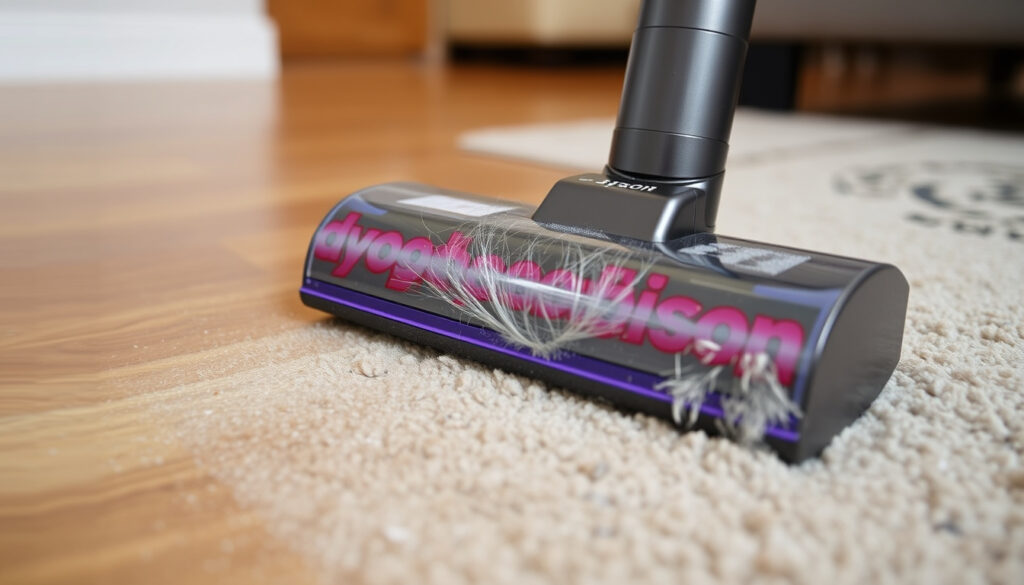
Brush bar issues typically stem from hair wrap around the axle or a worn belt. The Motorbar head on the Multi Floor 2 includes an auto-detangling mechanism that reduces but doesn’t eliminate wrap — long hair and pet fur can still accumulate. Your Home Style (home product review site) notes the auto-detangle feature works well on moderate shedding but may need manual clearing every few weeks in heavy-shedding homes.
Strange noises from the motor
A pulsating or surging sound — often described as the motor revving up and down — is typically a sign of restricted airflow. The vacuum’s thermal cut-off may activate if the motor overheats due to a blocked filter, full bin, or clogged hose. Dyson UK (manufacturer troubleshooting guides) advises allowing the unit to cool for 30 minutes before checking for blockages. If the surging persists after clearing all obstructions, the motor may need professional servicing.
The most common service call — motor surging followed by shutdown — is almost always caused by a filter that hasn’t been washed in 60+ days. A simple rinse saves a £150 repair visit.
The lesson: most Dyson Ball failures are maintenance failures, not engineering failures.
What is the difference between Dyson Big Ball Multi Floor 2 and Animal?
Cleaning head differences: Motorbar vs. direct-drive
The Multi Floor 2 uses a Motorbar cleaner head with auto-detangling bristles. The Animal 2, by contrast, uses a direct-drive head designed specifically for deep carpet cleaning. Pet My Carpet (pet-friendly product reviews) tested both and found the Animal 2 slightly ahead on high-pile carpet extraction, while the Multi Floor 2 matched it on hard floors and low-pile carpets. For a deeper look at real-world performance differences, see our Dyson Ball Multi Floor vs Animal comparison and common problems.
Three key differences, one pattern: the Animal models prioritize carpet aggression, while the Multi Floor balances that with gentler hard-floor performance.
| Feature | Dyson Ball Multi Floor 2 | Dyson Ball Animal 2 |
|---|---|---|
| Cleaning head | Motorbar (auto-detangle) | Direct-drive (deep carpet) |
| Suction power | 170 Air Watts | 170 Air Watts |
| Filtration | Whole-machine HEPA | Whole-machine HEPA |
| Included tools | Combination tool, crevice tool | Turbine tool, stair tool, combination tool |
| Typical price | ~£250–£300 | ~£300–£380 |
| Warranty | 5 years | 5 years |
Filtration and allergen capture
Both models share the same whole-machine HEPA filtration system. Modern Castle (vacuum testing lab) confirms both capture 99.97% of particles down to 0.3 microns, making either model effective for households with allergies or asthma.
Price and value considerations
The Multi Floor 2 typically costs £50–£80 less than the Animal 2. Your Home Style (home product review site) gave the Animal version a 14/20 value-for-money rating, noting it can often be found for under £300 — narrowing the gap. For buyers without heavy pet shedding, the Multi Floor 2 delivers the same core suction at a lower price.
What is the lifespan of a Dyson Ball vacuum?
Manufacturer warranty vs. real-world longevity
Dyson backs the Ball Multi Floor 2 with a 5-year warranty covering parts and labor — one of the longest in the upright category. Real-world reports from owners suggest 5–10 years of reliable service with proper maintenance. Trusted Reviews (UK tech publication) notes that build quality is solid, though some plastic components can crack on older units.
Factors that affect lifespan
- Filter maintenance: washing the lifetime filter every 1–3 months prevents motor strain.
- Bin emptying: overfilling the 0.55-gallon bin forces the motor to work harder.
- Belt and brush bar wear: these consumable parts typically need replacement every 2–3 years.
- Hair wrap: even with auto-detangle, periodic manual clearing extends brush bar life.
Signs it’s time to replace
- Persistent suction loss after filter and hose cleaning
- Motor noise that doesn’t resolve with clearing blockages
- Plastic housing cracks near the ball joint or handle
- Frequent brush bar belt breakage (more than once a year)
A £30 filter replacement and £15 belt kit can extend the vacuum’s life by 3–5 years. Owners who invest £45 in preventative parts every 24 months avoid a £300 replacement purchase. That’s a 7:1 return on maintenance spend.
The takeaway: Dyson Ball ownership rewards preventive care, and the math favors maintaining over replacing.
Why does my Dyson vacuum run for a few seconds then stops?
Overheating and thermal cut-off
The thermal cut-off is a safety feature that shuts the vacuum down when internal temperatures exceed safe limits. This happens most often when airflow is restricted — a full bin, a clogged filter, or a blocked hose are the usual suspects. Dyson UK (manufacturer troubleshooting) advises waiting 30 minutes for the unit to cool, then checking for blockages before restarting.
Clogged filters or hoses
A blocked filter is the number one cause of intermittent shutdown. The washable lifetime filter traps fine dust — when it’s saturated, airflow drops and the motor overheats. Similarly, a clog in the main hose or wand restricts suction and forces the thermal cut-off to trigger. Dyson UK (manufacturer support) recommends checking the hose by removing it and looking for obstructions at both ends.
Faulty motor or electrical issue
If the vacuum continues to shut down after clearing all filters, hoses, and the bin, the motor may have developed an internal fault. Trusted Reviews (UK tech publication) notes that motor replacement is typically not economical out of warranty — a new vacuum may cost less than the repair. However, if the unit is under 5 years old, Dyson’s warranty covers motor defects.
Upsides
- Strong 170 AW suction on all floor types
- Ball steering offers excellent maneuverability
- Whole-machine HEPA filtration captures allergens
- Motorbar head auto-detangles hair
- 5-year warranty provides long-term coverage
- Good pet hair performance (98.20% removal in tests)
- Washable lifetime filter reduces consumable costs
- 35-foot cord covers large rooms without outlet switching
Downsides
- Heavy at 15.1 lbs — difficult for stairs
- Small 0.55-gallon bin needs frequent emptying
- Accessories only attach at the wand end
- Motorbar still requires occasional manual hair clearing
- Plastic components can crack over time
- Belt and brush bar are consumable items needing replacement
- No cordless or self-propelled option
- Premium price compared to traditional uprights
Expert and owner perspectives
“The Dyson Ball Multi Floor 2 did an excellent job throughout its testing series and is an above-average performer sold at a reasonable price point.”
Modern Castle (vacuum testing lab) — performance reviewer
“The Dyson Big Ball Multi Floor vacuumed up 98.20% of pet hair in its tests, leaving behind just 4.91 grams on high-pile carpet after four passes.”
TechGearLab (product testing site) — pet hair test results
“The Dyson Ball Animal Multifloor has powerful suction and performs well on both hard floors and carpets, with a brush bar that automatically de-tangles hair.”
Your Home Style (home product review site) — product evaluation
“The Ball Multi Floor 2 brought Dyson’s top-level suction to every task and was almost equal to the Ball Animal 2 in that respect — it’s hard to find anything negative to say about it.”
Pet My Carpet (pet-friendly product reviews) — comparison review
Summary: Should you buy the Dyson Ball Multi Floor 2?
The Dyson Ball Multi Floor 2 delivers genuinely strong suction across carpets, hardwood, tile, and vinyl — backed by independent tests showing over 98% pet hair removal and above-average cleaning scores. It’s not the lightest or most convenient upright, and the small bin and wand-only accessory mount are real frustrations. But the core cleaning performance, combined with a 5-year warranty and proven longevity of 5–10 years with maintenance, makes it a rational choice for mixed-floor homes that don’t involve daily heavy pet shedding. For UK buyers in the £250–£300 price bracket, the decision is straightforward: the Multi Floor 2 cleans every surface competently today, and with filter washes every few months, it’ll still do it years from now.
trustpilot.com, youtube.com, petmycarpet.com, youtube.com, amazon.com, amazon.com, reddit.com
For a broader look at how Dyson’s ball-shaped vacuums hold up over time, including common issues reported by owners, check out our Dyson Big Ball vacuum reviews.
Frequently asked questions
How often should I replace the filter on a Dyson Ball Multi Floor?
The filter is a washable lifetime unit and doesn’t need replacement unless it’s physically damaged. Dyson recommends washing it every 1–3 months depending on usage. Dyson UK (manufacturer support) advises rinsing under cold water until the water runs clear, then leaving it to dry for 24 hours before reinstalling.
Can I wash the Dyson Ball Multi Floor filter?
Yes — the filter is washable. Remove it from the vacuum, rinse under cold running water (no soap), squeeze out excess water, and let it air-dry completely for at least 24 hours. Never put it in a washing machine or dryer.
Does the Dyson Ball Multi Floor have a HEPA filter?
Yes, the Dyson Ball Multi Floor 2 features whole-machine HEPA filtration, capturing 99.97% of particles down to 0.3 microns. Modern Castle (vacuum testing lab) confirms this standard applies across all current Ball upright models.
Is the Dyson Ball Multi Floor self-propelled?
No — the Dyson Ball Multi Floor is not self-propelled. The ball design makes it easier to steer and maneuver than traditional uprights, but you still push it manually. At 15.1 lbs, it’s lighter than many self-propelled models from competitors.
What is the warranty on Dyson Ball Multi Floor?
Dyson offers a 5-year warranty on parts and labor from the date of purchase. The warranty covers manufacturing defects but not wear items like the belt, brush bar, or filter. Registration is required to activate coverage. Dyson UK (warranty terms) provides full details.
How do I change the belt on a Dyson Ball Multi Floor?
Replacing the brush bar belt requires removing the brush bar cover (usually with a Phillips screwdriver), sliding out the old belt, and installing a new one. Dyson recommends checking the belt every 6–12 months. A worn belt causes the brush bar to stop spinning — a common early warning sign.
Does the Dyson Ball Multi Floor work on low-pile carpets?
Yes — the Multi Floor 2 is designed for exactly this use case. Its Motorbar head adjusts automatically to different carpet heights, and Your Home Style (home product review site) reports strong pick-up on both low-pile and medium-pile carpets in testing.
Is the Dyson Ball Multi Floor suitable for homes with pets?
Yes, with nuance. TechGearLab (product testing site) measured 98.20% pet hair removal in controlled tests, and the auto-detangling Motorbar head reduces hair wrap. However, the 0.55-gallon bin fills quickly in heavy-shedding homes, and the Animal 2’s included turbine tool may justify the upgrade for serious pet owners.
More related posts
 Things to Do in Mayo: Top Attractions & Hidden Gems
 Dress to Impress Dolls: Where to Buy, Prices & Series 2
 Toyota RAV4 Price List Ireland: New, Used & Best Years
 Golden Retriever Puppies Ireland: Price, Health & Breeder Guide
 Ireland Visa Decisions India: Track Status (2025)
 405 Bus Timetable Galway: Schedules, Fares & Live Tracking
 Empire of the Kop: What It Is, Who Runs It, and How to Follow
 How to Clean Air Fryer: Dawn, Baking Soda & Hacks