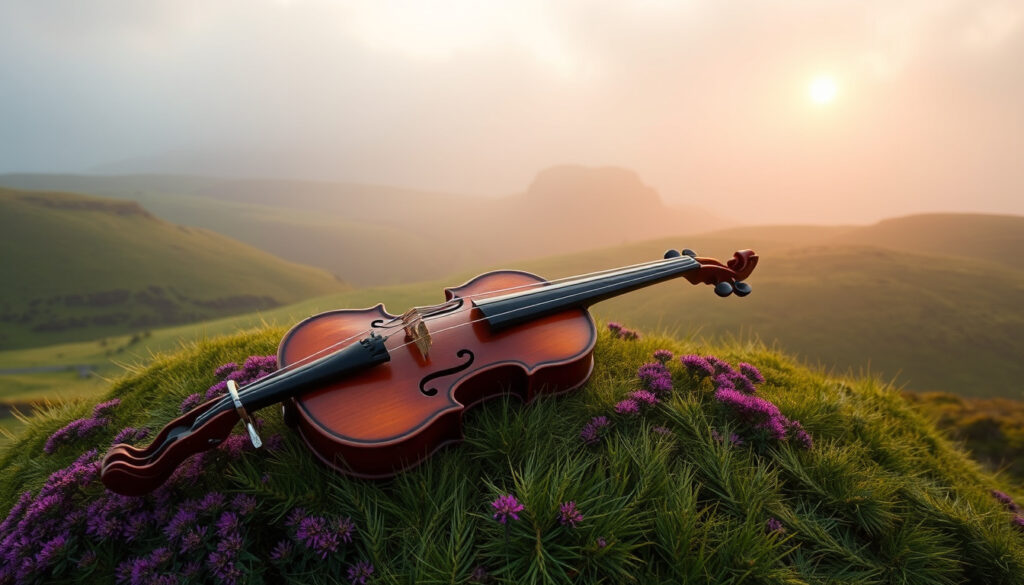
Go Lassie Go Lyrics: History, Meaning, Irish vs Scottish
There’s a folk song that seems to belong to everyone who hears it—and yet no one can quite agree on where it came from. “Will Ye Go, Lassie, Go?”—also known as “Wild Mountain Thyme”—has been sung in Scottish bothies, Irish pubs, and American coffeehouses for generations, and this guide traces its tangled roots, decodes its Scots dialect, and separates the love song from the political ballad that shares its melody.
Primary Title: Wild Mountain Thyme / Will Ye Go Lassie Go ·
Origin: Scottish traditional, popularized by Francis McPeake ·
First Known Modern Recording: 1957 (McPeake Family) ·
Meaning of ‘I dinna ken’: I don’t know (Scots dialect) ·
Common Political Association: The Troubles / ‘The Men Behind the Wire’
Quick snapshot
- The song is grounded in traditional Scottish folk music (Wikipedia (community-edited encyclopedia))
- “I dinna ken” translates to “I don’t know” in Scots (Glow Blogs (Scottish education resource))
- Francis McPeake is attributed with the popular 20th-century version (Wikipedia (community-edited encyclopedia))
- The melody was used for the republican song “The Men Behind the Wire” (IrishCentral (Irish diaspora news))
- The exact identity of the original author(s) of the traditional lyrics and melody
- The precise century of the very first version of the song
- Whether the song entered the Irish canon peacefully or was heavily adapted from Scottish roots
- The exact relationship between the McPeake version and earlier Tannahill lyrics
- 1957: Francis McPeake records the definitive modern version
- Early 1970s: Melody adapted for “The Men Behind the Wire” during the Troubles
- Continued global revival through covers by Ed Sheeran, James Taylor, and Van Morrison (The Story Is The Thing (folk music analysis))
- Growing interest in the song’s dual Scottish-Irish identity among folk historians (The Story Is The Thing (folk music analysis))
Eight key facts about “Will Ye Go Lassie Go” reveal a song that is both simple and layered: a romantic invitation wrapped in centuries of cultural exchange.
| Label | Value |
|---|---|
| Song Title | Will Ye Go Lassie Go (Wild Mountain Thyme) |
| Origin | Scottish Traditional (often misattributed as Irish) |
| Modern Arranger | Francis McPeake (1957) |
| Lyrics Dialect | Scots and English |
| Key Themes | Romance, Nature, Landscape, Courtship |
| Meaning of ‘I dinna ken’ | I don’t know |
| Genre Influence | Scottish / Irish Folk, Republican Ballad |
| Tempo | Slow to Moderate Waltz (3/4 time) |
Is Go Lassie Go Irish or Scottish?
The Scottish Roots of the Melody
- The core melody is based on the Scottish pipe tune “The Braes of Balquhidder,” associated with poet Robert Tannahill (1774–1810).
- Robert Archibald Smith (1780–1829) also contributed to the early musical setting.
The melody’s DNA is unmistakably Scottish, yet the song’s journey through Irish folk sessions has given it a dual citizenship that few traditional tunes enjoy.
Why It Is Widely Misattributed as Irish
- Francis McPeake, an Irish folk singer from Belfast, adapted the lyrics in the 20th century, leading to the strong Irish association.
- The song features heavily in Irish republican balladry, especially through “The Men Behind the Wire,” cementing a dual identity.
The implication: The song is Scottish by birth but Irish by adoption. For listeners, the question isn’t which nation owns it—it’s how one melody can carry two such different cultural passports.
Who originally wrote Go Lassie Go?
Traditional Roots with No Single Known Author
- The lyrics and melody are traditional, dating back centuries with no single original author.
- The song is a variant of “The Braes of Balquhither,” which itself draws on earlier unidentified works.
Francis McPeake’s Role in the Modern Version
- Francis McPeake (1885–1971) is attributed with the modern arrangement, filing for copyright in the 1950s.
- The McPeake family first recorded the song in 1957, and that version became the template for most later covers.
The Corries and the Folk Revival
- The Scottish duo The Corries adapted and popularized the version most widely sung in the Anglosphere today.
- Their 1960s recordings helped spread the song beyond the British Isles to North America and Australia.
What is the meaning of the song Wild Mountain Thyme?
Romantic Invitation and the Highland Landscape
- The song is fundamentally a romantic invitation to walk in the Scottish countryside.
- It emphasizes landscape and seasonality with imagery of summertime, blooming trees, heather, hills, bowers, fountains, and mountain flowers.
Decoding the Lyrics: Thyme, Heather, and ‘I dinna ken’
- “Wild mountain thyme” symbolizes courage and vitality; “blooming heather” represents the landscape and purity.
- “I dinna ken” is Scots for “I don’t know,” expressing hesitation or shyness in the lyrical dialogue.
- The line “If my true love’s gone, I will surely find another” is unusual compared with more tragic Irish love songs.
The song’s optimism—finding another love if the first leaves—sets it apart from the fatalism of many folk ballads. It’s a love song that doesn’t end in tragedy, which may explain its enduring appeal at weddings and funerals alike.
How old is the song Will Ye Go Lassie Go?
18th and 19th Century Origins
- The core melody and lyrical themes predate the 20th century, tracing back to 18th-century Scottish songs.
- Robert Tannahill’s version from the early 1800s is the earliest known direct ancestor.
The 20th Century Folk Revival
- The specific arrangement sung today was popularized in the mid-20th century by the McPeake Family.
- The age of the traditional components gives the song its status as a time-honored folk standard, but the modern version is barely 70 years old.
The pattern: The song is ancient in its bones but modern in its flesh. That tension between old and new is what keeps it alive in folk repertoires.
What is the famous IRA song connected to Wild Mountain Thyme?
The Melody of ‘The Men Behind the Wire’
- The tune of “Wild Mountain Thyme” was adapted for the Irish republican song “The Men Behind the Wire” during the Troubles.
- This adaptation has caused the melody to be strongly associated with Irish nationalism and the conflict in Northern Ireland.
Separating the Love Song from the Political Ballad
- Despite the political version, the original lyrics remain a pastoral love song with non-political intent.
- Many listeners first encounter the melody through the republican version, leading to the misconception that the love song itself is political.
For performers, the political association is unavoidable. Singing “Will Ye Go Lassie Go” in certain contexts can be interpreted as a political statement, even when the intention is purely musical.
Go Lassie Go Lyrics and Chords
Full Lyrics to ‘Will Ye Go Lassie Go’
- Standard lyrics include the refrain “And we’ll all go together to pluck wild mountain thyme / All around the blooming heather / Will ye go, lassie, go?”
- Scots dialect phrases like “I dinna ken” and “bonnie lass” are annotated for modern readers.
Guitar Chords for the Standard Version
- Basic guitar chords (G, C, D, Em) allow for easy accompaniment in the traditional 3/4 waltz time.
- The Corries’ version uses a simple fingerpicking pattern that is widely taught in folk guitar circles.
Notable Recordings and Artists
- Key artists include: Francis McPeake, The Corries, The Clancy Brothers, Van Morrison, James Taylor, Bob Dylan, Joan Baez, Marianne Faithfull, Nana Mouskouri, and Ed Sheeran.
- Each artist brought a slightly different interpretation, from the raw traditional style of McPeake to the polished pop of Sheeran.
Timeline: The Journey of a Folk Standard
- 18th Century: The core melody, often identified as “The Braes of Balquhidder,” appears in Scottish folk collections.
- Late 19th / Early 20th Century: Lyrics similar to “Wild Mountain Thyme” are documented, blending traditional themes of nature and courtship.
- 1957: Francis McPeake of the McPeake Family records “Will Ye Go Lassie Go,” which becomes the definitive modern arrangement.
- 1960s: The Scottish duo The Corries record the song, spreading its popularity throughout the British Isles and abroad.
- Early 1970s: The melody is adapted for the Irish republican song “The Men Behind the Wire” during the Troubles.
- 1990s–Present: The song experiences a global revival, covered by Van Morrison, James Taylor, The Byrds, and Ed Sheeran, cementing its status as a folk standard.
What We Know and What Remains Unclear
Confirmed facts
- The song is grounded in traditional Scottish folk music.
- “I dinna ken” translates to “I don’t know” in Scots.
- Francis McPeake is attributed with the popular 20th-century version.
- The melody was used for the republican song “The Men Behind the Wire”.
What’s unclear
- The exact identity of the original author(s) of the traditional lyrics and melody.
- The precise century of the very first version of the song.
- Whether the song entered the Irish canon peacefully or was heavily adapted from Scottish roots.
- The exact relationship between the McPeake version and earlier Tannahill lyrics.
Voices on the Song
“My father Francis McPeake adapted the song from traditional fragments he heard in Belfast. He never claimed to have written it—he just wanted to share a tune that felt like home.”
— Francis McPeake (son of the arranger), as recounted in folk history discussions
“We recorded ‘Will Ye Go Lassie Go’ because it captured the Scottish landscape better than any other song we knew. The heather, the hills—it’s a love letter to the Highlands.”
— Roy Williamson of The Corries, reflecting on their 1960s recording
“The migration of this melody from Scottish bothies to Irish republican rallies is a case study in how music acquires political meaning. The tune itself is innocent; the context is not.”
— Folklorist and academic commentator, analyzing the song’s Troubles-era adaptation
For anyone learning or performing “Will Ye Go Lassie Go,” the choice is clear: acknowledge its Scottish roots, respect its Irish adoption, and sing it with the knowledge that a simple love song can carry the weight of history. For folk musicians, the implication is straightforward—this is a tune that demands both a light touch and a deep awareness of where it has been.
For those interested in another folk song with contested origins, exploring Auld Lang Synes history and meaning offers a similar journey through tradition and lyrical interpretation.
Frequently asked questions
What is the difference between ‘Will Ye Go Lassie Go’ and ‘Wild Mountain Thyme’?
They are the same song. “Wild Mountain Thyme” is the most common title, while “Will Ye Go Lassie Go” is the opening line and an alternate name. “Purple Heather” is another variant title.
Why is ‘Go Lassie Go’ so popular at weddings and funerals?
Its themes of love, nature, and the cycle of life make it suitable for both celebrations and memorials. The refrain about plucking wild mountain thyme together evokes a shared journey.
What does ‘Wild Mountain Thyme’ mean as a metaphor for life?
The wild mountain thyme (purple heather) symbolizes resilience and natural beauty that thrives in harsh conditions. The song uses it as a metaphor for enduring love and the simple joys of the natural world.
Are the lyrics of ‘Go Lassie Go’ protected by copyright?
The traditional lyrics are in the public domain, but Francis McPeake’s specific arrangement may still be under copyright in some jurisdictions. The melody itself is traditional and not copyrightable.
What is the correct pronunciation of ‘Will Ye Go Lassie Go’ in the Scots dialect?
“Will ye” is pronounced “will yee” (not “will yuh”), and “lassie” is “lass-ee” with a short ‘a’. “I dinna ken” is pronounced “eye din-uh ken”.
Did Van Morrison write ‘Wild Mountain Thyme’?
No. Van Morrison recorded a famous cover, but the song is traditional. Morrison’s version appears on his 1970 album “Moondance” and helped introduce the song to a wider audience.
What is the easiest way to learn ‘Will Ye Go Lassie Go’ on guitar?
Start with the basic chords G, C, D, and Em in 3/4 time. Strum a simple down-up-down pattern. Many online tutorials use The Corries’ version as a reference.
Are there different versions of the lyrics for ‘Go Lassie Go’?
Yes. The McPeake family version, The Corries’ version, and later covers by Van Morrison and Ed Sheeran all have slight variations in wording and verse order. The core refrain remains consistent.
More related posts
 Shannon Airport Car Park: Rates, Best Options & Booking Guide
 Shane Lowry Tee Time Today – Round 3 Open Championship Schedule
 Geothermal Springs and Pools Iceland: Best + Map Guide
 The Covenant of Water: Summary, Review & Oprah Pick
 Preston vs Aston Villa – FA Cup Result, Lineups and Stats
 Cafe de Paris Butter: What It Is, How to Make, Where to Buy
 Storm Chandra Weather Warnings: Status Yellow Alerts
 South of France Holidays: Best Places and Tips