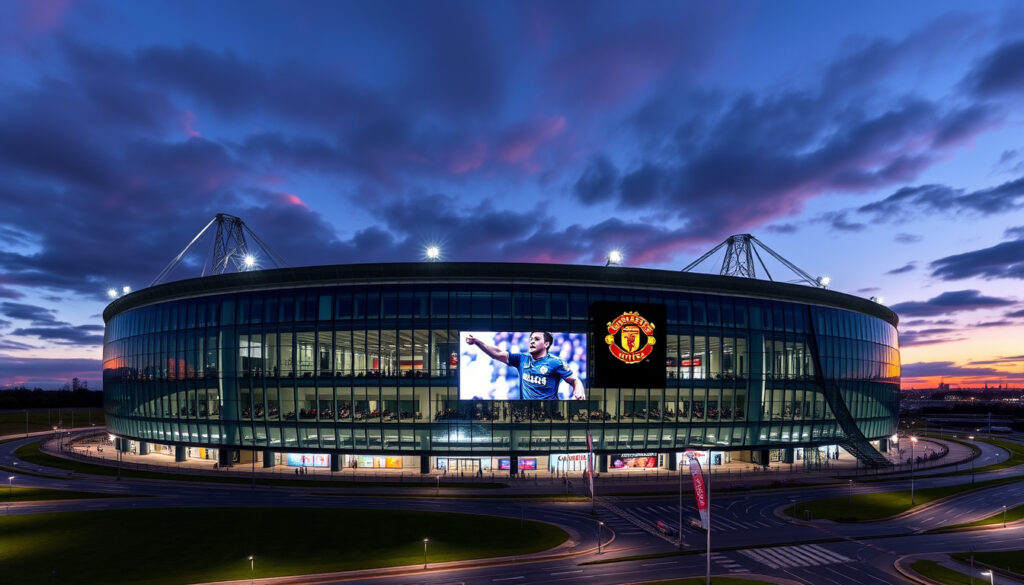
Manchester United New Stadium: Capacity, Cost & Latest
For Manchester United fans, the idea of leaving Old Trafford has always felt like a distant possibility. But in March 2025, the club unveiled plans for a new 100,000-seat stadium that could redefine not just the matchday experience but the entire Trafford area.
Proposed capacity: 100,000 ·
Estimated cost: £2 billion ·
Land area: 370 acres ·
New homes: 15,000 ·
New jobs: 48,000 ·
Rank in Europe: 2nd largest (after Camp Nou)
Quick snapshot
- Capacity: 100,000 (BBC Sport)
- Architect: Foster + Partners (Manchester United official site)
- Cost: £2 billion estimated (BBC Sport)
- Part of 370-acre regeneration (BBC Sport)
- Official name not confirmed (Manchester United official site)
- Exact completion date unknown (Manchester United official site)
- Construction start date not announced (Manchester United official site)
- Whether it will be the biggest in the world (Manchester United official site)
- Plans unveiled: March 2025 (BBC Sport)
- Majority land secured: June 2026 (Sky Sports)
- Location confirmed: July 2026 (The Athletic)
- Consultation ends: September 2026 (BBC Sport)
- Planning permission process (The Athletic)
- Funding finalisation (The Athletic)
- Construction start (TBD) (The Athletic)
- Target opening: 2030-31 season (The Athletic)
| Label | Value |
|---|---|
| Stadium name speculation | New Trafford |
| Capacity | 100,000 |
| Cost | £2 billion (estimated) |
| Location | Old Trafford, Manchester |
| Land area | 370 acres |
| Architect | Foster + Partners |
| New homes | 15,000 |
| New jobs | 48,000 |
| Rank in Europe | 2nd largest (after Camp Nou) |
| Completion date | TBD |
Will Manchester United’s new stadium be called New Trafford?
The name speculation around “New Trafford” has generated significant fan interest. The working title comes directly from the architects’ initial concepts but does not carry official club approval.
What is the origin of the name New Trafford?
The name “New Trafford” first appeared in architectural concepts from Foster + Partners (lead architects), the firm hired to design the stadium. In early renderings, the proposed stadium was labelled “New Trafford Stadium” as a working title. Wikipedia (community-edited encyclopedia) notes that the name is not official but has been widely used in media coverage.
Is New Trafford an official name?
Manchester United has not confirmed the name. The club’s official stadium page still refers to “Old Trafford” as the current home and does not list a new stadium name. Manchester United (official club site) describes the project as a “new stadium at Old Trafford” without a specific name. The naming rights will likely be sold separately, as is common for major venues.
Why is Manchester United building a new stadium?
What are the limitations of Old Trafford?
Old Trafford, opened in 1910, has undergone multiple expansions but now sits at 74,310 capacity. BBC Sport (UK public broadcaster) reports that the stadium needs significant refurbishment, and the club decided a new build was more cost-effective than upgrading an aging structure. The current site also limits further expansion due to adjacent railway lines and residential areas.
What is the Old Trafford regeneration project?
The new stadium is the centerpiece of a much larger plan. BBC Sport states the wider regeneration covers 370 acres and is expected to deliver 15,000 new homes (including affordable housing) and create 48,000 jobs. The project is not just a stadium; it’s a mixed-use development that aims to revitalise the Trafford Wharfside area.
The regeneration could transform one of Manchester’s most deprived wards, but it also raises questions about displacement and affordability. The club’s stated goal of 48,000 jobs is ambitious and will require significant infrastructure investment.
The stadium serves as the catalyst for a broader urban renewal project. The catch: the reported £7 billion annual economic boost is an estimate, and the club has not released detailed feasibility studies.
| Metric | Value | Source |
|---|---|---|
| Land area | 370 acres | BBC Sport |
| New homes | 15,000 | BBC Sport |
| New jobs | 48,000 | BBC Sport |
| Annual economic contribution | £7 billion (estimated) | BBC Sport |
What is the capacity of Manchester United’s new stadium?
How does the capacity compare to Old Trafford?
The proposed 100,000 seats would make the new stadium nearly 35% larger than Old Trafford’s current 74,310. BBC Sport confirms the 100,000 figure from the club’s announcement. The increase means more hospitality, premium seating, and general admission spaces.
How does it compare to other stadiums in Europe?
At 100,000, it would be the second-largest in Europe, behind only Barcelona’s Camp Nou (99,354). Wikipedia (list of stadiums by capacity) shows that Camp Nou currently holds the European record. The new stadium would surpass Wembley (90,000) and the San Siro (75,000).
Bigger capacity means more matchday revenue, but it also requires higher operating costs. The club will need to fill those seats consistently, which may push ticket prices up or force more aggressive marketing.
Will United’s new stadium be the biggest in the world?
What is the biggest stadium in the world?
The largest stadium globally is the Rungrado 1st of May Stadium in North Korea, with a capacity of 150,000. Wikipedia also lists the Motera Stadium in Ahmedabad, India (132,000) and the Melbourne Cricket Ground (100,024) as larger than 100,000. So Manchester United’s proposed stadium would not be the world’s largest.
How does the new stadium compare to other large stadiums?
It would rank among the top 10 globally, but well behind the 150,000-seat behemoths. The question of size often conflates “biggest in Europe” with “biggest in the world.” Sky Sports (major UK sports broadcaster) reported the ranking as second in Europe, not the world.
What is the 150,000 capacity stadium?
Which stadium has a capacity of 150,000?
The Rungrado 1st of May Stadium in Pyongyang, North Korea, is the largest by capacity at 150,000. Wikipedia also notes the Narendra Modi Stadium in Ahmedabad (132,000). These are primarily used for international events and rarely filled for club football.
Is Manchester United building a 150,000-seater?
No. The club’s plans are for a 100,000-capacity stadium, as confirmed by BBC Sport. The confusion may arise from earlier fan proposals or a misunderstanding of the global ranking.
Timeline: From announcement to opening day
The timeline has evolved since the March 2025 unveiling. Here are the key milestones.
- March 2025: Plans unveiled by Manchester United, including 100,000 capacity and £2 billion cost estimate (BBC Sport).
- September 2025: Reports surface that the canopy design could cost £300-400 million (The Athletic (sports news outlet)).
- June 2026: Club secures £550 million funding package to refinance bonds (BBC Sport).
- June 2026: Majority of land acquired for the stadium site (Sky Sports).
- July 2026: Location confirmed as 350 yards from Old Trafford (The Athletic).
- August-September 2026: Public consultation period runs until 22 September (BBC Sport).
- Target opening: 2030-31 season, according to Sir Jim Ratcliffe (The Athletic).
The catch: the land acquisition process has been complicated by the Freightliner site, reportedly valued at £400 million by the owner, far above United’s estimated £50 million (The Athletic).
What’s confirmed and what’s still unclear
What’s confirmed
- 100,000 capacity confirmed by club and multiple sources
- Land secured for the project (majority) as of June 2026
- Foster + Partners as lead architects
- Part of 370-acre regeneration with 15,000 homes and 48,000 jobs
- Second-biggest in Europe after Camp Nou
What’s unclear
- Official name (New Trafford is not confirmed)
- Exact completion date (target 2030-31 but not guaranteed)
- Exact cost (estimates vary; £2 billion is initial figure)
- Whether it will be the biggest in the world (no, but often misreported)
- Construction start date (not yet announced)
Quotes from the key voices
“At 100,000 capacity, Manchester United’s proposed new stadium will rank as the second-biggest in Europe, behind only Barcelona’s Camp Nou.”
Sky Sports
“New Trafford Stadium is the name given by the architects Foster + Partners to a potential new stadium for Manchester United.”
Wikipedia
“The 370 acre regeneration project is expected to deliver around 15,000 new homes, including affordable housing, create 48,000 new jobs locally.”
Manchester United official site
What this means for the future
The Manchester United new stadium is more than a football ground – it’s a bet on the economic revival of Trafford. The club faces a funding gap, land valuation disputes, and the challenge of maintaining matchday revenue during construction. For the local community, the promise of 48,000 jobs and 15,000 homes offers a transformation, but only if the housing is truly affordable and the jobs are accessible. The next 12 months will be decisive: planning permission, funding finalisation, and a final name will shape whether this project becomes a reality or fades into another ambitious plan. For Manchester United fans, the choice is clear: a new home that could define the next century, or the risk of being left behind in a modernising Premier League.
Related reading: Manchester United new stadium location confirmed
bbc.com, bbc.com, bbc.com, theguardian.com, bbc.com, skysports.com
Frequently asked questions
How many seats will the new stadium have?
The proposed capacity is 100,000 seats, as confirmed by the club and multiple sources including BBC Sport.
Will the new stadium have a retractable roof?
No official details have been released about a retractable roof. The canopy design, estimated at £300-400 million, is largely aesthetic and intended to provide cover around fan zones, not a full roof (The Athletic).
What is the exact cost of the new stadium?
The club’s initial estimate is £2 billion, but the final cost could rise depending on land acquisition, design changes, and construction inflation (BBC Sport).
Is the new stadium part of the Old Trafford regeneration?
Yes, the stadium is the anchor of a 370-acre regeneration project that includes 15,000 homes and 48,000 jobs (BBC Sport).
When will construction begin?
A start date has not been announced. The club is currently in the land acquisition and consultation phase, aiming for a 2030-31 opening (The Athletic).
What will happen to Old Trafford after the new stadium is built?
The club has not confirmed plans for Old Trafford. It may be redeveloped for other uses, such as a museum, community space, or sold for redevelopment.
Who is funding the new stadium?
Funding sources include a £550m bond refinancing package secured in June 2026 (BBC Sport) and likely a mixture of club revenue, debt, and potential naming rights.
How will the new stadium affect local traffic?
Traffic impact studies are part of the planning consultation. The project includes infrastructure improvements, but detailed transport plans have not been published.
More related posts
 Wunmi Mosaku Movies and TV Shows: Complete Filmography
 100 GBP to EUR: Live Rate, Fees & How to Convert
 When is the Ballon d’Or 2025? Ceremony Date, Time & Venue
 How to Install Fonts on Windows 11 and 10 (Complete Guide)
 KPop Demon Hunters Toys: Where to Buy
 Vodafone Top Up Online: Prepaid & Data Guide for Ireland