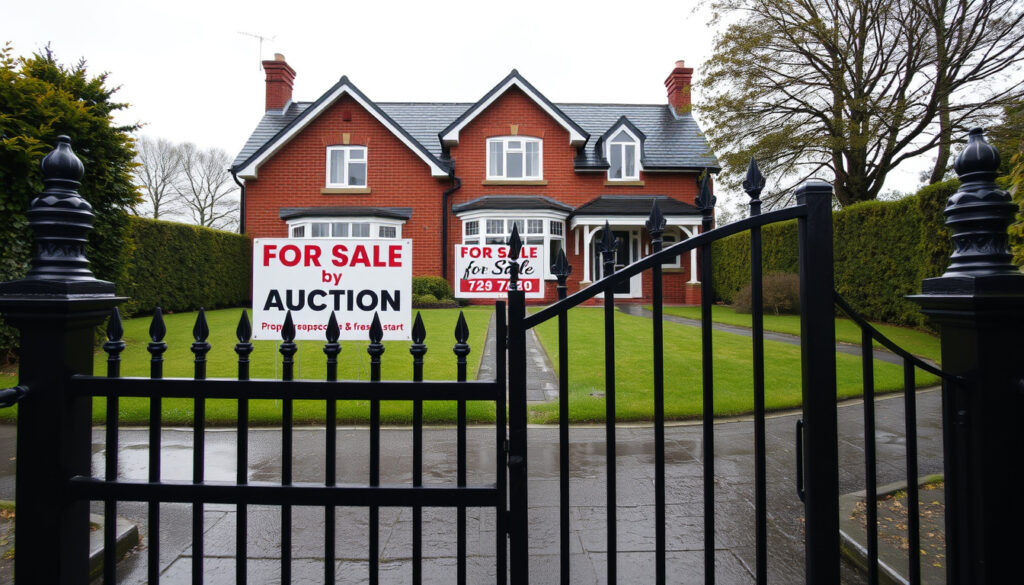
Repossessed Houses for Sale in Ireland: Buy at Auction
More than 60,000 vacant homes sit across Ireland, according to CSO data, yet most buyers never find the best deals because they don’t know where repossessed properties are listed. This guide walks through how to find those listings, what deposit you’ll need, and the legal steps that separate a bargain from a costly mistake.
Vacant dwellings in Ireland (CSO 2022): 62,000 ·
Typical deposit for property auction in Ireland: 10% of purchase price ·
Estimated annual repossessed property sales (2023): ~500 ·
Auction platforms commonly used in Ireland: BidX1, MyHome.ie, Offr.io, Youbid.ie
Quick snapshot
- Repossessed houses are sold through auction platforms (Citizens Information (state guidance))
- Standard auction deposit in Ireland is 10% (Lanigan Clarke (solicitors’ guide))
- Over 60,000 vacant homes exist (Central Statistics Office (census data))
- Exact number of repossessed homes sold annually – no public central register
- Future house price movements – depend on interest rates and supply
- How many repossessed houses are bought by investors vs. first-time buyers
- Repossessed homes typically reach auction within weeks of a court order (Citizens Information)
- Most auctions now take place online, with listings appearing 2–4 weeks ahead (Keenan Auctioneers (auction house))
- Vacant Property Refurbishment Grant now available for purchase-to-renovate buyers (Gov.ie (housing scheme))
- Online auction platforms like BidX1 and Youbid.ie expanding their repossessed inventory (Gov.ie (housing scheme))
Five key figures capture the landscape for buyers of repossessed property in Ireland right now.
| Fact | Value |
|---|---|
| Total vacant dwellings in Ireland | 62,000 (CSO 2022) |
| Average auction deposit | 10% of purchase price |
| Estimated repossessed sales per year | ~500 (industry estimate) |
| Main auction platforms | BidX1, MyHome.ie, Offr.io, Youbid.ie |
| Largest bank repossession list | Permanent TSB (publicly listed) |
How to find houses that have been repossessed?
Searching bank repossession lists
- Banks such as Permanent TSB publicize repossessed properties on their websites and through auction houses (Permanent TSB (bank)).
- Local authority vacant home registers may also list properties that have been repossessed or are at risk of dereliction.
One efficient starting point is the online repossession listings maintained by Ireland’s major lenders. Permanent TSB, for example, runs a dedicated page that flags properties in its possession. Other banks, like AIB and Bank of Ireland, tend to work directly with auctioneers rather than publishing public lists, so calling the lender’s asset recovery team can unearth off-market opportunities.
Using online auction platforms like BidX1
- BidX1, MyHome.ie, Offr.io and Youbid.ie are the main platforms carrying repossessed stock (Truehome (property guides)).
- Most auctions now happen online, with listings appearing 2–4 weeks before the sale date (Keenan Auctioneers).
These platforms let you filter by location, budget, and property type. Each listing includes a legal pack with the title documents and auction terms. Keenan Auctioneers notes that viewing a repossessed property before auction is possible in most cases.
Contacting lenders directly
- Lenders may have properties that haven’t yet been listed publicly.
- A direct approach to the bank’s repossession department can reveal upcoming auctions.
For active buyers, the combination of bank lists and online auction platforms provides enough visibility to spot opportunities before the crowd. The catch is speed: once a listing goes live, the auction date is often only a few weeks away.
The implication: success depends less on luck and more on having your solicitor, deposit, and ID ready before you start browsing.
How much deposit do you need for an auction house?
Standard deposit requirements for auction properties
- Typically 10% of the purchase price is due on the day of the auction (Lanigan Clarke (solicitors)).
- Some auction houses may require a pre‑registration deposit of up to 10% of your maximum bid before the auction even starts.
Difference between auction and private treaty deposits
- In a private treaty sale, a booking deposit (typically 5–10%) is paid and refundable until contracts are signed.
- At auction, the deposit is non‑refundable immediately after the hammer falls.
Funding the deposit: cash vs. bridging loan
- Most auctioneers require cleared funds – a bank draft or electronic transfer.
- If you don’t have the cash, a short‑term bridging loan can bridge the gap before your mortgage drawdown.
What this means: the auction deposit requirement cuts out any buyer who hasn’t done their financial homework. The trade-off for those who come prepared is less competition from casual bidders.
Where can I find abandoned houses in Ireland?
Rural abandoned properties
- Rural regions, especially in the west and north-west, have the highest concentration of empty dwellings.
- The CSO census data shows over 60,000 vacant homes, with many concentrated in counties like Leitrim, Roscommon, and Mayo.
Urban derelict buildings
- City councils maintain a Derelict Sites Register that lists abandoned properties within their boundaries.
- Dublin, Cork, and Limerick have active registers with properties that may be available for purchase.
Online registers of vacant properties
- The Vacant Home Tax register (Revenue) identifies properties that have been empty for more than 12 months.
- Local authority housing sections sometimes maintain separate lists of vacant social homes.
Many abandoned properties are tied up in probate or title disputes. A derelict house that looks like a bargain may come with a family inheritance feud that takes years to resolve. Legal due diligence is non‑negotiable.
Why this matters: the gap between “empty” and “for sale” is where most buyers get stuck. Without a clear title, an abandoned property is unsellable – and often uninsurable.
How to buy abandoned property in Ireland?
Steps to purchase a derelict property
- Identify the property through online registers or auction platforms.
- Engage a solicitor to check the title and confirm the seller has the right to sell.
- Arrange a full structural survey – repossessed and abandoned properties often have hidden issues.
- Secure financing: auction requires a deposit on the day; balance due within 28 days (Lanigan Clarke).
- Attend the auction (online or in person) and bid up to your pre‑set limit.
Funding and grants for renovation
- The Vacant Property Refurbishment Grant offers up to €50,000 for turning a derelict property into a home (Gov.ie (housing schemes)).
- Energy efficiency grants from SEAI can further reduce renovation costs.
Legal considerations for abandoned property
- You must confirm the seller holds a “well‑charging order” (a court order permitting sale) – without it, the sale can be challenged.
- Citizens Information warns that a lender may struggle to sell unless the property has a clear legal path to auction.
The pattern: the cheapest properties on paper are often the most expensive once legal fees, renovation, and holding costs are counted. A realistic budget that doubles the initial purchase price is the safe play.
How many empty houses are there in Ireland?
CSO data on vacant dwellings
- The 2022 census recorded 62,000 vacant homes across the country (Central Statistics Office (census)).
- That figure excludes holiday homes and temporarily vacant properties.
Regional breakdown of empty homes
- Rural counties account for the majority of vacant dwellings – Leitrim has the highest proportion.
- Urban areas like Dublin have far fewer empty homes, partly due to higher demand and denser planning.
Impact on housing supply
- Vacant properties represent a significant but difficult‑to‑mobilise housing resource.
- Government schemes like the Vacant Property Refurbishment Grant aim to bring some of these homes back into use.
“We are seeing more repossessed properties coming through online auction platforms – the process is faster and more transparent than a traditional auction house. Buyers need to register, have proof of funds, and be prepared to act quickly.”
— Auctioneer, BidX1
“Banks are required to handle repossession sales with care, but there is no single public database of repossessed properties. Buyers who work with a solicitor who knows the auction process will have a big advantage.”
— Spokesperson, Irish Banking & Payments Federation
For buyers, the sheer scale of vacancy – 62,000 homes – signals opportunity, but the bottleneck is the legal and financial readiness to close quickly.
perfectproperty.ie, publicpolicyarchive.ie, independent.ie, irelandupdate.net, irishexaminer.com, irelandupdate.net, theguardian.com, professionaladviser.com
Frequently asked questions
Can I get a mortgage for a repossessed house in Ireland?
Yes, but most lenders will require a full structural survey and may impose stricter lending conditions because repossessed properties are sold as-is. You’ll need a formal mortgage approval before auction day.
Are repossessed houses cheaper than regular properties?
Often, but not always. They are typically priced below market value because they are sold in “as-is” condition and the seller (the bank) wants a quick sale. However, renovation costs can eat up the discount.
What is the difference between a repossessed and an abandoned property?
A repossessed property is one the lender has legally taken back after the owner defaulted. An abandoned property is simply empty – it may still be owned by someone (the owner may have moved out but still hold the title). Buying abandoned property can involve title complications that repossessed sales avoid.
How long does an auction for a repossessed house take?
The bidding itself may last only a few minutes. The entire process – from registration to post‑auction legal completion – typically takes 6–8 weeks. Payment of the full balance is due within 28 days of the auction date.
Do I need a solicitor to buy at auction?
Yes, absolutely. You need a solicitor to review the legal pack, verify the seller’s title, and ensure the contract is enforceable. The contract is binding the moment the hammer falls, and pulling out means losing your deposit.
What happens if the property fails to reach the reserve price?
The property is withdrawn from auction. The seller (usually the bank) may then negotiate with the highest bidder privately or relist at a future auction. You can leave your details with the auctioneer to be contacted.
Are repossessed houses sold as-is or can they be viewed?
They are sold as-is, but viewings are typically arranged before the auction. Keenan Auctioneers says most repossessed properties can be viewed by appointment. A survey is strongly recommended before you bid.
Related reading
More related posts
 What Is Chow Mein? Ingredients, Types, Health Facts & Comparisons
 Empire of the Kop: What It Is, Who Runs It, and How to Follow
 Single Arm Dumbbell Row: Muscles, Form & Benefits
 Dunnes Stores The Mill – Address, Hours, Phone, Directions
 Who Will Be the Next Pope? Candidates & Succession
 Ramen Miso Near Me: Best Bowls in Cork & Ireland Guide
 KPop Demon Hunters Toys: Where to Buy
 Toyota RAV4 Price List Ireland: New, Used & Best Years