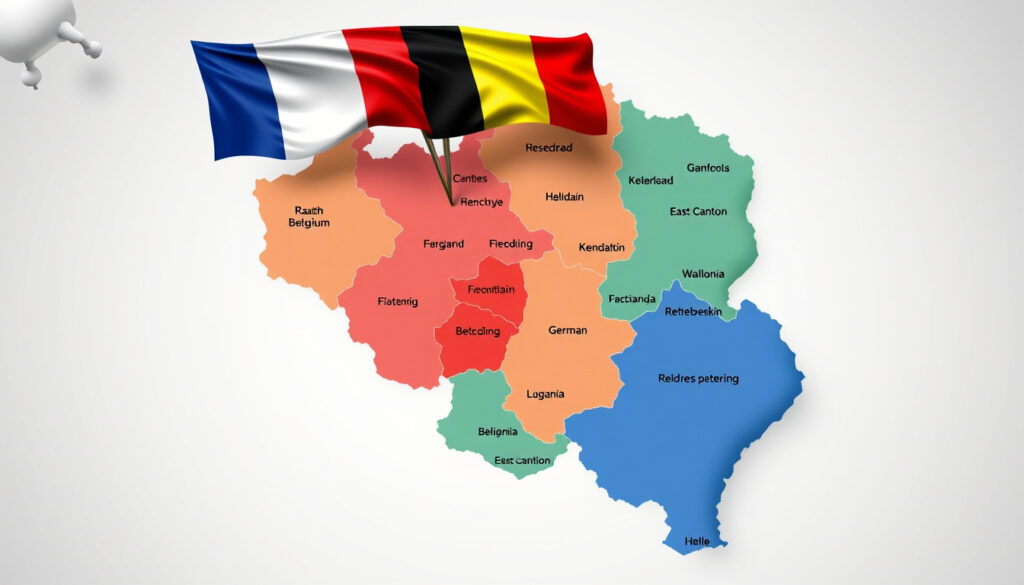
What Language is Spoken in Belgium? Official Languages Guide
Belgium sits at the crossroads of Western Europe, and its language map reflects centuries of cultural overlap. If you’ve ever looked up train tickets to Brussels and wondered whether you’d need French, Dutch, or just English to get by, you’re not alone. This guide breaks down exactly what languages are spoken across Belgium’s regions, from the Dutch-speaking north to the small German-speaking pocket in the east, with practical tips for visitors woven throughout.
Official languages: Dutch, French, German · Dutch speakers: approx. 60% · French speakers: approx. 40% · German speakers: less than 1% · Primary language Flanders: Dutch (Flemish)
Quick snapshot
- Three official languages: Dutch, French, German (Wikipedia – Languages of Belgium)
- Dutch is the most spoken primary language of Belgium (Wikipedia – Languages of Belgium)
- Approximately 59% belong to the Flemish Community (Wikipedia – Languages of Belgium)
- Precise city-by-city English proficiency breakdowns remain unavailable
- Exact speaker counts for regional languages (Walloon, Picard) lack consistent official tallies
- Recent shifts in language usage patterns between generations
- Belgium’s linguistic framework shaped by centuries of Germanic-Romance overlap
- Modern bilingual structure cemented with EU and NATO headquarters in Brussels post-WWII
- Ongoing debates about language rights and minority protections
- Growing EU multilingual policies may influence language education priorities
- English adoption in business settings continues to rise in urban centers
- Regional language preservation efforts gaining traction in Wallonia and Flanders
The table below summarizes the key language statistics that define Belgium’s linguistic landscape.
| Label | Value |
|---|---|
| Official Languages | Dutch, French, German |
| Dutch Speakers | 60% |
| French Speakers | 40% |
| Capital Bilingual | Brussels: Dutch-French |
| English Usage | High in urban areas |
What language does Belgium mostly speak?
Belgium has three official languages: Dutch (Flemish), French, and German. The Kingdom of Belgium recognizes these three languages under its constitutional framework, though their distribution varies dramatically by region (Wikipedia – Languages of Belgium). Belgium’s geography placed it directly between Latin and Germanic Europe, where centuries of overlapping populations created the linguistic fault lines visible today.
Official languages overview
Dutch serves as the sole official language of the Flemish Region in the north, while French dominates the Walloon Region in the south. The German-speaking Community in eastern Belgium (province of Liège) uses German for official administration. Each community governs its own language policy for education, media, and civil affairs (Lein Häuser – Belgium and its languages).
Freedom of language is enshrined in Belgium’s constitution, meaning citizens can communicate with federal authorities in any of the three official languages (Alphatrad UK).
Percentage of speakers
The numbers tell a clear story about Belgian linguistic geography. Dutch is spoken by approximately 60% of Belgium’s population as their primary language, making it the majority tongue. French comes second at approximately 40%, though many French speakers live in overlapping zones or Brussels where bilingualism is common (Babbel Magazine). German speakers account for less than 1% of the population — a small but constitutionally protected community in the east near the German border (Blog of Sunshine).
For visitors planning a trip: learn whether you’re heading to Flanders (Dutch territory), Wallonia (French territory), or Brussels (bilingual territory) before choosing which language to prioritize.
The implication: these aren’t soft boundaries either — road signs, official documents, and school curricula all follow the regional language rules. Belgium’s federal structure means language isn’t just about communication; it’s about political identity.
Are Flemish and Dutch the same thing?
This question comes up constantly, and the answer requires some nuance. Flemish (Belgian-Dutch) is technically a variety of Dutch rather than a separate language — speakers can understand Standard Dutch without difficulty. However, Belgian-Dutch differs from Standard Dutch particularly in pronunciation, vocabulary, and idioms, which can trip up learners who only studied from Dutch textbooks (Babbel Magazine).
Flemish as Dutch dialect
Regional dialects add further texture within Flanders. West Flemish, East Flemish, and Brabantian are Flemish dialects that carry distinct local flavors, though they’re increasingly giving way to a more standardized Flemish in formal settings. The dialect continuum means someone from Antwerp speaks differently than someone from Ghent, yet both are communicating in Dutch (Laoret).
Mutual intelligibility
The mutual intelligibility between Flemish and Standard Dutch works well in practice. A Belgian watching Dutch television or a Dutch person reading Belgian news faces minimal comprehension barriers. The real differences appear in everyday spoken language, informal expressions, and certain food or place name vocabulary.
What this means: If you’re learning Dutch for a trip to Flanders, Standard Dutch will serve you fine — most Flemish speakers switch to Standard Dutch for formal communication and appreciate the effort regardless of dialect subtleties.
What are the languages spoken in Brussels?
Brussels presents a fascinating linguistic paradox. Officially, the Brussels-Capital Region is bilingual with Dutch and French on equal constitutional footing. In practice, French dominates daily life — approximately 50% of inhabitants speak French as their primary language, with an additional 45% using French as a lingua franca (Wikipedia – Languages of Belgium). This makes Brussels one of the most French-speaking cities in the world, despite sitting in the Dutch-speaking region geographically.
Bilingual status
The bilingual status isn’t symbolic. In Brussels, civil servants and teachers are required to be proficient in both Dutch and French, ensuring governmental services are accessible in either language (Lein Häuser – Belgium and its languages). Street signs appear in both languages, and official documents default to bilingual formats.
Dominant language
Brussels has more than 1 million inhabitants, of which 30% are non-Belgians — a factor that skews the linguistic landscape further toward French and accelerates English adoption in international business contexts. The city’s role as seat of the European Union and NATO brings enormous numbers of English-speaking expatriates, making English the unofficial third language for many transactions (Alphatrad UK).
Brussels confounds expectations: it’s officially bilingual, French-dominant in practice, and increasingly English-enabled for international business. Tourists can generally navigate entirely in French or English.
The catch: If you’re trying to learn the local language norms, Brussels offers confusing signals. French will get you far socially, but Dutch remains politically necessary for official interactions and reflects the city’s historical Flemish identity.
Do we speak English in Belgium?
English is not an official language in Belgium, but it is frequently spoken, particularly in urban centers and international contexts. The Belgian Foreign Trade and Development Cooperation office confirms that while English holds no official status, its presence in business and tourism is pervasive (Belgian Foreign Trade and Development Cooperation).
English proficiency levels
Belgium consistently ranks among Europe’s better English-speaking countries, particularly in Brussels, Antwerp, and other major cities. English is taught from an early age in most schools, and the high concentration of EU institutions and multinational corporations creates natural demand for multilingual skills. Proficiency drops noticeably in rural Wallonia and the German-speaking region, where French or German remain dominant.
Regional variations
Flanders tends toward higher English proficiency than Wallonia, partly because Dutch speakers encounter more English-language media and have historically collaborated more closely with Dutch and British business partners. Wallonia’s linguistic ties run more toward France, which historically emphasized French over English. However, younger Walloons increasingly speak English, driven by international entertainment and business demands.
The pattern: English proficiency in Belgium tracks closely with urbanization and international business exposure. Brussels and Flanders lead; rural Wallonia and the German Community lag — though English competency is rising everywhere.
Can I survive with English in Belgium?
The practical answer for most visitors is yes — particularly if you’re sticking to major cities and tourist areas. Brussels, Antwerp, Ghent, and Bruges all have high English penetration in hospitality, retail, and public transport sectors. Hotel staff, restaurant workers, and museum guides typically speak English without hesitation.
Tourist scenarios
In Brussels, you can navigate museums, book train tickets, and order dinner entirely in English without serious friction. Antwerp and Ghent — both in the Dutch-speaking region — offer similar convenience despite their regional language. The further you venture from tourist zones, the less guaranteed English becomes, but most Belgians in service roles have at least basic conversational ability.
Cities vs rural
The divide is real between urban and rural Belgium. Major cities attract international visitors and business regularly enough that English is practically mandatory for customer-facing roles. Smaller towns, rural restaurants, and local government offices may require more creative communication — pointing, gesturing, or pulling out a translation app helps bridge the gap. In the German-speaking region near the eastern border, German remains the expected norm, and English may be less available.
For tourists: English will serve you well in Brussels and Flanders’ major cities. For rural exploration or German-Community interactions, learning three polite phrases in Dutch or French significantly improves the experience.
Practical phrases for Belgium
A few words in the local language go a long way, even if your accent needs work. Belgians appreciate the effort, and it opens doors in smaller establishments where English options narrow.
The table below provides essential phrases in both Dutch (Flemish) and French (Belgian) for common situations.
| Phrase | Dutch (Flemish) | French (Belgian) | Usage context |
|---|---|---|---|
| Hello | Hallo / Goededag | Bonjour | General greeting |
| Thank you | Dank u | Merci / Merci bien | After service |
| Sorry / Excuse me | Sorry / Pardon | Excusez-moi / Pardon | Asking past |
| Please | Alstublieft | S’il vous plaît | Requests |
| Goodbye | Tot ziens | Au revoir | Departing |
| Do you speak English? | Spreekt u Engels? | Parlez-vous anglais? | Verification |
| Water | Water | De l’eau | Ordering |
| The bill, please | De rekening, alstublieft | L’addition, s’il vous plaît | Dining |
Three languages, three polite phrases — the effort matters more than fluency in most Belgian interactions.
Upsides
- Three official languages mean rich cultural diversity across regions
- Bilingual education in Brussels produces highly multilingual citizens
- English widely understood in cities for visitors
- Regional dialects add character without blocking mutual comprehension
- EU institutions create demand for language learning at all levels
Downsides
- Regional boundaries create linguistic politics and identity tensions
- Officially bilingual Brussels is functionally French-dominant
- German-speaking community is small and geographically isolated
- Rural areas may offer limited English, complicating spontaneous travel
- Language requirements for civil service jobs limit employment flexibility
Brussels sits at the crossroads of Western Europe’s linguistic fault lines, drawing its Dutch-speaking hinterland into daily contact with French dominance. The city hosts the European Union and NATO, and its 30% non-Belgian population means English often dominates business meetings — yet constitutionally it must treat French and Dutch as equals. This tension never fully resolves; it just evolves with each generation’s language priorities.
Belgium’s three official languages reflect a nation shaped by geography and history, not ideology alone. For visitors, the practical takeaway is straightforward: match your language to your destination. Dutch for Antwerp and Ghent, French for Wallonia, either for Brussels, and German only if you’re visiting the eastern Liège Province. English covers the gaps in tourist zones, but locals notice — and appreciate — when you try.
Related reading: Official languages of Belgium
Belgium divides linguistically into Dutch-speaking Flanders, French-speaking Wallonia, and German-speaking east, much as this trilingual regional guide details with population breakdowns.
Frequently asked questions
What language is spoken in Belgium Antwerp?
Antwerp, Belgium’s largest city, sits in the Flemish region where Dutch (Flemish) is the official language. Approximately 60% of Belgium’s population speaks Dutch as their primary language, with Antwerp as a major Dutch-speaking urban center. Most Antwerpers understand and speak English, but signage, official business, and daily commerce default to Dutch.
What language is spoken in Belgium Ghent?
Ghent (Gent) is also in the Dutch-speaking Flemish region. Like Antwerp, the city uses Dutch as its primary official language. University cities like Ghent often have higher English proficiency due to international student populations, but local business, government, and daily life operate primarily in Dutch.
What is the most common language spoken in Belgium?
Dutch (specifically Flemish/Belgian-Dutch) is the most common primary language, spoken by approximately 60% of the population according to Babbel Magazine. French comes second at approximately 40%, with German under 1%.
What language is spoken in Brussels?
Brussels is officially bilingual in Dutch and French, but approximately 50% of inhabitants speak French as their primary language, with another 45% using French as a lingua franca, according to Wikipedia – Languages of Belgium. English is common in business and international contexts due to the EU institutions.
How do you say hello in Belgium?
It depends on the region. In Dutch-speaking Flanders, say “Hallo” or “Goededag.” In French-speaking Wallonia, say “Bonjour.” In German-speaking areas near Liège, say “Guten Tag.” In Brussels, either “Hallo” or “Bonjour” works, though French is more commonly heard.
What is “sorry” in Dutch?
In Flemish/Dutch Belgian usage, “sorry” works fine in informal contexts. More formally, “pardon” or “excuseer mij” conveys the same meaning. The word “spijt” (regret) appears in expressions like “Het spijt me” (I’m sorry).
What is “I love you” in Flemish?
“Ik hou van je” is the Flemish/Dutch expression for “I love you.” It follows standard Dutch grammar — the same phrase works across Belgium and the Netherlands. Flemish speakers may use slightly different inflections or informal variations among close friends and family.
More related posts
 Tipperary Crystal Christmas Decorations: Sparkle & Alphabet
 1 Euro to PHP: Live Rate & Best Conversion Tips
 Houses for Sale in Ballyfermot – Prices & Listings
 Five Nights at Freddys – Complete Guide to Games and Movie
 Best Kaiserschmarrn Near Me: Vienna, London & Insider Tips
 Pain on Top of Foot: Causes, Relief, and When to See a Doctor
 Wunmi Mosaku Movies and TV Shows: Complete Filmography
 Champions League Table Men 2025/26: Round of 16 Explained