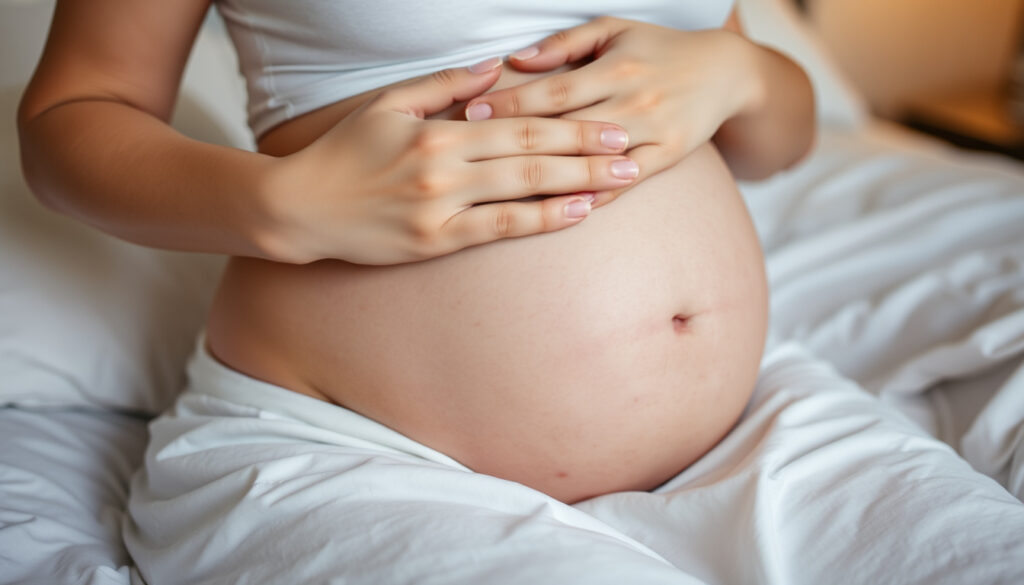
Spotting in Early Pregnancy: What’s Normal, What’s Not
If you’re a few weeks into a pregnancy and see a bit of blood, worry is natural, but spotting is actually one of the most common early-pregnancy occurrences — between 15% and 40% of pregnancies involve some light bleeding, often without any harm to the baby. Knowing the difference between normal spotting and warning signs can take the fear out of the moment.
Prevalence: 15-40% of pregnancies ·
Typical timing: 4-12 weeks gestation ·
Common colors: Pink, red, brown ·
Duration: A few hours to a few days ·
Miscarriage risk: Most spotting does not lead to miscarriage
Quick snapshot
- Spotting is very common in early pregnancy, affecting up to 40% of pregnancies (American College of Obstetricians and Gynecologists)
- Implantation bleeding typically occurs around 4-5 weeks (Hey NHS Trust)
- Light spotting is usually harmless; about half of women with spotting go on to have a normal pregnancy (North Bristol NHS Trust)
- Heavy bleeding with pain requires medical attention (Dudley Group NHS Foundation Trust)
- Exact cause of many spotting episodes remains unknown (North Bristol NHS Trust)
- Long-term outcomes of isolated spotting without other symptoms are not well documented (North Bristol NHS Trust)
- Whether cervical erosion is a frequent source of spotting is uncertain (Hey NHS Trust)
- Hormonal spotting at 6-8 weeks is not precisely defined by guidelines (North Bristol NHS Trust)
- Cervical spotting at 9-12 weeks lacks a clear timeline in clinical literature (North Bristol NHS Trust)
- Implantation bleeding: around 4-5 weeks (Hey NHS Trust)
- Most spotting resolves within a few days (NHS inform)
- Monitor bleeding: if it becomes heavy (soaking a pad in an hour) seek urgent care (Dudley Group NHS Foundation Trust)
- About half of women with spotting will continue to have a healthy pregnancy (North Bristol NHS Trust)
- Contact your doctor for any bleeding to rule out complications (Dudley Group NHS Foundation Trust)
Five key facts about spotting, each supported by clinical guidelines:
| Fact | Value |
|---|---|
| Prevalence | 15% to 40% of early pregnancies (ACOG) |
| Typical onset | 4 to 12 weeks gestation (NHS inform) |
| Duration | A few hours to a few days (Hey NHS Trust) |
| Color range | Pink, red, brown (ACOG) |
| Miscarriage link | Most spotting does not lead to miscarriage; about 50% of women with spotting have normal outcomes (North Bristol NHS Trust) |
What Does Spotting Look Like in Early Pregnancy?
Spotting is light vaginal bleeding that is much lighter than a typical period. It can appear as a few drops of blood on underwear or when you wipe.
What Colors Can Spotting Be?
- Pink: often fresh bleeding, common with implantation
- Red: may indicate active bleeding; could be harmless or a sign of something more
- Brown: older blood that has taken longer to exit the uterus; usually less concerning (ACOG)
Is Brown Spotting Normal?
- Brown spotting is typically old blood and often benign
- It can occur from implantation, cervical irritation, or after a pelvic exam (Hey NHS Trust)
Does Spotting Look Like Light Bleeding?
- Yes, spotting is defined as light bleeding that doesn’t soak a pad or liner
- Heavy bleeding (like a period or heavier) is different and requires evaluation (NHS inform)
The pattern: Color and volume offer immediate clues. Pink or brown spotting without cramps is typically low-risk, while bright red bleeding that gets heavier warrants a call to your provider.
How Many Weeks Pregnant Are You When You Start Spotting?
Spotting can start as early as 4 weeks (implantation) and can continue up to 12 weeks for various reasons.
Spotting by Week: 4, 5, and 6 Weeks
- Week 4-5: often implantation bleeding, lasting a few hours to 2 days (Hey NHS Trust)
- Week 6-8: hormonal changes can cause spotting; usually brown or pink
- Week 9-12: cervical sensitivity or subchorionic hematoma may cause spotting (North Bristol NHS Trust)
How Long Does Spotting Last in Early Pregnancy?
- Typically a few hours to a few days
- Continuous spotting beyond 3 days should be discussed with a doctor (NHS inform)
Is Spotting Common with Twins?
- Twins may increase the chance of spotting due to a larger implantation site and hormonal differences (ACOG)
- But spotting alone is not a reliable indicator of twins
What this means: Timing helps narrow the cause. Spotting at 4 weeks is very different from spotting at 10 weeks, but neither is automatically alarming.
Is Spotting Usual in Early Pregnancy?
Yes — spotting is a common experience, not a rare anomaly.
How Often Is Spotting Normal in Early Pregnancy?
- Up to 25-40% of pregnancies involve some bleeding or spotting (ACOG)
- Most cases resolve without intervention and do not affect the pregnancy outcome (North Bristol NHS Trust)
Is Spotting OK at 4 Weeks Pregnant?
- Yes, light spotting at 4 weeks is often implantation bleeding and considered normal
- If it’s accompanied by severe pain or becomes heavy, seek medical advice (Dudley Group NHS Foundation Trust)
Is Light Pink Spotting at 6 Weeks Normal?
- Light pink spotting at 6 weeks is common and can be caused by hormonal shifts
- It usually resolves on its own within a day or two (Hey NHS Trust)
The trade-off: The statistics are reassuring, but individual circumstances matter. A healthy pregnancy with spotting is far more likely than not.
How Do I Know If I’m Miscarrying or Just Spotting?
Distinguishing between harmless spotting and a miscarriage often depends on the pattern of bleeding, associated pain, and other symptoms.
How to Tell if Spotting Is Miscarriage or Implantation
- Implantation bleeding: light, short (hours to 2 days), no cramps or mild cramps
- Miscarriage bleeding: often heavier, may include clots, accompanied by cramping and tissue passage (ACOG)
How Much Bleeding Is Normal in Early Pregnancy?
- Spotting that does not soak a pad or liner is typical
- Bleeding that requires a pad and doesn’t stop is not considered spotting (NHS inform)
When to Seek Medical Care
- Heavy bleeding (soaking one pad per hour)
- Severe abdominal or shoulder pain
- Fever or chills
- Passing clots or tissue (Dudley Group NHS Foundation Trust)
The catch: About half of women with miscarriage have no prior bleeding at all (ACOG). Spotting alone is not a reliable predictor of pregnancy loss.
Can You Spot and Still Have a Healthy Pregnancy?
Yes — spotting alone does not mean a pregnancy is at risk. Many women who spot deliver healthy babies.
Does Spotting Mean 100% Pregnancy?
- No. Spotting can also occur in non-pregnant cycles (e.g., ovulation spotting).
- A pregnancy test and ultrasound are needed to confirm pregnancy (North Bristol NHS Trust)
When Does Spotting Indicate a Problem?
- When it becomes heavy, persistent, or accompanied by pain
- Ectopic pregnancy can cause spotting plus sharp pelvic pain — occurs in about 1 in 80 pregnancies (North Bristol NHS Trust)
Why this matters: Most spotting is benign, but it’s always worth a call to your OB/GYN for personalized guidance.
What to Do If You Experience Spotting
Steps to take that can help you stay calm and get the right care.
Spotting alone rarely derails a healthy pregnancy. For the vast majority, the best course is to observe, rest, and contact your care team.
- Call your doctor or midwife — they may recommend monitoring or an early ultrasound (ACOG)
- Use a pantyliner to track color and amount
- Avoid intercourse and strenuous activity until the spotting stops
- Note any cramps, pain, or changes in bleeding
- Seek emergency care if bleeding is heavy or painful (Dudley Group NHS Foundation Trust)
Spotting is both incredibly common and deeply unsettling. The data says “don’t panic” — but your instinct says “call someone.” Trust the instinct, but know the odds are on your side.
The pattern: Monitoring and communication are your best tools.
What’s Clear and What’s Still Unclear
Confirmed facts
- Spotting is very common in early pregnancy
- Implantation bleeding occurs around 4-5 weeks (Hey NHS Trust)
- Light spotting is usually harmless
- Heavy bleeding with pain requires urgent attention (Dudley Group NHS Foundation Trust)
What’s still unclear
- Exact cause of many spotting cases remains unknown (North Bristol NHS Trust)
- Long-term outcomes of isolated spotting without other symptoms
- Role of cervical erosion as a frequent source (Hey NHS Trust)
- Whether spotting increases miscarriage risk in the absence of other signs
Expert Perspectives on Spotting
“Spotting is light vaginal bleeding that can happen when you’re pregnant. It is very common and happens in early pregnancy. Spotting is usually harmless.”
— Health Service Executive (Ireland), official patient guidance
“Bleeding or spotting in early pregnancy is very common, reported in up to 40% of early pregnancies.”
— University of Utah Health, reproductive health division
“Between 15% and 25% of all pregnant women experience bleeding or spotting in the first 12 weeks.”
— Cleveland Clinic, obstetrics and gynecology department
The convergence: Across three major health systems, the message is consistent — spotting in early pregnancy is normal for many women and does not predict a bad outcome.
Bottom Line: What This Means for You
Spotting in early pregnancy is common, usually harmless, and not a reliable sign of miscarriage. The evidence from major medical bodies like ACOG and the NHS confirms that most women who spot go on to have healthy pregnancies. For the expecting parent reading this, the decision is clear: reach out to your provider for reassurance, monitor the bleeding, and trust that the odds are overwhelmingly in your favor. Spotting is not a verdict — it’s a signal to pay attention, not a reason to panic.
healthline.com, nbt.nhs.uk, health.ucdavis.edu, elht.nhs.uk, mayoclinic.org, kingstonandrichmond.nhs.uk, my.clevelandclinic.org
Frequently asked questions
Is spotting when I wipe normal at 5 weeks pregnant?
Yes. Light spotting on toilet paper is common at 5 weeks and can be from implantation or hormonal changes. If it’s only visible when wiping and doesn’t soak a pad, it’s usually low-risk (Hey NHS Trust).
Does spotting mean 100% pregnancy?
No. Spotting can occur during ovulation, after intercourse, or from cervical irritation unrelated to pregnancy. A positive pregnancy test or ultrasound confirms pregnancy (ACOG).
Can spotting occur without pain?
Yes. Many women experience painless spotting, especially with implantation bleeding. Painless spotting is usually less concerning than spotting with cramps (NHS inform).
Is spotting a sign of ectopic pregnancy?
Ectopic pregnancy can cause spotting, but it’s almost always accompanied by sharp pelvic or shoulder pain, dizziness, or fainting. Isolated spotting without pain is not typical for ectopic pregnancy (North Bristol NHS Trust).
Should I call my doctor if I spot in early pregnancy?
Yes. It’s always a good idea to inform your OB/GYN or midwife. They may recommend rest, monitoring, or an early ultrasound to rule out complications (Dudley Group NHS Foundation Trust).
What should I do if I see spotting?
Stay calm, put on a pantyliner to track the color and amount, and call your healthcare provider. Avoid sex and heavy lifting until the spotting stops. Seek emergency care if the bleeding becomes heavy or painful (ACOG).
The takeaway: These FAQs address common concerns based on clinical guidance.
More related posts
 Irish Presidential Election Results and Analysis 2025
 How to Jump Start a Car with Leads – Step-by-Step Safety Guide
 Dingle v St Brigids: Result and Match Report
 Who Won the Ryder Cup 2025? Final Score & Results
 Cadbury Christmas Hamper Giveaway – WhatsApp Scam Warning
 Redmi Note 13 Pro Review: Specs, Price, and Is It Worth Buying
 What Is the Mean in Math? Definition, Formula & Examples
 Dyson Ball Multi Floor 2 Review: Is It Worth It? (2025)