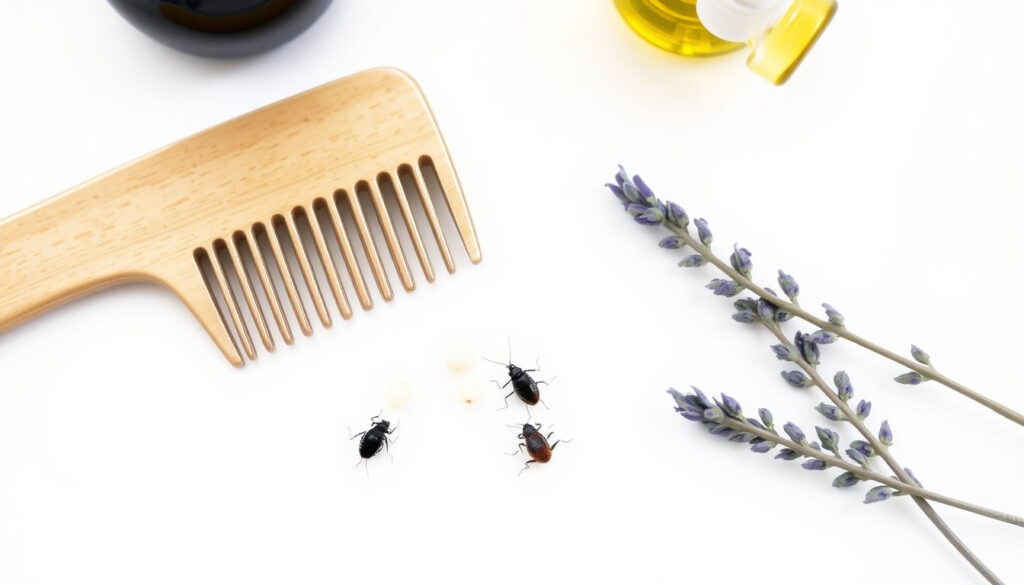
How to Remove Lice: Effective Treatments and Home Remedies
You find a tiny bug crawling on your child’s scalp and suddenly the whole room feels itchy. Before you reach for the hottest shower or panic-buy three different shampoos, here’s the grounded truth: head lice are annoying but harmless, and removing them is a straightforward process — if you follow the right steps. This guide combines CDC-recommended treatments, practical combing techniques, and the science behind what actually kills lice, so you can clear an infestation without the drama.
Annual head lice infestations in U.S. children aged 3–11: 6–12 million (CDC) · Maximum survival time off a human host: 24–48 hours (CDC) · Nit hatching period: 7–10 days after laying · Effectiveness of wet combing when done every 3 days: Reduces live lice by 80–90%
Quick snapshot
- Lice spread only through direct head-to-head contact (NHS (UK national health service))
- OTC shampoos kill live lice but may not kill all eggs (American Academy of Dermatology (professional dermatology association))
- Wet combing with conditioner is an effective non-chemical method (NHS (UK national health service))
- Whether home remedies like mayonnaise or olive oil are effective compared to standard treatments (CDC (U.S. public health agency))
- Whether hot showers have any impact on lice (no evidence they do) (NHS (UK national health service))
- Whether pillowcases require special cleaning beyond normal hot water washing (CDC (U.S. public health agency))
- Day 1: Apply treatment and begin wet combing (CDC (U.S. public health agency))
- Day 4: Second wet combing session (NHS (UK national health service))
- Day 7–10: Second treatment (if needed) and combing (CDC (U.S. public health agency))
- Day 14: Final check to confirm no live lice (NHS (UK national health service))
- Continue combing every 2–3 days for 2–3 weeks after treatment (Cleveland Clinic (leading U.S. hospital))
- Wash bedding and clothing in hot water (CDC (U.S. public health agency))
- Check all household members and treat simultaneously (NHS (UK national health service))
| Attribute | Value |
|---|---|
| Main cause of transmission | Direct head-to-head contact |
| Incubation period for nits | 7–10 days |
| Lifespan of adult louse | 30 days on scalp |
| Recommended treatment frequency | Every 3–4 days for 2 weeks |
The data below summarizes the key facts about head lice transmission, lifespan, and treatment schedule.
What kills lice immediately?
Four treatment categories, one pattern: speed of kill varies, and none are instant against eggs.
| Treatment type | Active ingredient | Kills live lice | Kills eggs | Prescription required |
|---|---|---|---|---|
| OTC shampoo | Permethrin 1% | Yes | Partial | No |
| OTC shampoo | Pyrethrin | Yes | Partial | No |
| Prescription lotion | Ivermectin 0.5% | Yes | Yes (appears to prevent hatching) | Yes |
| Prescription | Spinosad | Yes | Yes | Yes |
| Non-chemical | Wet combing (conditioner + fine comb) | Yes (physical removal) | Yes (physical removal) | No |
Over-the-counter shampoos
- Permethrin and pyrethrin kill live lice by disrupting their nervous system. However, American Academy of Dermatology (professional dermatology association) notes that resistance is growing, and some eggs survive.
- Apply on dry hair, leave on for 10 minutes, then rinse. Do not re-wash hair for 1–2 days.
Prescription treatments
- Ivermectin lotion (0.5%) is approved for ages 6 months and older. CDC (U.S. public health agency) states it kills lice and appears to prevent surviving eggs from hatching.
- Spinosad works quickly and is also approved for children 6 months+. Single application often sufficient.
Home remedies and what science says
- Smothering agents like mayonnaise, olive oil, or butter lack clinical evidence. Mayo Clinic (U.S. medical research center) does not list them as effective.
- No single treatment kills both lice and eggs instantly. That’s why retreatment and combing are essential.
The only way to truly “kill lice immediately” is a two‑pronged attack: a pediculicide that kills adults plus manual nit removal. Relying on a single shampoo or home remedy inevitably leaves eggs behind, guaranteeing a second wave in 7–10 days.
The implication: effective treatment requires combining chemical and mechanical removal.
How to get rid of head lice in 5 minutes?
Wet combing method
- Wet hair, apply plenty of conditioner, and use a fine-toothed nit comb. The NHS (UK national health service) recommends combing from root to tip, wiping the comb after every stroke.
- Combing short hair: about 10 minutes; long or curly hair: 20–30 minutes.
Using a fine-toothed comb
- The Cleveland Clinic (leading U.S. hospital) says nit combs remove lice and nits from the hair shaft. Flea combs for pets also work.
- Repeat combing every 3–4 days for 2 weeks to catch newly hatched nymphs.
What to do if you have only 5 minutes
- 5-minute combing is a start but not a complete treatment. Use it as a stopgap before a full session later that day.
- Apply a fast-acting OTC shampoo first, then comb quickly to remove stunned lice.
The pattern: quick combing can buy time but does not replace the full protocol.
How do I remove lice by myself?
Step-by-step self-treatment
- Apply an OTC lice treatment (permethrin 1% or pyrethrin) to dry hair. Follow package instructions exactly. Cleveland Clinic (leading U.S. hospital) notes that lice are treatable with special shampoos, creams or lotions.
- Comb out dead lice and nits using a fine-toothed comb. The CDC (U.S. public health agency) recommends using a fine comb to remove any dead or remaining live lice.
- Retreat in 7–10 days if you used a non-ovicidal treatment. If using ivermectin, one application may be enough.
- Continue combing every 2–3 days for 2–3 weeks after each treatment (NHS (UK national health service)).
Tools you need
- Fine-toothed nit comb (metal or plastic with very narrow teeth).
- Conditioner to loosen nits.
- Good lighting and magnifying lens if available.
- Paper towels to wipe comb between strokes.
Aftercare and prevention
- Wash bedding, clothing, and combs in hot water (130°F/54°C minimum).
- Vacuum furniture and carpets — do not use insecticide sprays (NHS (UK national health service) warns against using medicated lotions and sprays for prevention).
- Check everyone in the household and treat those with lice on the same day.
Treating yourself saves a trip to the doctor but demands discipline: 2–3 weeks of combing, not just a single shampoo. Skipping the combing step is the reason most reinfestations happen.
What this means: self-treatment is effective only when combined with thorough, repeated combing.
Can lice live on pillows?
Lice survival on inanimate objects
- CDC (U.S. public health agency) states that lice can live up to 48 hours off the scalp. Pillows can harbor lice, but the risk of reinfestation is low.
- Lice need blood meals; they don’t reproduce on bedding.
How long can lice live without a host?
- Adult lice: 24–48 hours. Nits (eggs) can survive up to 10 days off the scalp if not exposed to extreme temperatures.
Laundry and cleaning recommendations
- Wash bedding and clothing in hot water (130°F) and dry on high heat. This kills both lice and nits.
- Soak combs and brushes in hot water (130°F) for 5–10 minutes.
- No need to bag pillows for weeks — standard hot wash is sufficient.
The catch: the low risk from pillows reinforces that direct head contact is the primary concern.
Your first line of defense against head lice is an over-the-counter head lice treatment.
How to remove lice from hair permanently?
Complete treatment plan
- No treatment guarantees permanent immunity. Reinfestation is common without environmental cleaning.
- Effective removal requires killing all lice and nits — that means combining a pediculicide with thorough combing.
- American Academy of Dermatology (professional dermatology association) says two treatments spaced seven to nine days apart often get rid of head lice.
Permanent vs temporary removal
- “Permanent” here means you’ve broken the life cycle and removed all nits. But if you stay in environments with infested people, you can get lice again.
- Shampoos alone may not remove nits; combing is essential.
When to see a doctor
- If OTC treatments fail after two applications, consult a clinician. CDC (U.S. public health agency) warns: if lice seem as active as before 8–12 hours post-treatment, the medicine may not be working.
- Prescription options like ivermectin or spinosad may be needed.
Use a fine comb to remove any dead or remaining live lice from the hair.
— CDC (U.S. public health agency)
Lice are treatable with special shampoos, creams or lotions.
— Cleveland Clinic (leading U.S. hospital)
For any caregiver dealing with a lice outbreak, the choice is clear: combine a proven pediculicide with disciplined wet combing over 2–3 weeks, or risk a repeat infestation that wastes time and money. Anyone who follows the right sequence will succeed.
batleypharmacy.co.uk, baystatehealth.org, cdph.ca.gov, nottinghamshirehealthcare.nhs.uk, npr.org, blackpoolteachinghospitals.nhs.uk, youtube.com, parpeds.com, england.nhs.uk
Frequently asked questions
Can lice jump from person to person?
No. Lice cannot jump or fly. They spread only through direct head-to-head contact. CDC (U.S. public health agency) confirms this.
Do lice prefer clean hair?
No. Lice do not prefer clean or dirty hair; they simply need a human scalp to survive. Infestation has nothing to do with hygiene.
How long do lice live on bedding?
Lice can survive up to 48 hours off the scalp, but the risk of reinfestation from bedding is low. Washing in hot water kills them.
Can you get lice from pets?
No. Head lice are human-specific and cannot live on pets.
What is the best treatment for lice?
There is no single “best” treatment. The most effective approach combines an OTC or prescription pediculicide with repeated wet combing. American Academy of Dermatology (professional dermatology association) offers a guide based on local resistance patterns.
Should I keep my child home from school with lice?
Many schools allow children to stay in school as long as treatment has started. Check your school’s policy. CDC (U.S. public health agency) does not recommend automatic exclusion.
Are lice dangerous to health?
No. Lice are a nuisance but do not transmit disease. They cause itching but no serious health risks.
More related posts
 Jim of the Mills Pub: Authentic Irish Music in Tipperary
 Bridge House Hotel Tullamore – Reviews, Amenities and Guest Guide
 Tipperary Crystal Christmas Decorations: Sparkle & Alphabet
 Foods High in Fibre: Complete Guide to 30g Daily Target
 Vodafone Top Up Online: Prepaid & Data Guide for Ireland
 How Many Points to Win Ryder Cup: Scoring Rules Explained
 What Language is Spoken in Belgium? Official Languages Guide
 Best Home Exercises for Weight Loss and Fitness – Complete Guide