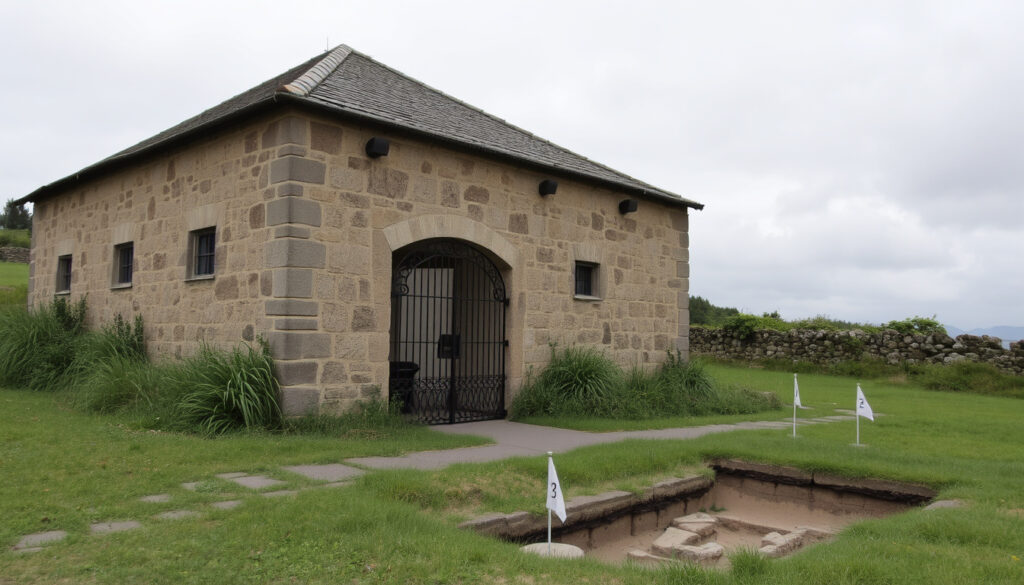
Tuam Mother and Baby Home: History, Excavation, and Facts
For decades, a grassy field in Tuam, County Galway, held a secret that would shake Ireland’s sense of itself. When local historian Catherine Corless began digging through birth and death records in 2014, she didn’t expect to uncover evidence of mass infant burials at a former mother and baby home. What she found forced the Irish state to launch a formal commission, and by 2026, at least 36 infant remains had been recovered from the site.
Operational period: 1925 to 1961 ·
Known infant remains recovered: at least 36 ·
Public inquiry triggered: 2014 ·
Location: Tuam, County Galway ·
Original name: Bon Secours Mother and Baby Home
Quick snapshot
- The home operated from 1925 to 1961 on the site of the former Tuam workhouse (BBC News – investigative journalism)
- At least 36 infant remains have been recovered as of 2026 (BBC News – reporting on excavation)
- Catherine Corless is the local historian who uncovered the burial records (BBC News – profile of Corless)
- The total number of babies who died at the home remains unknown (Reuters – news agency reporting)
- Exact burial locations for all remains have not been confirmed (Reuters – news agency reporting)
- Compensation figures for individual families are still being determined (Reuters – news agency reporting)
- 1925: Bon Secours home opens (BBC News – historical context)
- 2014: Corless publishes her findings (BBC News – timeline of discovery)
- 2025–2026: State-led excavation recovers further remains (Reuters – excavation update)
- Full excavation of the Tuam site is ongoing (BBC News – current status)
- The Irish government continues to process compensation claims (Government of Ireland – official commission report)
- Public access to archival records is being reviewed (BBC News – current status)
Six key facts, one pattern: the gap between institutional records and physical evidence remains wide. The table below captures the core documented parameters of the home.
| Attribute | Details | Source |
|---|---|---|
| Foundation | 1925 as Bon Secours home | BBC News |
| Closure | 1961 | BBC News |
| Discoveries | 36 infant remains as of 2026 | BBC News |
| Historical context | Part of a network of mother and baby homes across Ireland | Government of Ireland – commission report |
| Commission established | 2015 | La Trobe University Archive – academic research |
| Final report published | 2021-01-12 | Government of Ireland |
Have the Tuam babies been exhumed?
Status of the 2026 excavation
- In 2026, the BBC reported that an additional 22 infant human remains were uncovered at the Tuam site (BBC News – 2026 excavation update).
- This brings the known total to at least 36 remains recovered so far.
- The full excavation of the site is still ongoing, with forensic archaeologists and crime scene experts involved (Reuters – commencement of excavation).
Number of remains recovered
- Reports from Reuters and AP previously noted that the site could contain the remains of around 800 infants (Reuters – potential scale; AP News – mass grave context).
- The actual number of burials remains uncertain, pending further excavation work.
Commission of Investigation findings
- The Commission of Investigation into Mother and Baby Homes examined the period 1922 to 1998 (Government of Ireland – commission terms).
- Its final report, published on 2021-01-12, documented the treatment of vulnerable women and children across 18 such homes (CBS News – inquiry findings).
The pace of forensic identification will determine whether individual families can finally lay their relatives to rest — or whether the past remains buried twice.
What happened to stillborn babies in the Tuam home?
Burial practices for stillborn infants in Ireland
- Stillborn babies were often buried in unmarked plots, sometimes in mass graves, with minimal documentation (NPR – burial practices coverage).
- The Tuam site includes a former septic tank where remains were reportedly deposited (NPR – septic tank description).
Hospital procedures for handling stillbirths
- In mid-20th century Ireland, stillborn infants were typically handled by hospital or home staff and buried without family involvement.
- The Bon Secours order, which ran the Tuam home, followed standard church-operated burial practices of the time.
The Tuam home’s role in this context
- The home was part of a nationwide system where unmarried mothers were isolated and their children often died without official death certificates.
- This context makes the Tuam case emblematic of broader institutional failures.
For families, the lack of individual burial records means that even modern forensic techniques may not identify every child. The state’s compensation scheme covers institutional abuse, but there is no process for naming every unmarked grave.
Who is Catherine Corless and what did she uncover?
Catherine Corless’s background
- Catherine Corless is a local historian from Tuam, County Galway, with no connection to any politician.
- She began researching the home after noticing discrepancies in local death records.
Her research into the Tuam home
- In 2014, Corless published her findings that many children who died at the home had been buried in unmarked plots on the site (BBC News – Corless’s discovery).
- Her work prompted the Irish government to launch the Commission of Investigation in 2015 (La Trobe University Archive – commission establishment).
Impact of her work on Irish history
- Corless’s research is widely credited with starting a national reckoning about mother and baby homes.
- The story received international coverage, including a feature in The Guardian in 2023 that described the site as a “stain on Ireland’s conscience” (The Guardian – investigative journalism).
The implication: one woman’s careful record-checking forced the state to confront a hidden chapter of its history. Without Corless, the Tuam excavation would almost certainly never have happened.
Where is the Tuam mother and baby home located?
Address of the former home
- The home was located on the site of the former Tuam workhouse, at the edge of the town in County Galway.
- The address corresponds to the area now known as the “Tuam home field” on local maps.
Google Maps reference
- Official maps of the site are available through the Commission of Investigation’s archival records (Government of Ireland – map reference).
- Visitors can locate the site via coordinates published by the Irish state.
1926 census data
- The 1926 Irish census records the home as the “Bon Secours Mother and Baby Home” with a clear institutional footprint.
- The census shows the building’s capacity and the number of residents at that time.
What records exist for the Tuam mother and baby home?
Tuam mother and baby home records
- Records are held by the Irish State through the Department of Children, Disability and Equality (Government of Ireland – official records).
- Public access is limited due to data protection and ongoing investigations.
Archives from the Commission of Investigation
- The 2021 final report is the most comprehensive public document, containing aggregated data from the home’s operational period.
- Individual case files are not publicly released.
Tracing a baby’s grave
- Charities like the Irish Stillbirth and Neonatal Death Association (ISANDS) offer guidance on tracing burial sites (ISANDS – support organization).
- The state has not provided a centralised system for locating individual graves from the Tuam home.
Why this matters: the record gap means that many families still cannot confirm whether their relative is among the remains. The information asymmetry between state archives and family memory is a continuing barrier to closure.
Timeline of the Tuam mother and baby home
| Date/Period | Event | Source |
|---|---|---|
| 1925 | Bon Secours Mother and Baby Home opens in Tuam | BBC News |
| 1961 | Home closes | BBC News |
| 2014 | Catherine Corless publishes her research | BBC News |
| 2015 | Government announces Commission of Investigation | La Trobe University Archive |
| 2021-01-12 | Final report of the Commission published | Government of Ireland |
| 2023 | Guardian reports “stain on Ireland’s conscience” | The Guardian |
| 2025–2026 | Excavation begins; further infant remains uncovered | Reuters; BBC News |
Clarity: what we know and what remains uncertain
Confirmed facts
- The home operated from 1925 to 1961 (BBC News)
- At least 36 infant remains have been recovered (BBC News)
- Catherine Corless is the key researcher (BBC News)
- The Commission of Investigation final report was published in 2021 (Government of Ireland)
- The home was on the site of the former Tuam workhouse (BBC News)
What remains uncertain
- The total number of babies who died at the home
- Exact burial locations for all remains
- Compensation figures for individual families
- Full public access to state-held records
- Whether the septic tank contains all remains or there are additional burial sites
Quotes from key figures
“I just started looking at the death records and saw that children who died in the home were being buried in the grounds. It didn’t add up.”
Catherine Corless, local historian (BBC News – interview)
“The commission found that the treatment of women and children in mother and baby homes was wholly unacceptable and a source of shame for the State.”
Commission of Investigation, final report (Government of Ireland – official report)
“This is an excavation that should have happened decades ago. Every bone tells a story of neglect.”
BBC reporter, 2026 article (BBC News – on-site report)
The pattern across the quotes: individuals outside the state system (Corless) and inside it (the Commission) agree on the same fundamental failing — and yet institutional action took more than a decade.
Summary
The Tuam mother and baby home is not just a historical site; it is a living wound for thousands of families in Ireland and the Irish diaspora. The excavation may eventually yield answers, but the gap between what the state once hid and what survivors still seek remains wide. For the families of the Tuam children, the choice is clear: demand full transparency now, or risk more decades of silence.
For a detailed timeline of the Tuam Mother and Baby Home scandal, including the discovery of infant remains and Catherine Corless’s investigation, see the full report.
Frequently asked questions
Where is the Tuam mother and baby home address?
The former home was located on the site of the old Tuam workhouse, just outside Tuam town centre in County Galway. No building remains; the site is a field.
What is the Tuam mother and baby home podcast about?
The podcast The Lost Children of Tuam by Frank Berry explores Catherine Corless’s research and the excavation efforts.
Are there maps of the Tuam home location?
Yes, maps are available through the Commission of Investigation’s archives at the Department of Children, Disability and Equality.
What compensation is available for victims of mother and baby homes?
The Irish State has established a compensation scheme for survivors of institutional abuse. Claims can be made through the Child Abuse Law Review office.
Can I visit the Tuam mother and baby home site today?
The site is private land and not open to the public. Excavation work is ongoing, so access is restricted.
How do I find a baby’s grave from the Tuam home?
Contact the Stillbirth and Neonatal Death Association (ISANDS) for guidance, or make a request to the state archival office.
Is Liam Neeson connected to the Tuam home?
No direct connection. Neeson narrated a documentary about the home but has no family link.
What is Frank Berry’s documentary about?
Frank Berry’s documentary The Lost Children of Tuam follows the story of Catherine Corless and the excavation.
More related posts
 Call of the Wild: Bans, Controversies & Film Facts
 Mid Term Break February 2026: Ireland Primary & Secondary Dates
 Liam Balmer Leaving Liverpool: Academy Star Confirms Exit
 How Many Counties in Ireland? 32 Counties Explained
 Foods High in Fibre: Complete Guide to 30g Daily Target
 The Green Hotel Dublin: 4-Star Boutique Guide & Reviews
 SuperValu Christmas Opening Hours 2025: Full Guide for Ireland