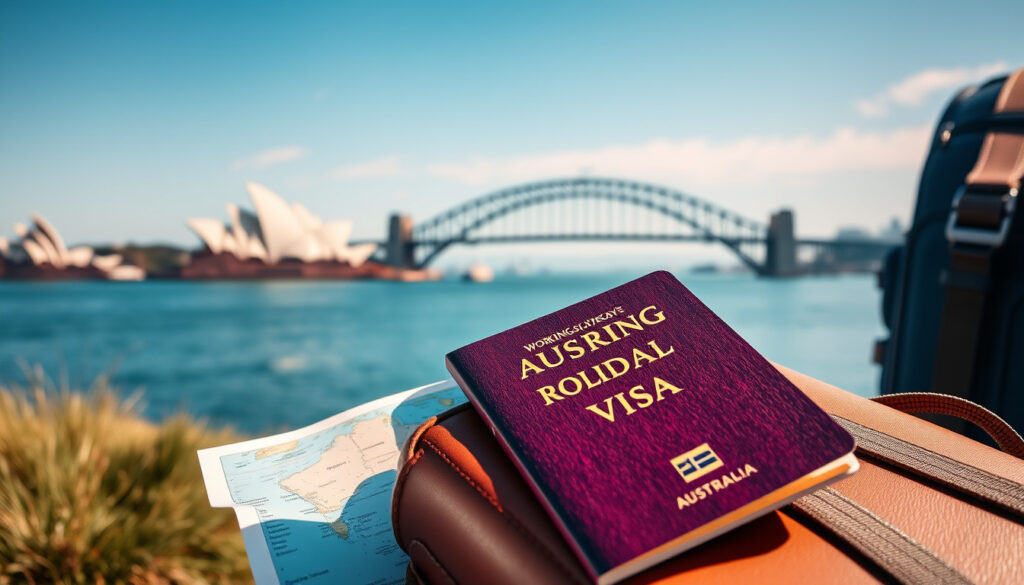
Working Holiday Visa Australia – How to Apply and Qualify
Australia’s Working Holiday visa provides young adults from eligible countries with an opportunity to live, work, and travel in Australia for up to 12 months. Two visa subclasses govern this program: Subclass 417 (Working Holiday visa) and Subclass 462 (Work and Holiday visa), each with distinct eligibility criteria and application requirements.
The program was designed to encourage cultural exchange and strengthen international relationships between Australia and partner nations. Holders can work short-term jobs to fund their travels, study for up to four months, and enter Australia multiple times during their stay. Understanding the requirements, application process, and conditions attached to these visas helps prospective applicants navigate the system more effectively.
This guide covers the essential details prospective working holiday makers need to know, from basic eligibility through to extension options and work limitations.
Who is eligible for a Working Holiday visa in Australia?
Eligibility for Australia’s Working Holiday visa depends on nationality, age, and meeting core requirements related to health, character, and financial capacity. Both subclasses share some common criteria while differing in others.
Nationality requirements by visa subclass
Subclass 417 is available to passport holders from Belgium, Canada, Cyprus, Denmark, Estonia, Finland, France, Germany, Hong Kong (SAR), Ireland, Italy, Japan, Korea, Malta, Netherlands, Norway, Sweden, Taiwan, and the United Kingdom. Subclass 462 targets partner countries with additional requirements, including minimum education standards and English proficiency verification. Eligibility lists are determined through bilateral agreements and may be updated periodically.
Applicants must confirm their country’s current eligibility status on the official Department of Home Affairs website before beginning the application process.
Age limits explained
Most applicants must be aged between 18 and 30 years old at the time of application or visa decision. However, several countries enjoy an extended upper limit of 35 years under bilateral arrangements. These typically include the United Kingdom, Canada, Ireland, France, and Italy under Subclass 417, with some Subclass 462 nationalities also qualifying for the higher age threshold based on individual agreements.
Age is assessed at application or decision time, making it essential to check passport-specific rules that apply to your situation.
To qualify, applicants must hold a passport from an eligible country, be free of dependent children accompanying them, demonstrate sufficient funds (typically AUD 5,000 for initial support), complete required health and character checks, and submit their application from outside Australia while remaining offshore until the visa is granted.
Subclass 462 additional requirements
Those applying under Subclass 462 face extra prerequisites beyond the core eligibility criteria. These include proof of post-secondary education such as a degree or diploma, demonstration of functional English language ability through approved tests (IELTS, PTE, or TOEFL), or evidence of English-medium education. Some nationalities may also need a government letter of support from their home country.
| Aspect | Subclass 417 | Subclass 462 |
|---|---|---|
| Work Limit | 6 months per employer (exemptions possible) | Same, plus nationality-specific extras |
| Regional Work | Required for 2nd/3rd visa extensions | Same |
| Study Rights | Up to 4 months | Up to 4 months |
| Education Proof | Not required | Required |
| English Test | Not required | Required |
How do I apply for a Working Holiday visa Australia?
The application process for Australia’s Working Holiday visa is entirely online through the ImmiAccount portal. Applicants must be physically outside Australia when submitting their application and when the visa is granted. Processing times vary, and candidates are advised to apply well in advance of planned travel dates.
Step-by-step application process
First, applicants create an ImmiAccount and select the appropriate visa subclass. The online form requires personal details, passport information, and responses to eligibility questions. After completing the form, applicants upload supporting documents, pay the application fee, and submit. The Department of Home Affairs then reviews the application, potentially requesting additional information or medical examinations.
Those unfamiliar with the process may benefit from consulting registered migration agents or reviewing official guidance materials before applying.
Required documents checklist
Several documents form the foundation of a complete application. A valid passport with the biographical page is essential. Applicants must provide proof of funds demonstrating access to AUD 5,000 or more through bank statements. Police clearance certificates may be requested depending on circumstances, while recent passport-sized photographs are also required.
Subclass 462 applicants additionally need educational certificates or transcripts and English language test results from approved providers. Any health examinations requested by the department must also be completed.
Gather all required documents before beginning the online application. Having certified translations ready for non-English documents and ensuring bank statements are recent (within the past three months) helps prevent processing delays.
Understanding the costs involved
The base visa application fee stands at approximately AUD 635, though this amount may change and applicants should verify current fees on the official portal. Beyond the visa fee, additional expenses include English language testing (if applicable), health examinations, police clearance certificates, and costs associated with obtaining or translating documents. These supplementary costs can add several hundred dollars to the total expenditure.
Financial proof requirements mean applicants must demonstrate access to AUD 5,000 in funds, which remains accessible throughout the application process rather than being paid to the government.
How long can I stay and can I extend my Working Holiday visa?
The initial Working Holiday visa permits a stay of up to 12 months from the date of grant. Visa holders can enter and exit Australia multiple times during this period, providing flexibility for regional travel. However, work with any single employer cannot exceed six months under Condition 8547.
Extending your visa: second and third year options
Extending a Working Holiday visa beyond the first year requires completing specified regional work. To qualify for a second visa, holders must complete 88 days of work in approved industries within designated postcodes or regions. Eligible work sectors typically include agriculture, mining, construction, and fishing, though the specific list of approved occupations and locations is updated regularly by the Department.
A third visa becomes available after completing additional specified work following the second visa. This pathway allows eligible working holiday makers to remain in Australia for up to three years total, provided they meet the regional work requirements for each extension.
Not all work qualifies for extension purposes. Employment must fall within approved industries and specific geographic areas designated by the Department of Home Affairs. Workers should verify their intended employment qualifies before commencing, keeping detailed employment records including payslips, group certificates, and employer contact details.
Recent 2025 changes affecting extensions
A 2025 pilot program introduced modifications to work limitations, allowing visa holders in key sectors to work with a single employer for longer than the standard six-month limit. These exemptions apply to specific industries facing labour shortages, though details continue to evolve. Applicants should check current conditions on the official Department of Home Affairs Work and Holiday visa page for the latest information.
Age and country eligibility lists remain tied to bilateral agreements, with some nationalities continuing to access the expanded 35-year age limit.
What jobs can I do on a Working Holiday visa in Australia?
Working Holiday visa holders can undertake a broad range of employment in Australia. The primary purpose of work while on this visa is to fund travel rather than secure permanent employment, meaning short-term and casual arrangements are common and expected. Full-time, part-time, and casual work are all permitted under the visa conditions.
Work conditions and employer limitations
Condition 8547 restricts visa holders to a maximum of six months’ work with any single employer. This limitation applies across all visa subclasses and is strictly enforced. Employers found to be engaging working holiday makers beyond this period may face penalties, and visa holders risk having their visa cancelled for non-compliance.
Exemptions to the six-month rule exist for key sectors experiencing labour shortages, particularly in agriculture, hospitality, and healthcare. The 2025 pilot extension expanded these exemptions further, allowing longer employment periods with approved employers in designated industries facing critical skill gaps.
Popular industries for working holiday makers
Agriculture remains one of the most common sectors for working holiday makers, particularly in regions like Queensland, Northern Territory, and Western Australia where seasonal harvesting creates significant demand. Hospitality work in tourist areas, retail positions in major cities, and administrative roles also attract significant numbers of visa holders.
Regional work in approved postcodes and industries serves a dual purpose: providing income while meeting the requirements for visa extensions. Many applicants strategically choose their initial employment to both fund travel and accumulate qualifying regional work days.
Beyond work, visa holders can study for up to four months during their stay. This provision allows short courses, certifications, or vocational training to enhance skills or career prospects while experiencing life in Australia.
Comparison with tourist visa work restrictions
Unlike tourist visas (such as Subclass 600), which explicitly prohibit any employment, Working Holiday visas permit both work and study. Tourist visas also typically limit stays to shorter periods without pathways to extension, whereas the Working Holiday program offers a structured progression through second and third visa subclasses for those completing regional work requirements.
The ability to work legally and the extension pathway make the Working Holiday visa distinctly more suitable for young travellers seeking extended stays with employment opportunities.
What is the typical application timeline?
Understanding the sequence of events from initial preparation through to visa grant helps applicants plan their move to Australia more effectively. While exact processing times vary, a general timeline applies to most applications.
- Eligibility verification – Confirm nationality eligibility, age requirements, and document readiness before proceeding.
- Document preparation – Gather passport, bank statements, educational credentials, English test results, and police clearances.
- ImmiAccount creation – Set up online account and select the appropriate visa subclass (417 or 462).
- Online application submission – Complete the form, upload documents, and pay the application fee.
- Medical examinations – Undergo required health checks if requested by the Department.
- Visa decision – Receive notification of grant or request for additional information (typically 1-4 weeks for straightforward applications).
Processing times depend on application complexity, document quality, and departmental workload. Those with complete applications meeting all requirements generally receive decisions faster than incomplete submissions requiring additional evidence.
What is confirmed versus what remains unclear?
Transparency about what information is firmly established versus areas of ongoing uncertainty helps readers understand the reliability of guidance provided.
| Confirmed information | Information requiring verification |
|---|---|
| Subclass 417 available for 19 eligible countries | Specific Subclass 462 country eligibility lists |
| Age range 18-30 for most, up to 35 for select countries | Current fees (may change without notice) |
| AUD 5,000 minimum funds requirement | Precise processing timeframes |
| 88 days regional work for second visa | Updated list of qualifying postcodes and occupations |
| Six-month employer limitation under Condition 8547 | Scope of 2025 pilot exemption sectors |
| Study rights up to four months | Future policy changes under bilateral negotiations |
Prospective applicants should verify current requirements directly with the Department of Home Affairs, as bilateral agreements and departmental policies evolve. Information accurate today may be updated as governments renegotiate international agreements or adjust program parameters.
Background and context of the Working Holiday program
Australia’s Working Holiday program traces its origins to bilateral arrangements designed to foster cultural exchange and strengthen international bonds with partner nations. The initiative allows young adults to experience life in another country while contributing to local economies through temporary work.
The program reflects broader trends in international mobility, where governments increasingly recognise the value of youth exchange in building soft diplomatic relationships and addressing labour shortages in regional areas. Over 40 countries currently participate in arrangements with Australia, making it one of the most extensive working holiday programs globally.
Regional communities particularly benefit from working holiday makers, who often fill seasonal labour gaps in agriculture and hospitality that local workers may not fill. In exchange, visa holders gain valuable international experience and the opportunity to explore Australia’s diverse landscapes and communities.
What do official sources say?
Government and authoritative sources provide the most reliable information on visa requirements and conditions. The Department of Home Affairs maintains detailed pages for each visa subclass, regularly updating requirements as policies change.
“To be eligible for a Working Holiday visa (subclass 417), you must hold a valid passport from an eligible country, be outside Australia when you apply and when the visa is granted, meet the age requirements, and have no dependent children accompanying you.”
— Department of Home Affairs, First Working Holiday (subclass 417)
“For a Work and Holiday visa (subclass 462), you must also meet additional requirements including functional English and proof of post-secondary education.”
— Department of Home Affairs, Work and Holiday (subclass 462) information
Registered migration agents and immigration lawyers can provide personalised advice for complex cases, though the core visa requirements remain consistent across all information channels. Official government sources remain the authoritative reference for eligibility criteria and application procedures.
Key takeaways for prospective applicants
Australia’s Working Holiday visa program offers young adults from eligible countries a genuine opportunity to experience life in Australia while working to fund their travels. Success depends on meeting clear eligibility requirements, preparing complete applications, and understanding the conditions attached to the visa.
Those considering this pathway should verify their nationality eligibility, confirm their age qualifies under current rules, and ensure they can demonstrate sufficient funds before applying. The extension pathway through regional work provides a realistic route to longer stays for those willing to undertake specified work in approved areas.
For related information on travel preparations and practical skills needed while exploring Australia, see our guide on Jump Starting a Car – Safe Step-by-Step Guide or learn about How to Jump Start a Car with Leads – Step-by-Step Safety Guide.
How long can I stay on a Working Holiday visa in Australia?
The initial visa permits up to 12 months’ stay. Extensions are available for second and third visas by completing 88 days of specified regional work, potentially allowing up to three years total.
What is the age limit for the Working Holiday visa Australia?
Most applicants must be between 18 and 30 years old. Citizens of some countries, including the UK, Canada, Ireland, France, and Italy, can apply up to age 35 due to bilateral agreements.
Can I work on a Working Holiday visa in Australia?
Yes, visa holders can work for any employer, though employment with a single employer cannot exceed six months. A 2025 pilot program extends this limit in key sectors facing labour shortages.
How much funds do I need for a Working Holiday visa?
Applicants must demonstrate access to AUD 5,000 for initial support, shown through bank statements. The visa application fee is approximately AUD 635, plus additional costs for health checks, police clearances, and English tests where applicable.
What documents do I need for the Working Holiday visa application?
Required documents include a valid passport, proof of funds (bank statements showing AUD 5,000+), recent passport photo, police clearance certificate (if requested), health examination results (if required), and for Subclass 462: educational certificates and English test results.
What countries are eligible for Australia’s Working Holiday visa?
Subclass 417 applies to Belgium, Canada, Cyprus, Denmark, Estonia, Finland, France, Germany, Hong Kong, Ireland, Italy, Japan, Korea, Malta, Netherlands, Norway, Sweden, Taiwan, and the UK. Subclass 462 covers additional partner countries with different bilateral arrangements.
Can I extend my Working Holiday visa in Australia?
Extensions require completing 88 days of specified regional work in approved industries and postcodes. A second visa requires this work after the first year. A third visa requires additional specified work following the second visa.
What’s the difference between Subclass 417 and Subclass 462?
Subclass 417 covers countries like the UK, Canada, and Japan without requiring education or English test proof. Subclass 462 applies to partner countries and adds requirements for post-secondary education and functional English language ability through approved tests.
More related posts
 Best Aquarium Fish for Beginners: 10 Hardy Species & Tank Tips
 How to Childproof a House – Room-by-Room Guide and Checklist
 Atlantic Flight Training Academy (AFTA) Cost & Pilot Career Guide
 Crystal Palace vs Brighton: Rivalry History, Head-to-Head & More
 Grey Cat Reykjavík: Café, Not a Bar – Hours & Menu
 News of the World: Newspaper Shutdown, Scandal & Tom Hanks Film
 Albania National Football Team: Rankings, Players & Tickets
 Geothermal Springs and Pools Iceland: Best + Map Guide