Come Out Ye Black and Tans: Meaning, History, and Controversy
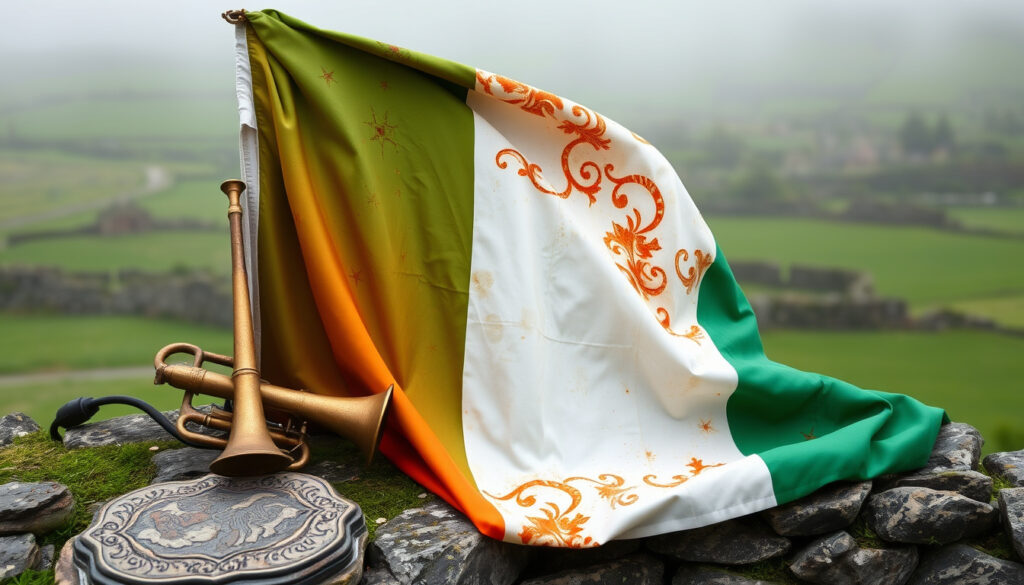
Few songs pack as much emotional punch as “Come Out, Ye Black and Tans,” a tune that can fill a pub with cheers or spark a heated debate. Written by Dominic Behan in the late 1950s, the song turns a historical grievance into a taunt aimed at a British paramilitary force.
Song written by: Dominic Behan ·
Most famous recording by: The Wolfe Tones ·
Historical period referenced: Irish War of Independence (1919–1921) ·
Genre: Irish rebel song
Quick snapshot
- Song written by Dominic Behan (Wikipedia (encyclopedic entry))
- Black and Tans were a British paramilitary force deployed 1920–1921 (Wikipedia (historical summary))
- Most famous version by The Wolfe Tones (Japanese Wikipedia (music reference))
- Exact year of composition (often cited as 1959 but not universally confirmed) (The Irish Times (culture analysis))
- Whether Behan intended the song as satire or inflammatory (The Irish Times (culture analysis))
- Authorship sometimes attributed to Stephen Behan rather than Dominic Behan (The Irish Times (culture analysis))
- 1920–1921: Black and Tans active in Ireland (RTÉ Brainstorm (historical analysis))
- c. 1959: Song written by Dominic Behan (Wikipedia (song entry))
- 1960s: The Wolfe Tones record and popularise it (Japanese Wikipedia (music reference))
- Debate over racism allegations continues (The Irish Times (culture analysis))
- Song likely to remain a staple at nationalist events (Songtell (lyrics analysis))
Six facts that define the song’s identity – one pattern: the core facts are settled, but the interpretation remains contested.
| Attribute | Value |
|---|---|
| Song Title | Come Out, Ye Black and Tans |
| Writer | Dominic Behan |
| Year Written | c. 1959 |
| Most Famous Performer | The Wolfe Tones |
| Genre | Irish rebel song |
| Subject | Irish War of Independence, Black and Tans |
What does “Come Out Ye Black and Tans” mean?
Literal interpretation of the lyrics
The song’s opening line directly challenges the Black and Tans to “come out” and fight. According to Songtell (lyrics analysis platform), the phrase is a confrontational callout, not a literal invitation. The lyrics mock the British forces for hiding behind medals from Flanders while brutalising Irish civilians.
The opening line is not a suggestion – it is a dare, designed to provoke a reaction.
The historical context of the taunt is rooted in the Black and Tans’ reputation for brutality during the Irish War of Independence.
Historical context of the taunt
The Black and Tans were a temporary police force sent to Ireland in 1920 to reinforce the Royal Irish Constabulary during the War of Independence. RTÉ Brainstorm (Irish public broadcaster analysis) describes them as a “notorious” force whose reprisal tactics – house burnings, shootings, and collective punishment – made them a symbol of British oppression. Behan’s lyrics weaponise this reputation.
Modern usage and cultural significance
Today the song is sung at Gaelic football matches, republican commemorations, and even some football terraces. Its popularity surged in the 2010s, partly through social media and clips of fans belting it out. Wikipedia (song entry) notes that the tune has become an almost universal anthem of Irish defiance, but that very universality also fuels the controversy.
The same melody is shared with the loyalist song “The Boyne Water,” as The Irish Times (culture analysis) points out – a musical overlap that undercuts any simple “us vs. them” reading.
The pattern: what started as a local taunt in the 1950s has become a global signifier of Irish rebellion, but its meaning splinters across different audiences.
Bottom line: The song’s meaning is a weaponised call to arms that shifts with the context in which it is sung.
Is “Come Out Ye Black and Tans” a racist song?
Arguments labeling the song as racist
Critics argue that the song is anti-British and can stoke sectarian hatred. In 2020, some British venues banned it after it was played at protests. The Irish Times (culture analysis) reports that the controversy hinges on whether the target is a specific historical paramilitary force or an entire nationality.
Historical defense: anti-colonial, not racial
Supporters point out that the song targets the Black and Tans – a temporary police force, not the British people. The lyrics reference the organisation’s actions during the War of Independence, not the ethnicity of its members. Wikipedia (song entry) describes the song as a “satire” of pro-British Irishmen and British colonial violence.
Current debate in Irish and British media
There is no consensus. Context matters enormously – the same lyrics can be a proud historical anthem in one setting and a sectarian taunt in another. The Irish Times (culture analysis) notes that the song’s meaning changes depending on who sings it, where, and why. The implication: the debate is less about the words themselves and more about the political moment in which they are shouted.
Bottom line: The song is not inherently racist, but its use can become sectarian depending on the singer and audience.
Did the Black and Tans fight the IRA?
Who were the Black and Tans?
Recruited from British veterans after World War I, the Black and Tans were named for their mismatched uniforms – dark-green RIC tunics and khaki army trousers. The Irish Times (culture analysis) explains the nickname origin. They were deployed to bolster the Royal Irish Constabulary against the rising republican movement.
The Irish War of Independence
From 1919 to 1921, the Irish Republican Army (IRA) waged a guerrilla campaign against British rule. The Black and Tans were tasked with crushing the insurgency, and their harsh tactics – including reprisal killings and destruction of property – became infamous. Wikipedia (historical summary) states that both sides committed atrocities, but the Black and Tans’ actions hardened public opinion against Britain.
The IRA’s guerrilla campaign against them
The IRA avoided set-piece battles, using ambushes and hit-and-run attacks. The Black and Tans, in turn, often responded with collective punishment. RTÉ Brainstorm (Irish public broadcaster analysis) notes that the conflict was a “dirty war” with no clear front line.
The song’s historical accuracy is less important than its emotional truth: for many Irish nationalists, the Black and Tans embody everything the song condemns. The trade-off: celebrating that resistance also means confronting the violence on both sides.
The catch: the song picks a side, but the history is messier than any single narrative can contain.
Bottom line: The Black and Tans and the IRA were enemies in a guerrilla war where both sides committed atrocities, but the song takes a clear nationalist stance.
What is the most popular IRA song?
List of well-known Irish rebel songs
Irish rebel songs span centuries, from “The Foggy Dew” to “The Boys of the Old Brigade.” Wikipedia (song entry) lists “Come Out, Ye Black and Tans” among the most widely recognised. Others include “The Fields of Athenry,” “A Nation Once Again,” and “The Minstrel Boy.”
Why “Come Out Ye Black and Tans” is iconic
Its aggressive, direct challenge sets it apart. The Wolfe Tones’ recording – with its rousing chorus – turned it into a stadium anthem. Japanese Wikipedia (music reference) notes that the song became especially well known through later Irish rebel performances.
Other contenders: “The Foggy Dew,” “The Boys of the Old Brigade”
While “The Foggy Dew” is often praised for its literary quality and “The Boys of the Old Brigade” for its emotional weight, neither matches the raw confrontational energy of Behan’s lyric. The pattern: each song serves a different emotional register – elegy, nostalgia, or defiance.
The pattern: “Come Out, Ye Black and Tans” holds the top spot for sheer directness, but its popularity is also a lightning rod for the very controversy that surrounds it.
Bottom line: The song is the most iconic IRA anthem because of its confrontational lyrics, but that same quality makes it controversial.
Were the Black and Tans Catholic or Protestant?
Religious composition of the Black and Tans
The Black and Tans were predominantly Protestant, but not exclusively so. Recruitment drew from British Army veterans, most of whom were Protestant. Wikipedia (historical summary) does not provide a precise religious breakdown, but historical records indicate a clear Protestant majority.
Sectarianism in the Irish conflict
The War of Independence had sectarian undertones: the IRA was largely Catholic, while the Royal Irish Constabulary and the Black and Tans were overwhelmingly Protestant. Yet the conflict was fundamentally political, not religious. RTÉ Brainstorm (Irish public broadcaster analysis) emphasises that the Black and Tans were a “secular” force, not a religious militia.
Myths vs. historical record
A common myth holds that the Black and Tans were a specifically Protestant militia. The historical record does not support that. They were a police reinforcement unit, not a sectarian army. But the perception persists because, in the Irish context, the British state and its institutions were historically associated with Protestantism. The catch: the song’s target is the Black and Tans as a political force, not a religious group.
The implication: the question of religion is a red herring – the song’s real target is British colonial authority, not Protestantism per se.
Bottom line: The Black and Tans were mostly Protestant but the song attacks British colonial power, not Protestant faith.
Timeline
- 1920–1921: Black and Tans active in Ireland during War of Independence. (Wikipedia (historical summary))
- c. 1959: Dominic Behan writes “Come Out, Ye Black and Tans.” (The Irish Times (culture analysis))
- 1960s: The Wolfe Tones record the song, popularising it. (Japanese Wikipedia (music reference))
- 2010s: Song gains new popularity through football chants and social media. (Wikipedia (song entry))
- 2020: Renewed controversy after being played at protests; some call for ban. (The Irish Times (culture analysis))
The pattern: the song’s timeline mirrors the evolution of Irish nationalism from militant resistance to cultural symbol.
Confirmed facts
- Dominic Behan wrote the song. (Wikipedia (song entry))
- The Black and Tans were a British paramilitary force (1920–1921). (Wikipedia (historical summary))
- It is an Irish rebel song. (Wikipedia (song entry))
Rumors and unclear claims
- Exact year of composition (often given as 1959 but not universally confirmed). (The Irish Times (culture analysis))
- Whether Behan intended the song to be inflammatory or just satirical. (The Irish Times (culture analysis))
- Authorship sometimes attributed to Stephen Behan rather than Dominic Behan. (The Irish Times (culture analysis))
- The extent to which the song is actually racist vs. anti-colonial. (The Irish Times (culture analysis))
Key perspectives
“The Black and Tans were a notoriously brutal temporary police force sent to Ireland in 1920 to help suppress the republican movement.”
“The song is a satire of pro-British Irishmen and references British colonial violence in Ireland.”
— Wikipedia (song entry)
“The melody was adapted from an older air, Rosc Catha na Mumhan, which is also associated with the loyalist song The Boyne Water.”
— The Irish Times (culture analysis)
For Irish nationalists, the song’s legacy is a double-edged sword: it celebrates resistance against colonial rule, but its modern use can also alienate potential allies and invite accusations of sectarianism. The choice is clear: either embrace the song as a historical artifact with careful context, or risk letting its most confrontational interpretation define the movement.
it.wikipedia.org, youtube.com, ru.wikipedia.org, cs.wikipedia.org, reddit.com, de.wikipedia.org
Frequently asked questions
What does “come out” mean in the song?
It’s a confrontational challenge – a call for the Black and Tans to show themselves and fight, not a literal request to exit a building. (Songtell (lyrics analysis))
Is the song banned anywhere?
No official ban, but some venues in the UK have refused to play it after complaints. (The Irish Times (culture analysis))
What tune is “Come Out Ye Black and Tans” based on?
The melody is adapted from the older air “Rosc Catha na Mumhan,” which also underlies the loyalist song “The Boyne Water.” (The Irish Times (culture analysis))
Why is the song popular at soccer matches?
Its simple, rousing chorus and rebellious spirit make it easy to sing in large crowds. Ireland fans and some Celtic FC supporters have adopted it. (Wikipedia (song entry))
Are there alternative versions of the song?
Yes – many artists have covered it, including The Dubliners, Paddy Reilly, and more recently, punk bands. (Japanese Wikipedia (music reference))
Did Dominic Behan support the IRA?
Behan was a republican and came from a family with IRA connections, but he primarily saw himself as a writer and satirist. (The Irish Times (culture analysis))
What is the best recording of the song?
The Wolfe Tones’ version from the 1960s remains the definitive recording, but many prefer later live versions for their energy. (Japanese Wikipedia (music reference))
The takeaway: the song’s FAQ reveals that most questions revolve around its interpretation, not its historical facts.
More related posts
 RIP.ie Recent Deaths Dublin: How to See Who Died
 Liberty Car Insurance Ireland: RedClick Rebrand Explained
 Dunnes Stores Blazer Skort Set 2026: Price, Sizes & Styling Tips
 Hotel Gift Vouchers Ireland: Best Options & Buying Guide
 How Many Counties in Ireland? 32 Counties Explained
 Map of Northern Ireland: Cities, Counties & Towns Guide
 Brent Crude Oil Price: Why It’s Falling & 2026 Outlook
 Spider-Man: Homecoming Box Office, Timeline & LGBTQ Facts